London — The British prime minister on Monday urged restraint and dialogue as tensions rose between the United States and its European allies over Greenland, warning that escalating trade threats could damage global stability and economic recovery.
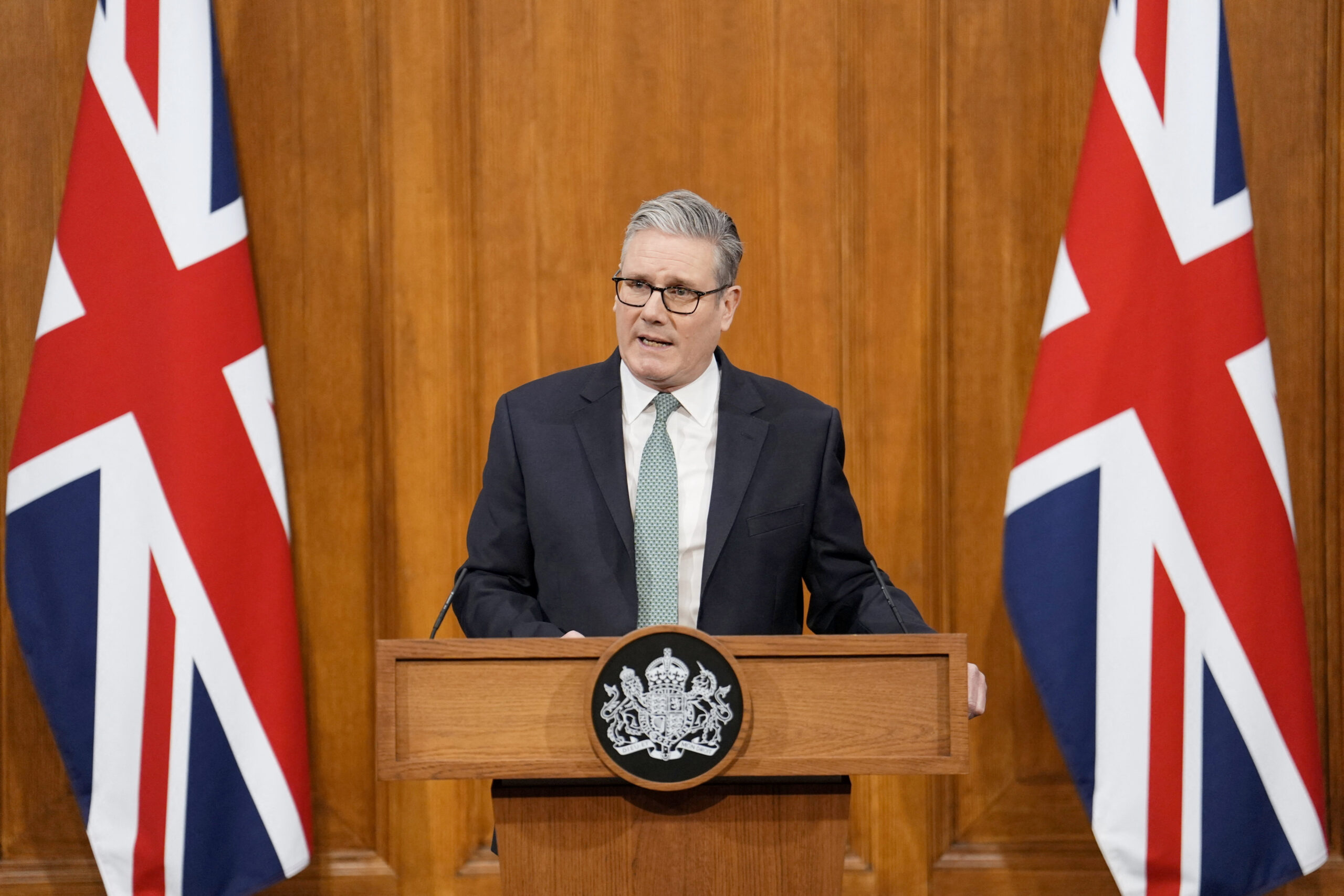
Speaking to reporters in London, Prime Minister Keir Starmer said diplomacy must prevail amid growing rhetoric surrounding Greenland’s future and proposed U.S. tariffs that have unsettled markets and strained transatlantic relations.
“This is not a moment for megaphone diplomacy or economic brinkmanship,” Starmer said. “Calm discussion, mutual respect and international law must guide the next steps.”
The remarks followed renewed statements from Washington suggesting economic pressure could be used to influence negotiations involving Greenland, an autonomous territory within the Kingdom of Denmark. The issue has triggered alarm across Europe, where leaders fear a new cycle of trade confrontation just as inflation eases and growth remains fragile.
British officials said Starmer held phone calls over the weekend with Danish and European Union leaders to coordinate a response and discourage unilateral action.
A Delicate Diplomatic Moment
Greenland, rich in strategic minerals and positioned along key Arctic shipping routes, has long drawn interest from global powers. Recent comments from U.S. officials about revisiting trade terms linked to Arctic cooperation revived memories of earlier disputes over sovereignty and defense arrangements.
In London, senior government sources said Britain’s position is clear: Greenland’s political future rests with its people and Denmark, and any economic measures should be discussed through established international frameworks.
Foreign Secretary advisers described the situation as “sensitive but manageable,” provided diplomatic channels remain open.
“We are not witnessing a crisis yet,” one official said. “But careless language has consequences, especially when markets and alliances are already under strain.”
Market Reaction Adds Pressure
The diplomatic tension spilled quickly into financial markets. European stocks slipped modestly on Monday morning, with investors wary of renewed trade friction between the United States and Europe. The British pound weakened slightly against the dollar before recovering by midday.
Economists said the episode underscored how quickly political statements can reverberate across fragile economies.
“Trade wars are not theoretical risks anymore,” said Eleanor Marks, a senior analyst at a London-based consultancy. “They move markets, disrupt planning, and slow investment almost immediately.”
Business groups urged leaders on both sides of the Atlantic to de-escalate.
“Companies need predictability, not uncertainty,” said the Confederation of British Industry in a statement. “Any steps that threaten tariffs or supply chains will harm workers and consumers alike.”
Britain’s Strategic Balancing Act
For the UK government, the dispute arrives at a sensitive time. Britain is seeking deeper trade cooperation with both the United States and the European Union while also positioning itself as a diplomatic bridge between Washington and Brussels.
Starmer has emphasized rebuilding trust with European partners after years of strained relations following Brexit. His cautious tone on Greenland reflects that broader strategy.
Downing Street officials said Britain does not intend to take sides publicly but will advocate strongly against any measures that risk destabilizing transatlantic ties.
“We are not interested in choosing camps,” a senior aide said. “Our role is to lower the temperature, not raise it.”
European Unity Under Test
Across Europe, leaders echoed similar concerns. Danish officials reaffirmed that Greenland’s status is not open to negotiation through economic pressure. The European Commission warned against actions that undermine international agreements.
Diplomats said informal consultations are underway among NATO allies to ensure the issue does not spill into defense cooperation in the Arctic, a region already affected by heightened military activity and climate-driven competition.
“The Arctic must not become another theater of economic confrontation,” said one European diplomat. “That benefits no one.”
A Message to Washington
While Starmer avoided direct criticism of the U.S. administration, his message was unmistakable: trade threats would only complicate already complex geopolitical relationships.
“History shows that tariffs are blunt instruments,” he said. “They damage trust faster than they deliver results.”
Analysts noted that Britain’s restrained language contrasts with sharper rhetoric from some European capitals, reflecting London’s desire to preserve close ties with Washington.
“The UK is walking a careful line,” said Professor Martin Holloway, a foreign policy expert at King’s College London. “It wants to support Europe without alienating the United States, which remains a critical partner in security and trade.”
What Comes Next
Officials expect further discussions later this week among foreign ministers and trade representatives. No formal sanctions or tariff measures have been announced, but uncertainty remains high.
Starmer said Britain would continue to press for quiet diplomacy behind closed doors.
“This is the time to talk, not threaten,” he said. “Stability must come before spectacle.”
As markets closed on Monday, traders and diplomats alike were watching for signs that cooler heads would prevail — and that the latest Arctic dispute would fade before becoming the next chapter in a widening global trade conflict.