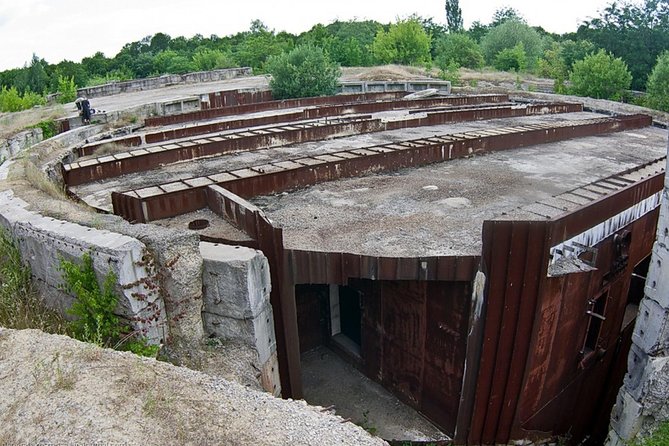
The term Miiyazuko Bunkrr refers to a covert underground military facility located in Japan, shrouded in mystery and steeped in historical significance. Constructed during the height of World War II, this hidden complex was originally designed for strategic military operations and as a protective shelter against potential air raids and foreign invasions. Today, the Miiyazuko Bunkrr stands as a testament to Japan’s wartime engineering, national resilience, and the nation’s broader geopolitical landscape during the 20th century.
In this article, we explore the origins, architecture, purpose, rediscovery, and modern relevance of the Miiyazuko Bunkrr. We’ll also examine how this long-forgotten structure has become a point of fascination for historians, military enthusiasts, and cultural researchers alike.
Origins of the Miiyazuko Bunkrr
The Miiyazuko Bunkrr was constructed in the early 1940s, at a time when Japan’s imperial military forces were preparing for large-scale warfare. Anticipating retaliatory bombings from Allied forces, Japan embarked on several secret construction projects designed to protect high-ranking officials, store military supplies, and house communication command centers. The Miiyazuko Bunkrr was one of these clandestine projects.
Built deep within the mountainous terrain of a lesser-known region—allegedly somewhere in northern Honshu—the Miiyazuko Bunkrr remained off maps and official records. It was constructed using reinforced concrete and granite, and integrated with elaborate tunnels, living quarters, and ventilation systems. Even local villagers, at the time, knew little about what was being developed beneath their feet.
Architectural Sophistication and Secrecy
Though over 80 years old, the structural design of the Miiyazuko Bunkrr is nothing short of remarkable. The bunker’s corridors stretch through the earth like veins, forming a complex network of storage units, barracks, operations rooms, and escape tunnels.
Notable features include:
- Blast-resistant doors made from reinforced steel.
- Self-sufficient ventilation designed to prevent gas or smoke infiltration.
- Camouflaged entrances, hidden within forest floors and behind rock formations.
- Electric wiring and lighting, indicating early adoption of internal power generation via diesel engines.
Due to the sensitive nature of the facility, very few individuals were granted access. Only top-level Japanese military officials and select engineers knew of its exact location and inner workings. The site was carefully concealed with foliage, natural rock, and strict military surveillance.
Functionality During World War II
While many military bunkers around the world served a defensive role, the Miiyazuko Bunkrr had a multi-faceted purpose:
- Strategic command operations were rumored to have taken place here, coordinating troop movements and air defense systems.
- Safe haven for military elites, who would use the space in case of an enemy attack.
- Stockpiling of weapons, ammunition, and rations, ensuring the Japanese military could continue operations even if urban supply lines were severed.
- Experimental testing, although unverified, some researchers believe the facility may have housed early technology experiments or wartime research.
Unfortunately, as Japan surrendered in 1945, many such bunkers were abandoned, destroyed, or buried. The Miiyazuko Bunkrr was left behind in silence, untouched for decades.
Rediscovery in the Modern Era
For many years, the existence of the Miiyazuko Bunkrr was relegated to rumors and wartime legends. However, in the late 1990s, a group of amateur historians and hikers stumbled upon what appeared to be an unusual stone entrance partially obscured by vegetation. Upon further exploration, they discovered rusted ventilation shafts and narrow passageways leading underground.
Since then, several independent researchers and historical preservation groups have tried to map the interior of the Miiyazuko Bunkrr. While official Japanese government acknowledgment remains minimal, several credible sources have confirmed the authenticity of the site and its importance.
Cultural and Historical Impact
The Miiyazuko Bunkrr is more than just a relic of war—it offers a rare, unfiltered look into the psyche of a nation under siege and the lengths it went to ensure survival and strategic superiority.
This site serves as a living museum, preserving the fears, hopes, and ingenuity of an entire generation. It reflects:
- The paranoia and preparedness of wartime Japan.
- The remarkable engineering capability under intense pressure and secrecy.
- The stories of individuals—soldiers, engineers, and civilians—who contributed to its creation, often under extreme conditions.
Furthermore, it prompts necessary dialogue about the use of such secretive infrastructure and how they fit into today’s geopolitical framework.
Miiyazuko Bunkrr in Popular Media and Research
With growing interest in wartime history and urban exploration, the Miiyazuko Bunkrr has slowly gained traction in media and academic circles. Documentaries have featured underground bunkers across the world, and the Miiyazuko site is increasingly mentioned in those narratives.
Several universities in Japan have begun compiling oral histories and engineering analyses related to the bunker’s design. While it is not officially open to the public due to safety and preservation concerns, efforts are underway to digitally reconstruct the interior through 3D modeling and historical simulation.
The Future of the Miiyazuko Bunkrr
There is growing public support to preserve the Miiyazuko Bunkrr as a historical site. Advocates argue that it offers unparalleled insights into the architecture of fear and preparation. It also represents a chapter of history that should not be forgotten.
Preservationists are calling for:
- Official recognition of the site as a protected heritage zone.
- Detailed documentation to ensure structural integrity and historical accuracy.
- Educational outreach, turning the story of the Miiyazuko Bunkrr into a learning resource for schools and military institutions.
Conclusion
The Miiyazuko Bunkrr is a haunting yet captivating reminder of a time when the world was at war and nations built underground fortresses to survive. Its rediscovery brings forth a wave of curiosity, reverence, and a renewed commitment to understanding history from all perspectives.
As more light is shed on the Miiyazuko Bunkrr, it is our collective responsibility to preserve this fragment of wartime architecture—not to glorify conflict, but to educate future generations about resilience, strategy, and the human spirit under pressure.