
Spend enough time looking at hair transplant results online, and a pattern begins to form. At first, everything looks impressive, sharp hairlines, dense coverage, confident before-and-after comparisons. But the more you look, the more subtle differences start to appear.
Some results hold up naturally under different lighting, angles, and timeframes. Others begin to feel slightly artificial, overly dense in some areas, or inconsistent as the hair grows in.
This gap is where the real story lies.
Because while most clinics today use similar techniques, the results they produce can vary in ways that are difficult to explain, unless you look at how those results are actually created.
What Happens Before the Procedure Matters More Than the Procedure Itself
One of the most overlooked aspects of hair transplantation is how much of the final outcome is decided before anything physical begins.
At clinics that focus heavily on planning, the process starts with mapping, not just where hair will be placed, but how it will behave over time. Hairline design is approached with restraint, taking into account facial proportions, age progression, and existing hair patterns. Donor areas are evaluated not only for what can be extracted today, but for what needs to remain intact for the future.
This type of structured preparation tends to separate clinics that deliver consistently natural results from those that rely more on execution alone.
It’s also where certain providers begin to stand out. Clinics like Now Hair Time have built their entire process around a planning-first model that prioritizes outcome over standardization. Instead of working within fixed graft packages, the clinic determines graft numbers based on medical need, allowing for broader and more balanced coverage, particularly in cases that require higher density or more complex restoration.
This approach is supported by detailed pre-procedure analysis, where factors such as donor capacity, hair structure, and growth direction are carefully evaluated before any decisions are made. Procedures are carried out in a hospital setting by experienced teams, ensuring that both planning and execution follow a controlled, repeatable process. For women interested in female hair transplant in turkey, this combination of structured assessment, scalable graft strategy, and consistent execution tends to stand out in practice. It reflects a system designed not just to perform the procedure, but to deliver results that remain natural and sustainable as the hair continues to grow and evolve.
Same Techniques, Different Outcomes
FUE and DHI are now widely available, and for many patients, they appear to be the deciding factor. But in practice, these techniques are simply tools.
The difference lies in how they are used.
Two clinics can perform the same procedure, yet produce noticeably different outcomes depending on how grafts are handled, how density is distributed, and how carefully natural growth direction is replicated. These are small decisions in isolation, but together they define whether a result feels natural or constructed.
In many cases, clinics that prioritize speed or volume may execute these steps efficiently, but not always with the same level of refinement.
The Subtle Impact of Scale
Another factor that quietly influences results is how a clinic manages scale. High-volume clinics often rely on streamlined workflows, which can improve accessibility but may limit the time spent on individual planning and execution.
By contrast, clinics focused on consistency operate within more controlled structures, where each case follows a defined process from consultation through aftercare. The difference may not be immediately visible, but it becomes clearer over time as results either maintain their natural appearance or begin to show imbalance.
Why “Natural” Is Harder Than It Looks
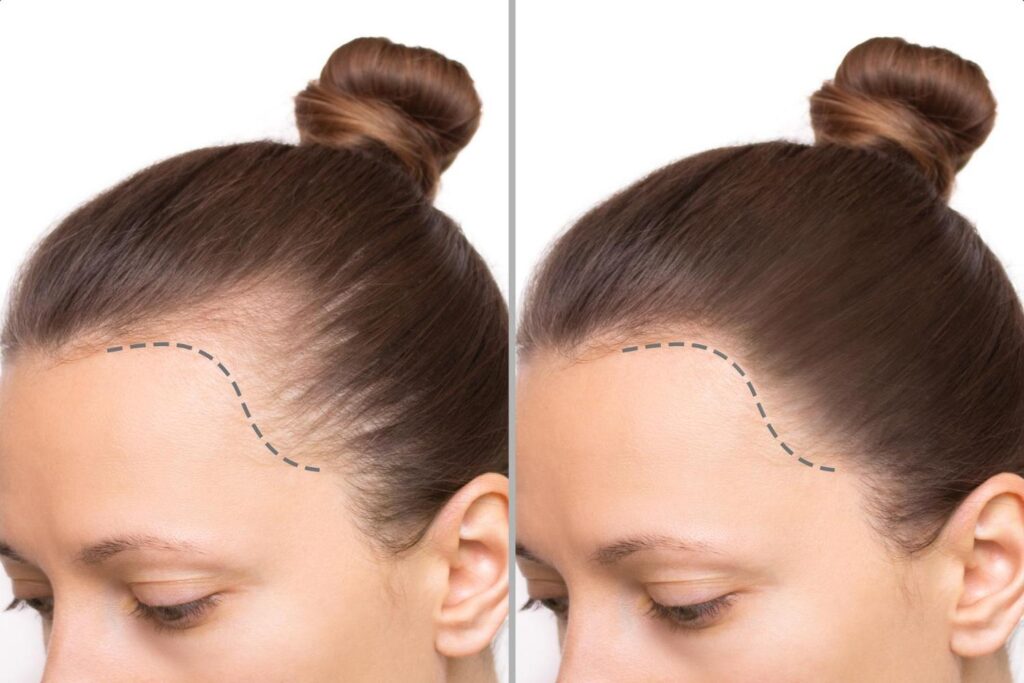
Image by Janeberry on Freepik
Creating a natural result is less about maximizing density and more about replicating how hair actually grows. Direction, variation, and subtle irregularities all play a role.
Hairlines, in particular, highlight this difference. A design that appears sharp or dense at first can look unnatural over time, while a more restrained, carefully planned hairline tends to age more convincingly. This is where clinics that prioritize planning and precision consistently produce more durable results.
What Patients Often Miss When Comparing Clinics
Most comparisons begin with visible factors, price, number of grafts, or advertised techniques. While these are important, they rarely tell the full story.
Less visible factors often have a greater impact:
- how donor areas are preserved
- how long-term hair loss is considered
- how consistently results are replicated across patients
- how involved the medical team is throughout the process
These elements are harder to measure, but they are often what define whether a result will still look natural years later.
Results Continue to Evolve After the Procedure
Even the most carefully executed transplant does not produce immediate final results. Hair grows in cycles, and the months following the procedure are critical.
Clinics that remain involved during this phase tend to see better outcomes. Patients receive guidance on how to support healing, protect grafts, and manage expectations as the hair develops.
According to the American Academy of Dermatology, maintaining proper scalp care and post-procedure conditions plays an important role in supporting healthy hair growth. In the context of transplantation, this can influence how well grafts establish and how evenly the final result appears.
Looking Beyond the Surface
As more patients explore hair transplantation, the conversation is shifting. The focus is no longer just on whether a clinic can perform the procedure, but on how well it can deliver results that feel natural, consistent, and lasting.
Not all hair transplant clinics deliver the same results because they are not built the same way. Behind every outcome is a process, one that includes planning, decision-making, execution, and follow-up. Clinics that treat these elements as a connected system tend to produce results that hold up over time. And for patients, that difference is often the one that matters most.
Stay in touch to get more updates & news on Daily!