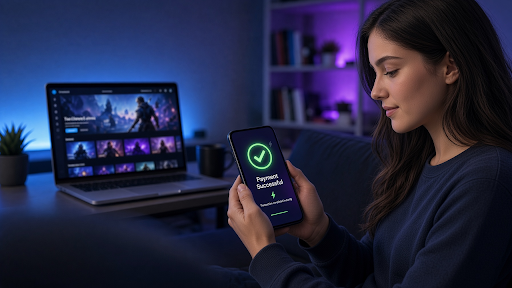
When did you last type a 16-digit card number to pay for something online? For most people I know, the answer is years ago. Modern payments are using open banking to approve purchases using 2FA, fingerprint, face scan, or BankID. The technology verifies your identity, your age, and your bank account. Everything is connected in one place.
The bank itself now also moves the money in seconds. Gaming and online casinos run on that infrastructure now. Deposits got fast a long time ago. It’s the withdrawals that are finally catching up, and that’s where the real story is.
What Actually Counts As an Instant Payment?
An instant payment is a bank-to-bank transfer that lands in the recipient’s account within seconds, no matter what time or day. In Europe, the standard is the SEPA instant credit transfer, and people have been able to use it since October 2025. For gamers, it means they no longer have to depend on just third-party open banking solutions such as Trustly. Players both deposit and withdraw in seconds by just using their own bank.
This is what it looks like. The first is pay by bank, you pick your bank at checkout, approve the amount in your banking app, and the money goes straight to the merchant. The second is the instant payout, which runs the same rail in reverse and sends winnings, refunds, or earnings back to your account.
However, there’s a safety layer people tend to miss. Banks now check the name on the receiving account against the account number before you send, and they warn you when the two don’t match. For a payment method that depends completely on trusting your bank, I’d argue that check matters more than speed.
One honest caveat. “Instant” describes the rail, not the merchant. A transfer can clear in 10 seconds and still sit for hours in someone’s review queue before it’s released.
Gamers Trained Themselves Out of the Checkout Screen
Gaming got people used to speed long before the banks caught up. Here’s how a typical player in Europe moves money in 2026:
- A wallet balance, topped up once and spent across a whole game store
- Money sent to friends to split a co-op pack or pay back a season pass, over SEPA Instant in the countries that support it
- Purchases on mobile approved with a fingerprint or a face scan
- Direct bank payments at game web shops, with no card form in sight
Every one of those habits shortens patience. If a skin lands in your inventory the second you pay, a three-day wait for anything else feels like a bug. Across Europe, account-to-account payments now make up about 15% of the market, with the strongest numbers in the Netherlands, Poland and Spain.
Casinos Are the Toughest Test, And the Nordics Got There First
Online casinos move money in both directions, often several times a week per player, under strict identity and anti-money-laundering rules. That’s why the clearest data on instant payments comes from this corner of the market.
The Deposit Doubles as the Sign-Up
In the pikakasinot pay-and-play model, there’s no registration form at all. You pick an amount, log in with your bank’s electronic ID, approve the transfer, and the site builds your account from the details your bank has already verified. Testers who timed it in May 2026 recorded deposits of under 30 seconds from click to playable balance.
Withdrawals are Where it Gets Interesting
An instant withdrawal sends your winnings back over the same instant payment network to the bank account you deposited from. At major Nordic banks, the money usually lands within seconds, but can take up to 15 minutes for approval. Players get faster access to their own money, and it can only return to their account.
Why an Instant Withdrawal can Still Take Hours
The payment rail is rarely the hold-up. One independent test team opened 41 real casino accounts between January and August 2026, timed 82 withdrawals, and found the delay almost always sat in the operator’s own review queue. These were the usual causes:
- First withdrawals. Licensed operators verify your identity before the first payout, and that can take anywhere from ten minutes to five business days.
- Weekends. Requests made between Friday 6 p.m. and Sunday 10 p.m. took 34% longer on median, and card and standard bank transfers caused almost all of that delay.
- Per-request caps. Six of the seven fastest operators capped their quickest method at €500 to €2,000 per request, so a €4,000 win gets split up or pushed onto a slower rail.
- Big deposits. In a separate test, an EUR 800 deposit triggered a source-of-funds check that held the next withdrawal for about four hours.
Why Operators and Platforms Keep Switching
For businesses, instant payments are a retention tool first and a cost-saving second. Survey data published by iGaming Business in January 2026 found that 82% of European online gamblers call fast payouts important when choosing a platform. More than half said they’d likely move to a site that offers instant withdrawals.
A US study points the same way. Of players paid within 24 hours, 78% topped up their account again within a week. Among players who waited more than five days, only 32% did.
Card payments also fail more often in this sector, because card issuers apply their own rules to gambling transactions. Bank-to-bank transfers avoid most of those declines, along with the card chargeback process.
At an operator roundtable in June 2026, nearly every market represented reported that bank deposits cost the customer nothing. Romania was the exception, since operators there have paid a 2% monthly tax on player deposits since January 2019.
Streaming, Creators, and What’s Next
Instant payments reach past games and casinos. To cite an instance, creator tipping has grown into a real payment category. Viewers tip streamers inside the chat they’re already watching, and the same one-tap pattern now covers tournament entry fees and support for mod creators.
Subscriptions keep getting bundled as well, with game and media services sharing one monthly charge. Both depend on payments that settle fast and renew without anyone thinking about them.
Instant payments are now normal across European gaming, and in the best markets the gap between depositing and getting paid has shrunk from days to minutes.