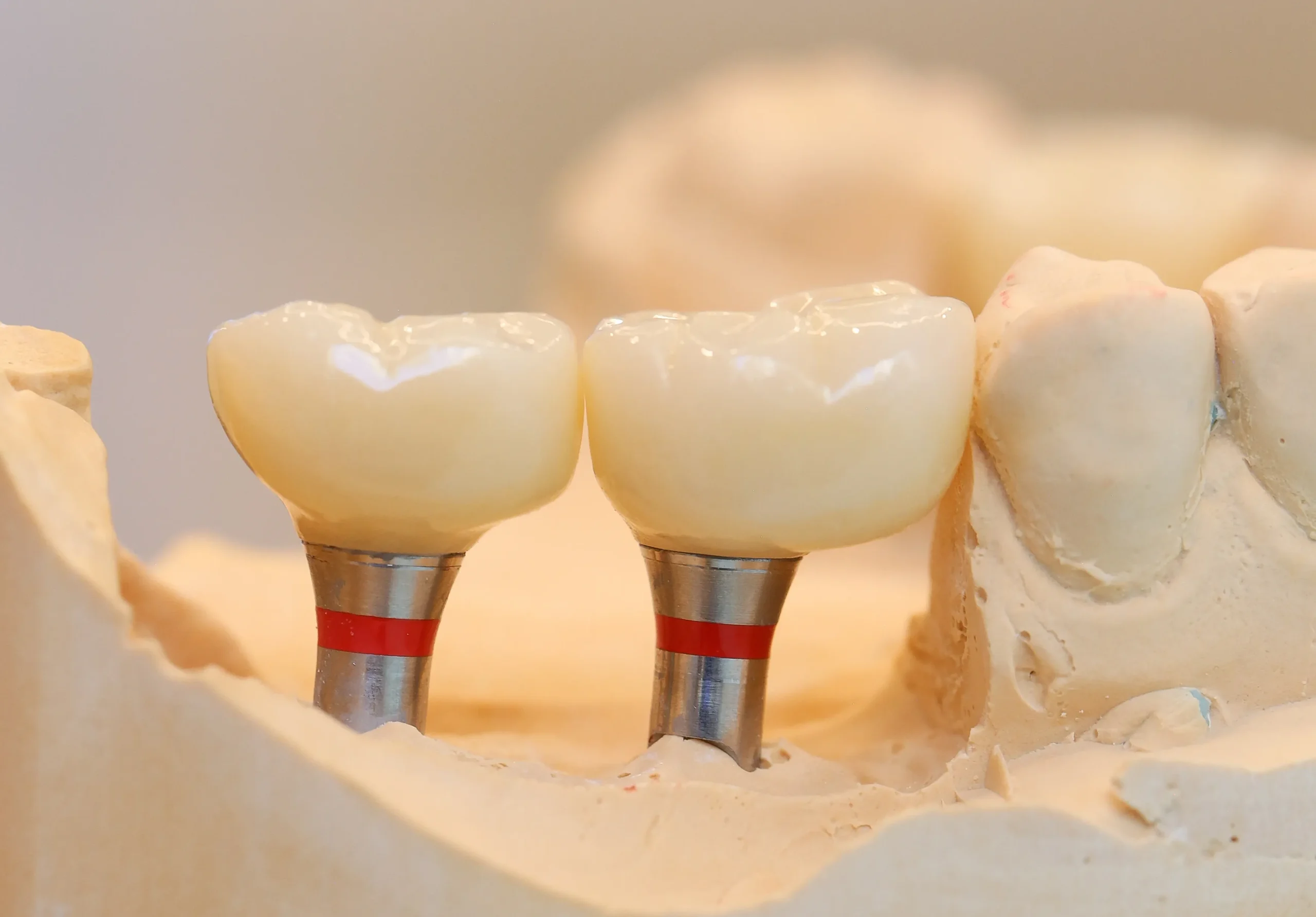
Walk into any consultation about crown work and you’ll be presented with at least three material options. Porcelain-fused-to-metal, E-max lithium disilicate, gold alloys, and zirconium dioxide all have their place, and a competent dentist will explain why one fits a specific tooth better than the others. The problem is that most patients don’t get this conversation properly. They get a quick recommendation and a price. DentPrime takes a different approach, walking patients through the trade-offs before treatment starts so the choice is made with full information rather than after the fact.
The Older Standard: Porcelain-Fused-to-Metal
For decades, the default crown was a porcelain shell baked over a metal substructure. The metal gave it strength, the porcelain gave it a tooth-like appearance, and the cost was low enough to make it the workhorse of dentistry. The drawbacks became obvious after years of use. The metal layer often showed as a dark line above the gum once tissue receded. Some patients reacted to nickel or other base alloys. And the porcelain itself could chip, exposing the metal underneath.
These crowns are still used in some clinics, but most modern practices have moved on. International patients researching options for their long-term care almost never end up with this material today.
E-max: Strong on the Front, Weaker on the Back
E-max crowns are made from lithium disilicate, a glass-ceramic that produces beautifully translucent results. For front teeth where aesthetics matter most, E-max can be the right call. The catch is mechanical. E-max is roughly half as strong as zirconia under bite force, which means it’s not the right choice for molars or anyone with a heavy bite. Patients who grind their teeth at night usually rule it out for the back of the mouth on dentist’s advice.
Gold and Other Metal Crowns
Gold alloy crowns are still occasionally placed on back molars where the appearance doesn’t matter and durability is everything. They last for decades without chipping and are gentle on opposing teeth. The reason they’ve fallen out of fashion is purely cosmetic. Almost no patient today wants visible metal in their mouth, even on a back molar that only shows during a wide laugh.
Why Zirconia Has Become the Modern Default
The shift to zirconium crowns happened because the material solved every weakness of the alternatives at once. Zirconium dioxide is roughly twice as strong as E-max and matches the durability of gold. There’s no metal substructure, so no dark gum line and no allergic responses. Modern multi-layer zirconia carries a built-in translucency gradient that mimics how real enamel reflects light, which closes the aesthetic gap that used to favour E-max for front teeth. And the material is biocompatible, so the gum tissue around it stays healthy long-term.
For most patients today, zirconia is the right answer for both front and back teeth. The exceptions are narrow and usually relate to extreme aesthetic demands on a single front tooth where E-max may still hold a slight edge.
How DentPrime Walks Patients Through the Decision
The clinic’s consultation process treats material selection as a discussion rather than a decision the dentist makes alone. After the clinical examination and imaging, patients are shown why a particular material suits their case. Bite force, gum health, position of the tooth, aesthetic priorities, and long-term plans all factor in. The honest recommendations sometimes surprise patients. Not every front tooth needs E-max, and not every back tooth needs gold. In most cases zirconia is the right answer for both, but the reasoning matters more than the conclusion.
Final Thoughts
Choosing the right crown material is a decision that affects how your teeth look and feel for the next fifteen to twenty years. The clinics that take the time to explain the options properly tend to produce the best long-term results, because patients understand what they’re committing to. That’s the consultation standard DentPrime works to, and it’s why so many international patients leave Antalya with the right material in their mouth rather than the easiest one to recommend.
Stay in touch to get more updates & news on Daily!