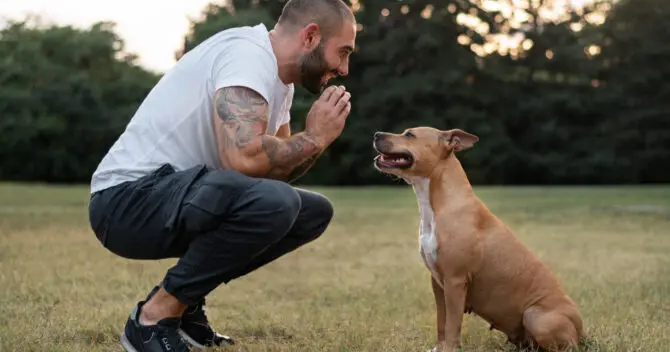
If you’ve ever felt like you’re walking on eggshells around your dog because of growling, lunging, or unpredictable reactions, you’re not alone, and you’re definitely not “bad at training.” Many dogs develop challenging behaviors not out of stubbornness, but because they’re anxious, overwhelmed, or simply haven’t learned a better way to communicate what’s going on in their minds.
The good news? Positive dog training gives you tools that actually make lasting change possible and it’s way more than treats and applause. Its foundation is science: dogs learn best when they understand what’s expected and get rewarded for calm, thoughtful responses instead of being corrected for mistakes. This approach helps dogs feel understood rather than intimidated, which matters a lot when behavior is driven by fear or stress rather than defiance.
Why Aggression Often Isn’t What You Think
Let’s start by clarifying something important: when dogs act aggressively, it’s usually communication, not cruelty. What looks like “bad behavior” is frequently your dog’s way of saying they’re uncomfortable, scared, or uncertain about what they’re being asked to do.
A dog might show stiffness, a fixed stare, growling, or snapping around particular people, other dogs, or environments because:
- They haven’t learned a better way to cope
- They lack early socialization
- They feel overwhelmed by their surroundings
- Fear or frustration drives their impulse to react
These reactions are understandable once you see them as responses to stress, not intentional disobedience. When you learn what triggers those responses, you can tailor your dog’s learning so that those triggers become safe over time – not something to avoid forever.
One practical way this happens is through targeted classes that help dogs learn new patterns in a controlled setting. Enrolling in a program built to help reactive dogs – like structured Dog Classes for Aggressive Dogs from PawChamp gives you guided support from people who know how to shape responses from fear to focus under positive reinforcement. This kind of structured learning leads to real steps forward instead of just hoping for better behavior.
What Positive Dog Training Really Looks Like
So what do people mean when they talk about positive dog training? At its core, it’s about building behavior through rewards and encouragement, not fear or punishment. Decades of canine behavior research have shown that dogs trained with rewards not only learn skills more reliably but also enjoy the process and tend to have fewer stress responses in everyday life.
A big piece of that is letting your dog choose calm behaviors and reinforcing them, so they associate positive outcomes with the actions you want to encourage.
Here’s what that looks like in practice:
- Reward your dog immediately when they do something you want more of
- Keep cues simple and clear
- Break down new skills into tiny steps
- Make sure lessons are short and tailored to your dog’s comfort level
- Avoid harsh corrections that can increase anxiety
When it comes to helping dogs overcome fear, reactivity, or aggressive tendencies, not all training methods are created equal. Exploring Positive Dog Training vs Punishment can give you a clear picture of why reinforcement-based approaches lead to more confident, well-behaved dogs and why fear or correction often backfires. This perspective sets the stage for understanding practical techniques that actually work in everyday life.
How This Helps Aggressive or Reactive Dogs
When a dog has had repeated stressful reactions, like barking at other dogs or lunging when strangers approach. They’ve built a pattern in their brain: a scary stimulus leads to an emotional reaction. Positive training doesn’t just stop the behavior – it reshapes the emotional association. Instead of fear → reaction, training builds neutral or calm response → reward. Over time, your dog begins to look to you for what happens next instead of reacting instinctively.
Practical Tools and Everyday Training Tips
Putting this into practice day to day can feel overwhelming if you’re starting from “complete chaos” on walks. Here’s a more grounded way to bootstrap your training:
Find support and structure. Many owners benefit from joining dog training classes that focus on behavior fundamentals and small group learning. These settings make it easier to work on impulse control and confidence before expecting perfect behavior out in the world.
Use modern tools. Apps and programs now let you train in small, achievable steps that fit into your everyday life. For example, structured lessons and reminders help keep training consistent even when life is busy.
Understand your dog’s thresholds. Start training around triggers at a distance where your dog is curious but calm. Reward every moment of calm presence with praise or treats. Your dog learns that staying engaged with you is predictably good.
Keep training short and regular. Five to ten minutes a few times a day beats one long session once a week. Dogs learn through repetition and consistency, not intensity.
Everyday Integration: Turning Training into Habit
One of the biggest shifts for owners is seeing training as everyday life, not a separate chore. You reinforce calm behavior when you:
- Wait with your dog before opening the front door until they settle
- Use simple cues while walking instead of reacting to every distraction
- Praise and reward for focus during minor triggers so big ones become manageable
- Celebrate small wins: a glance back, a smooth sit, a relaxed walk past a trigger
Behavior modification takes time. But the more consistently you reinforce calm choices, the more your dog learns that stress doesn’t have to lead to reaction. Calm focus pays off!
Bringing It All Together
Positive dog training isn’t about being kind only when it’s easy. It’s about understanding your dog’s emotional world and shaping it so fear and confusion give way to trust and clarity. When you build learning around reward and structure, even dogs with challenging histories can grow into confident partners.
Keep an eye for more latest news & updates on Daily Uk!