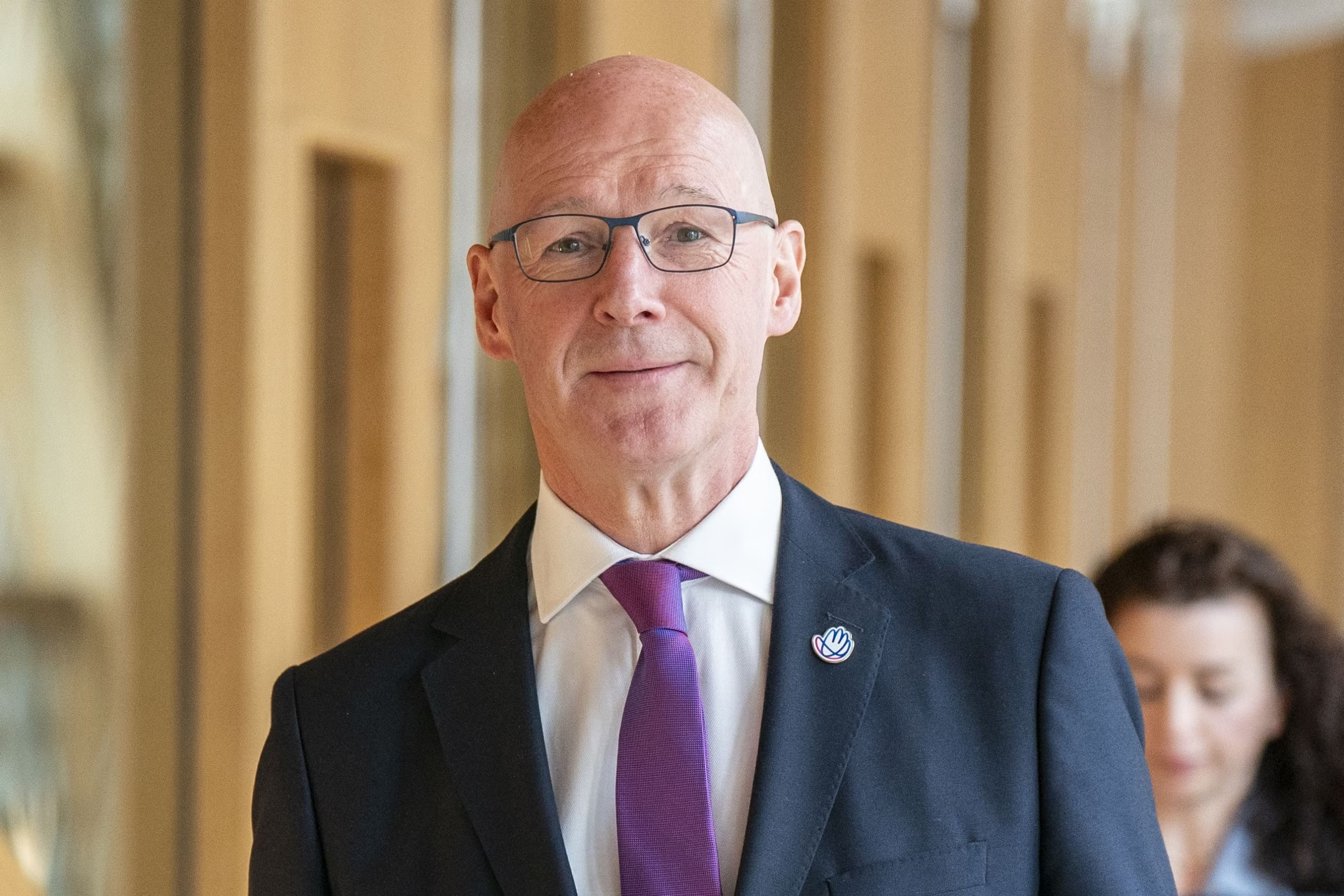
Scottish First Minister John Swinney has launched one of his clearest defences of immigration to date, arguing that Scotland’s economy, workforce, and long-term demographic stability depend heavily on welcoming new arrivals. His remarks come during a period of rising support for Reform UK, whose anti-immigration message is gaining traction across parts of Scotland ahead of the 2026 Holyrood elections.
Swinney, speaking at a policy event in Edinburgh, urged political leaders to resist “simplistic narratives” around border control and instead focus on the economic realities facing Scotland. He warned that shrinking population growth, worker shortages, and an ageing demographic make immigration a “strategic necessity rather than a political choice.”
The comments represent an assertive attempt by the First Minister to shift the national conversation as Reform UK continues to chip away at both the SNP and Labour in key constituencies. Recent polling shows the party gaining momentum particularly in regions that previously saw little organised right-wing political activity.
A Strong Defence of Immigration Policy
During his speech, Swinney emphasised that Scotland’s prosperity has long been supported by the contributions of migrants, describing them as “integral to the fabric of our society.” He highlighted sectors such as healthcare, agriculture, hospitality, and technology, all of which rely significantly on international workers.
“Without inward migration, many of our essential services simply could not function,” he said. “We must recognise the global competition for talent and position Scotland as a country that welcomes skills, values diversity, and supports those who choose to build their lives here.”
Swinney also criticised attempts by competing parties to frame immigration as a threat, arguing that fear-based rhetoric risks damaging social cohesion and Scotland’s global reputation. He insisted that responsible policy-making requires acknowledging demographic trends, citing government projections that Scotland faces a population decline in the coming decades without sustained migration.
Reform UK’s Rising Popularity
The First Minister’s comments arrive as Reform UK’s profile sharply increases in Scotland. Traditionally, the party has maintained stronger support in England, but recent surveys indicate a notable shift north of the border. Analysts attribute this growth to several factors:
- Disillusionment with the SNP after internal disputes and stagnation around independence discussions.
- Growing concerns about public services, particularly healthcare waiting times and economic pressures.
- A wider UK-wide appetite for populist messaging, especially on immigration and cultural issues.
Reform UK’s Scottish representatives have repeatedly criticised what they call “reckless open-border policies,” insisting that Scotland’s challenges stem from prioritising migration over investment in domestic workers. Their messaging echoes themes used in previous UK general elections, where the party positioned itself as the “voice of common sense” on national identity and border security.
The party has also capitalised on frustration among some rural and semi-urban communities who feel disconnected from Holyrood’s policy decisions. In these regions, Swinney’s pro-immigration message faces its toughest scrutiny.
Economic Realities Highlighted by Experts
Economists and business leaders largely supported Swinney’s position, pointing to long-standing workforce shortages across Scotland. Sectors such as social care have struggled for years to recruit and retain domestic workers, prompting employers to seek international candidates.
The Scottish Fiscal Commission has repeatedly warned that without immigration, Scotland risks:
- Declining working-age population
- Increased pressure on public spending
- Slower economic growth
- Diminished competitiveness in global markets
Business groups, including chambers of commerce, argue that immigration is crucial to sustaining small enterprises and rural economies. Many agricultural businesses depend on seasonal workers from abroad, while the tech and renewable energy sectors rely heavily on attracting specialised talent.
Despite these realities, public perception remains mixed. While urban centres tend to view migration positively, polls suggest rural voters are more divided, particularly when reforms to public services feel slow or insufficient.
Political Tensions Inside Scotland
Swinney’s forthright comments have sparked political debate across Holyrood. Scottish Labour called his speech “a welcome shift toward honesty,” while simultaneously criticising the SNP for “years of inconsistent messaging” around economic planning.
The Scottish Conservatives, meanwhile, accused the First Minister of “ignoring legitimate public concerns,” arguing that his government has failed to create infrastructure capable of supporting long-term population growth.
Reform UK responded sharply, claiming Swinney’s defence of immigration demonstrates “how out of touch the SNP has become.” The party insists that public services are already stretched thin and that Scotland must prioritise citizens before expanding migration routes.
Green and Liberal Democrat leaders supported Swinney’s stance but pushed for clearer integration strategies and better protections for migrant communities.
A Strategic Moment Ahead of Elections
With the 2026 elections approaching, immigration is shaping up to be one of the most contentious issues in the campaign. Analysts suggest Swinney’s remarks signal a deliberate shift by the SNP to reinforce its progressive identity while countering the growing influence of right-leaning populism.
Some political strategists believe the First Minister’s defence of immigration could energise the SNP’s urban base, which tends to lean socially liberal. However, they caution that regions experiencing economic stagnation may view the debate through a different lens, creating challenges for a party already working to rebuild trust.
The electoral landscape is changing: where once Scottish politics was defined almost entirely by the independence question, issues like population growth, cost of living, energy security, and immigration are now generating intense public debate.
Public Mood: A Complex Picture
Public opinion remains far from unified. Surveys reveal that many Scots recognise the economic value of immigration but simultaneously express concern about the pace of change in their local areas.
Younger voters tend to support more open immigration policies, viewing diversity as a strength and an opportunity for global engagement. Older voters, especially in communities dealing with strained health and housing services, are more inclined toward restriction or reform.
Political sociologists note that the surge in Reform UK support does not necessarily translate to widespread anti-immigration sentiment but may reflect broader frustration with the political establishment. Still, the party’s messaging resonates strongly with some voters who feel overlooked or unheard by traditional parties.
Scotland’s Long-Term Demographic Challenge
Underlying the political drama is a demographic issue that experts say cannot be ignored. Scotland’s population is ageing more rapidly than the rest of the UK. Birth rates have declined, and some rural regions face depopulation as young people move to cities or leave the country altogether.
Without inward migration, economists warn that Scotland could face:
- Labour shortages
- Reduced tax revenue
- Increased demand for healthcare and pensions
- Difficulty sustaining rural communities
Swinney’s message, therefore, is not simply political—it is tied to a broader vision of how Scotland can maintain its economic vitality and social structure in the decades ahead.
Conclusion
John Swinney’s defence of immigration marks an important moment in Scotland’s political debate. As Reform UK gains ground and shifts the national conversation, the First Minister is attempting to reframe immigration not as a cultural battleground but as a practical necessity for Scotland’s future.
Whether his message resonates across the country remains to be seen. What is clear is that immigration, once a peripheral issue in Scottish politics, now stands at the centre of a defining political struggle—one that will shape the country’s economic direction and electoral landscape for years to come.