The Hitaar is more than just a musical instrument. It is a symbol of Arab culture, carrying the stories, emotions, and traditions of generations. From festive celebrations to quiet reflective moments, the Hitaar brings a unique resonance that touches the heart. In this article, we explore the history, significance, and beauty of this enchanting instrument.
What is a Hitaar?
At its core, the Hitaar is a stringed musical instrument. It has a distinct sound that sets it apart from other instruments in the Arab musical world. With its deep, melodic tones, it can evoke both joy and melancholy. The Hitaar is traditionally played by plucking its strings, producing a sound that is both soothing and expressive.
We can think of it as the voice of Arab history, a way for people to share their stories without words. Every note carries a piece of heritage, and every melody has a memory attached to it.
The History of the Hitaar
The origins of the Hitaar date back centuries. It is believed to have evolved alongside Arab culture, blending influences from neighboring regions while maintaining a unique identity. Historically, the Hitaar was more than just an entertainment tool—it was a means of preserving oral stories and traditions.
In the past, travelers and nomads would carry the Hitaar with them. By playing it around campfires or at gatherings, they passed down stories, legends, and emotions through music. We can imagine the soft plucking of strings under the desert sky, with melodies echoing across the dunes, connecting people to their roots and each other.
Cultural Significance of the Hitaar
The Hitaar is deeply woven into Arab cultural identity. It is a presence at weddings, religious ceremonies, and local festivals. We see it as a bridge between generations, where young and old gather to enjoy and learn from each other.
Unlike modern instruments that often focus solely on rhythm or melody, the Hitaar combines both. It has a storytelling aspect, which allows musicians to express complex emotions. We often hear it in songs of love, longing, celebration, and even remembrance. Its cultural role goes beyond music—it represents community, memory, and identity.
How the Hitaar is Made
Making a Hitaar is an art in itself. Traditionally, artisans carefully select wood, strings, and other materials to craft an instrument that is both beautiful and sonically rich.
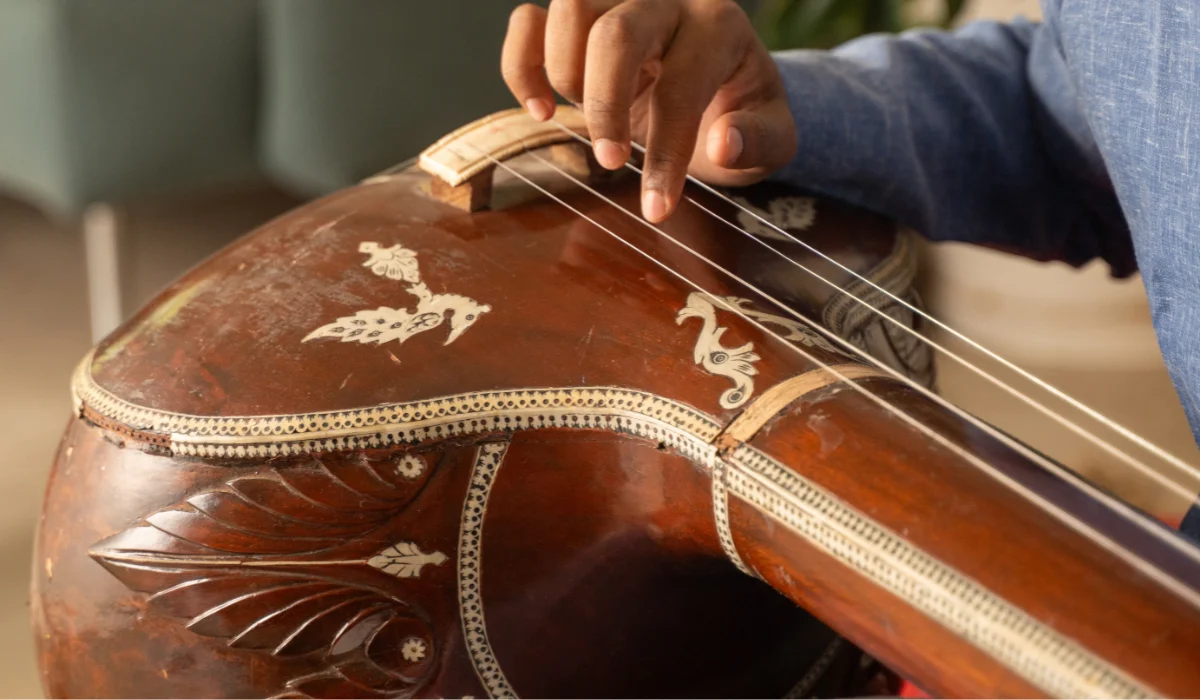
The body of the Hitaar is usually made from high-quality wood, chosen for its resonance and durability. The strings are carefully tuned to achieve a specific tone, and the instrument is often decorated with intricate patterns reflecting Arab artistry.
We often marvel at the craftsmanship involved. Each Hitaar is unique, carrying the personal touch of the artisan who made it. The process is labor-intensive, but the result is a piece of art that produces music capable of stirring emotions.
Playing the Hitaar
Playing the Hitaar requires skill, patience, and emotion. Musicians pluck the strings with precision, sometimes using their fingers and other times with small picks. Each pluck produces a tone that can vary from soft and soothing to loud and dramatic.
We notice that great Hitaar players don’t just follow notes—they tell stories. Their fingers move across the strings almost like they are painting pictures with sound. The timing, rhythm, and intensity all work together to create an experience rather than just a song.
The Hitaar in Modern Times
Although the Hitaar is deeply traditional, it continues to evolve. Modern musicians experiment with fusion styles, blending the classic sounds of the Hitaar with contemporary genres like pop, jazz, and electronic music.
We see the Hitaar gaining recognition beyond the Arab world. International audiences are beginning to appreciate its unique tones and emotive capabilities. Social media and online platforms have also helped preserve and spread the art of Hitaar music, introducing it to younger generations who might not have encountered it otherwise.
Why the Hitaar Matters Today
In a world increasingly dominated by digital sounds and synthesized music, the Hitaar reminds us of the value of human touch and tradition. It connects us to the past, allowing us to experience the emotions of those who lived centuries before.
We feel that listening to the Hitaar is more than just entertainment. It is a way to slow down, reflect, and connect with something timeless. The music encourages mindfulness and appreciation for craftsmanship, culture, and history.
Learning to Play the Hitaar
For those interested in learning the Hitaar, patience and dedication are key. Beginners often start by understanding the structure of the instrument, the placement of strings, and basic plucking techniques.
We suggest starting with simple melodies, gradually building skill and confidence. Listening to experienced players can also provide inspiration and guidance. Over time, the Hitaar becomes not just an instrument, but a medium for personal expression and creativity.
The Hitaar’s Role in Storytelling
One of the most fascinating aspects of the Hitaar is its storytelling power. Historically, before written records were common, music was a primary method of preserving stories. Poets, travelers, and communities used the Hitaar to accompany their tales, turning songs into living history.
We notice that even today, composers use the Hitaar to convey emotions that words alone cannot express. From love and joy to sorrow and reflection, the instrument captures feelings in a way that resonates universally.
Celebrating the Hitaar in Festivals
Throughout Arab countries, the Hitaar is celebrated in cultural festivals and music events. These gatherings not only showcase talent but also keep traditions alive. Communities come together to enjoy the music, learn from experienced musicians, and foster a love for their heritage.
We see the Hitaar as a symbol of unity, as its melodies bring people together regardless of age or background. In these festivals, the instrument is not just played; it is experienced and appreciated as a living tradition.
The Emotional Connection
Perhaps the most remarkable thing about the Hitaar is its ability to evoke deep emotion. Listeners often describe feeling transported when they hear its music. A single melody can bring back memories, create nostalgia, or simply soothe the soul.
We feel that this emotional connection is what makes the Hitaar truly special. It is not just about sound—it is about the feelings, memories, and stories attached to it.
Preserving the Hitaar Tradition
As with many traditional arts, the future of the Hitaar depends on preservation efforts. Music schools, cultural organizations, and community initiatives play a vital role in ensuring that younger generations learn about and appreciate this instrument.
We believe that preserving the Hitaar is more than just saving an instrument—it is about maintaining a connection to history, culture, and identity. Teaching new players, documenting traditional techniques, and encouraging creative exploration are all ways we can ensure the Hitaar continues to thrive.
Conclusion
The Hitaar is not just a musical instrument; it is a living piece of Arab heritage. Its history, craftsmanship, and emotional depth make it a treasure worth celebrating. Whether played at a festival, shared among friends, or heard in a quiet moment, the Hitaar has the power to connect us to our past and inspire our future.
We invite everyone to listen, learn, and experience the magic of the Hitaar. By doing so, we keep its melodies alive, honor its tradition, and continue to celebrate the rich cultural tapestry it represents.
The next time you hear the soft plucking of Hitaar strings, remember that you are not just hearing music—you are hearing centuries of stories, emotions, and heritage coming to life.