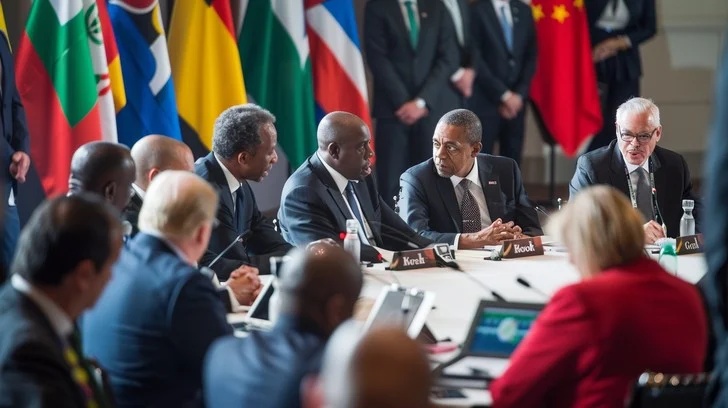
January 17, 2026 — International leaders renewed calls for restraint and de-escalation on Saturday as tensions across the Middle East showed little sign of easing, raising concerns about regional stability and the humanitarian consequences of prolonged conflict.
Diplomatic efforts intensified behind the scenes as foreign ministers, envoys, and international organisations worked to prevent further escalation following weeks of military exchanges, political uncertainty, and mounting civilian hardship. While no immediate breakthrough was announced, officials described ongoing discussions as “critical” to preventing wider regional involvement.
The latest developments come amid growing concern over civilian casualties, displacement, and infrastructure damage. Humanitarian agencies warned that conditions on the ground continue to deteriorate, with shortages of food, medical supplies, and clean water reported in multiple affected areas.
Military activity has remained sporadic but persistent, with airstrikes, artillery fire, and drone activity reported across several flashpoints. Although some pauses in fighting have been observed, analysts say they have been fragile and short-lived, often collapsing amid renewed hostilities.
World leaders used diplomatic channels to urge all parties to adhere to international humanitarian law and protect civilian lives. Statements from European, Asian, and African governments emphasised the need for restraint, dialogue, and a return to negotiations.
“The priority must be the protection of civilians and the prevention of further regional destabilisation,” said one senior European official familiar with the discussions. “Military escalation will only deepen suffering and make long-term peace more difficult to achieve.”
The United Nations has continued to play a central role in mediation efforts, coordinating with regional partners and major powers to explore pathways toward de-escalation. UN officials have stressed that humanitarian access must not be politicised, warning that delays in aid delivery could have irreversible consequences for vulnerable populations.
Displacement has emerged as a major concern, with hundreds of thousands of people forced to flee their homes amid insecurity and damaged infrastructure. Neighbouring countries are preparing contingency plans as fears grow that prolonged conflict could trigger additional refugee flows, straining already limited resources.
Economic repercussions are also being felt beyond the immediate region. Energy markets have remained volatile, with investors closely monitoring developments amid concerns that further escalation could disrupt key shipping routes and energy supply chains. Analysts say even limited disruptions could have global implications, particularly for fuel prices and inflation.
Meanwhile, international aid organisations have appealed for increased funding, warning that current resources are insufficient to meet growing needs. Medical facilities in affected areas are reportedly operating beyond capacity, with doctors facing shortages of equipment and personnel.
Political divisions within the international community have complicated diplomatic efforts. While there is broad agreement on the need to reduce violence, disagreements persist over responsibility, sequencing of ceasefire measures, and long-term governance solutions.
Some governments have emphasised security concerns, arguing that any de-escalation framework must address threats posed by armed groups. Others have stressed the importance of addressing root causes, including political grievances, territorial disputes, and long-standing humanitarian issues.
Public demonstrations have taken place in several global capitals, with protesters calling for an immediate ceasefire and increased humanitarian aid. These demonstrations reflect widespread public concern and growing pressure on governments to take more decisive action.
Experts in international relations note that the current situation underscores the complexity of modern conflicts, where local disputes intersect with regional rivalries and global power dynamics. They caution that failure to achieve de-escalation could lead to unintended consequences beyond the region.
Despite the challenges, diplomats involved in the talks expressed cautious optimism that sustained engagement could prevent further deterioration. “Dialogue remains open,” said one official. “The situation is fragile, but diplomacy has not been exhausted.”
As negotiations continue, the focus remains on preventing additional loss of life and creating space for political solutions. For civilians caught in the conflict, however, immediate relief remains uncertain, with many facing daily struggles for safety, shelter, and basic necessities.
The coming days are expected to be critical, as international mediators attempt to translate diplomatic pressure into tangible steps toward calm. Whether these efforts succeed may shape not only the future of the region but also broader global stability in the months ahead.