Choosing a brand asset management system isn’t just another software decision — it’s the backbone of how your brand shows up every single day.
And here’s the kicker: brands that stay consistent across all platforms can see revenue jump by more than 30 percent. So, that’s not just a “nice-to-have,” that’s real money on the table!
If you’re part of a startup team, this matters even more. A good brand asset management tool for startup teams keeps everything in one place, saves you from messy folders and endless Slack requests, and makes sure your brand grows without losing its voice.
This guide breaks it down in a simple way: the right questions you should be asking before you choose a system.
What Is a Brand Asset Management System and Why Does It Matter?
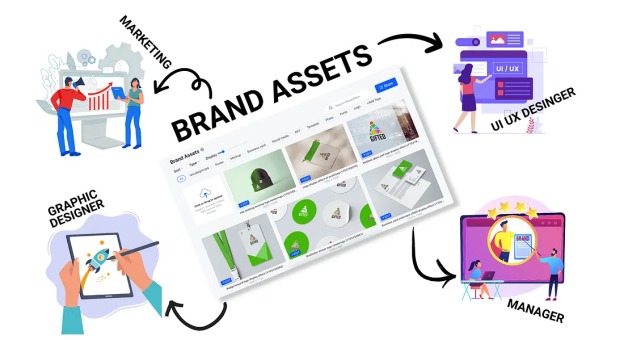
A Brand Asset Management (BAM) system is a platform designed to store, organize, and manage all your brand-related assets in one place.
These assets include:
- Logos, icons, and design files
- Brand guidelines and templates
- Product photos and campaign visuals
- Marketing collateral and copy decks
Unlike a shared drive or Dropbox folder, a BAM system is a brand’s command center. Here, every asset lives with the proper context, including usage rules, colors, file formats, and guidelines. That means no more grabbing the wrong logo, sending outdated decks, or wasting hours fixing mistakes later.
What Challenges Do Start-Ups Face Without a Brand Asset Management System?
Startup teams without a BAM system encounter several recurring problems:
- Inconsistent branding: Different logos, outdated pitch decks, mismatched tone of voice
- Wasted time: Hours lost searching for the right file in emails or shared drives
- Slower scaling: Onboarding new hires becomes chaotic
- Customer confusion: Mixed messages and visuals reduce recognition and trust
A BAM system eliminates these pain points. It centralizes your assets, enables version control, and maintains consistent guidelines. For startups, this saves time, reduces errors, and strengthens brand reputation.
How Does a Brand Asset Management System Drive Consistent Brand Excellence?
Consistency is about repetition without error. A BAM system supports this by:
- Ensuring every ad, deck, and social post looks and feels on-brand
- Reducing human error by standardizing templates and rules
- Speeding up marketing campaigns since everyone knows exactly where to pull approved assets
- Allowing collaboration across departments without version conflicts
- Protecting the brand during scale-up phases when teams expand quickly
When your brand is consistent across every touchpoint, customers build trust, and this trust translates into long-term loyalty and revenue growth!
What Startups Should You Look For in the Right BAM System?
Not all systems are built equal. When evaluating, consider:
- Ease of use: Can non-designers quickly find and use assets?
- Scalability: Will it grow as your team or product lines expand?
- Brand governance tools: Does it enforce usage rules automatically?
- Collaboration features: Can multiple teams work together without chaos?
- Customization: Can it reflect your unique brand guidelines instead of a generic library?
Ethos, for example, puts startup teams first with user-friendly access and customizable guidelines, making it easier to protect brand integrity from day one.
Why Should Startup Teams Invest in BAM Early On?
Startups often overlook brand systems, thinking they’ll “fix it later.” But later usually means after costly mistakes like inconsistent investor decks, mismatched visuals in media coverage, or confusing social branding.
A B2B Branding Survey by Circle Research found that 77% of marketing leaders say branding is critical to growth. Investing in a BAM system early ensures:
- Professionalism from day one
- Smooth scaling as your team grows
- Clearer investor and customer perception
- Saved time and reduced design bottlenecks
Consistency is one piece of the puzzle — but so is credibility. If you want to go deeper, check out our guide on ethical ways to build brand trust.
How Do You Choose the Best BAM for Your Team?
Here’s a simple checklist to guide your decision:
- Identify your biggest pain points (asset chaos? inconsistent branding?).
- Match features to those needs (permissions, templates, integrations).
- Test usability across your entire team, not just design.
- Compare cost vs. long-term ROI in saved time and brand consistency.
The right BAM should feel less like extra software and more like your brand’s operating system. Here’s how to create a solid brand strategy that your BAM can support.
Why Ethos Is the Best Brand Asset Management System for Startups?
Ethos isn’t just another storage platform — it’s a brand asset management (BAM) solution built for fast-moving startup teams. From onboarding and collaboration to guideline enforcement and AI tools, Ethos makes brand management simple and scalable.
Here’s a quick look at the key benefits for startups:
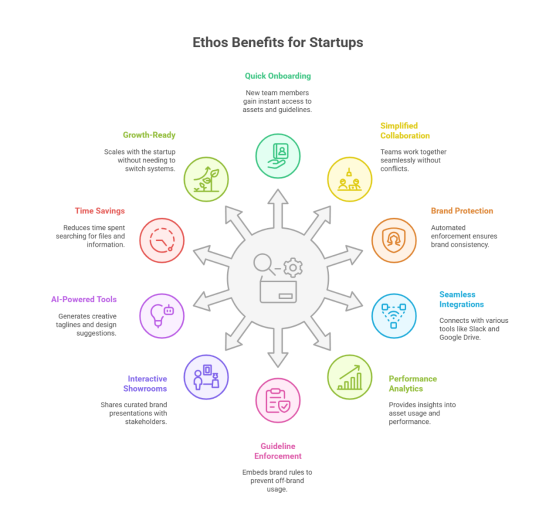
Startups move fast, but speed shouldn’t come at the expense of brand consistency. With Ethos, your team gets more than just organized assets; you also gain the ability to:
- Bring new team members up to speed in days, not weeks.
- Launch campaigns faster with zero guesswork about “where’s the latest version?”
- Keep brand knowledge accessible to everyone, not just one person.
- Impress investors and customers with a professional, consistent brand image.
By building brand discipline early, Ethos ensures your startup can scale quickly while staying true to its identity.
Final Thoughts: Is Ethos the Right Choice?
If you’re running a startup that’s scaling fast, you don’t just need another storage folder! You need a digital brand asset management system that can help your brand stay sharp, consistent, and easy for the whole team to use.
Ethos is built with that in mind. It gives startups the structure they need to look professional, move quickly, and build trust with customers and investors. By setting brand standards early, you save yourself from messy fixes later — and you create the kind of consistency that fuels long-term growth.
At the end of the day, brand excellence isn’t about restricting creativity. It’s about giving your team the confidence to create freely while knowing they’ll always stay on brand. The right BAM system makes that possible.
Revised FAQs
1. What is Brand Asset Management (BAM)?
Brand Asset Management is the process of keeping all your brand’s materials — logos, colors, images, videos, and guidelines — in one organized system. It helps make sure your brand shows up consistently across every platform and touchpoint.
2. What kinds of assets does a BAM system store?
A strong BAM system can manage everything from logos, icons, and templates to campaign photos, videos, style guides, and marketing materials. It’s basically a central hub for anything tied to your brand identity.
4. Can a BAM system work with tools like Google Drive or Slack?
Yes. Many BAM platforms integrate with everyday tools like Slack, Google Drive, Canva, and project management apps, so your team doesn’t have to change the way they already work — it just gets smoother.
5. Does a BAM system really enforce brand guidelines?
It can. The best systems let you attach usage rules directly to assets, so when someone downloads a logo or template, they see exactly how it should be used. This reduces mistakes and keeps your brand consistent without extra policing.
Keep an eye for more latest news & updates on Daily!