Diesel engines don’t fail quietly. When something goes wrong, it usually shows across multiple symptoms at once – rough idle, smoke, sluggish power, a code that doesn’t explain the actual problem. Good diesel engine diagnostics means finding the root cause, not just treating what the ECU logged.
What Is Diesel Engine Diagnostics
Diesel engine diagnostics is the systematic evaluation of fuel injection, compression, air supply, sensor signals, and mechanical engine condition.
Diesel engine diagnostics includes the fuel injection system (how injectors behave and when they fire), the crankshaft and camshaft signals and their timing, the compression in each cylinder, and what’s actually happening inside the cylinder during combustion. When you look at all of this together, you get a clear picture of how well the engine starts, runs, and produces power.
Regular checks matter because problems develop gradually. Catching degraded injector corrections or early compression loss early is always cheaper than fixing the consequences.
Diesel Engine Fault Diagnosis: Common Issues and Causes
Diesel engine fault diagnosis starts with reading symptoms correctly:
● Hard cold start – low compression, worn glow plugs, degraded injectors, or incorrect CKP-CMP synchronization. Symptoms overlap – you need measured data.
● Black smoke – excess fuel or insufficient air: clogged EGR, failing turbo, worn injectors.
● White smoke on cold start – unburnt fuel in the exhaust.
● Power loss without smoke – one cylinder dropping out of balance. No fault code if ECU corrections stay within range, but the driver feels it.
● Unstable idle, excessive vibration – cylinder imbalance, almost always.
How to Diagnose a Diesel Engine (Step-by-Step)
Knowing how to diagnose a diesel engine properly means following a sequence – not jumping to the most expensive component first.
- Visual inspection. Check for leaks, cracked boost hoses, corroded connectors. Many diesel problems start somewhere obvious.
- Read fault codes. Pull codes and note injector correction values. Heavy compensation on one cylinder is a direction, not a final answer.
- Fuel system check. Verify rail pressure, fuel supply, and return flow to ensure the system delivers under load.
- CSS script – cylinder power balance. Maps each cylinder’s power contribution across idle, acceleration, and overrun via micro-variations in crankshaft speed. Weak injector, partial blockage, and compression-related misfires all produce distinct signatures.
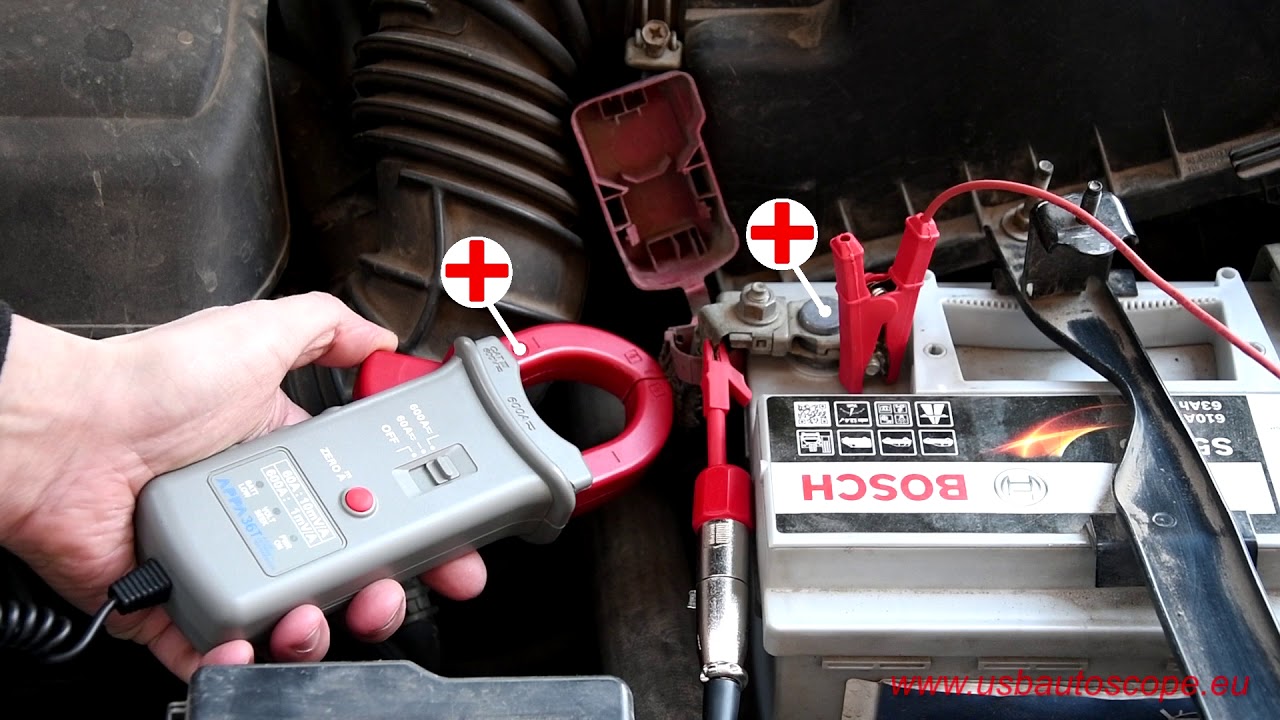
- Relative compression test (ElPower script). Clamp the CTi-1000 around the battery cable, crank the engine, get a cylinder-by-cylinder comparison in under ten minutes.
- CKP-CMP synchronization. Overlay both sensor signals. Timing chain stretch or incorrect assembly after a head job is invisible to a scanner but obvious on a waveform.
Using Autoscope 4 for Diesel Engine Diagnostics
The USB Autoscope 4 is a PC-based oscilloscope connecting via USB to a laptop. It runs automated diagnostic scripts – CSS, ElPower, Px – alongside live waveform capture, and for diesel work it replaces several separate tools.
What it captures: CKP and CMP signal shape and synchronization, injector current profiles via CTi-50 clamp (pre-injection and main injection pulses), starter current for relative compression via CTi-1000, and in-cylinder pressure via the PSG200 transducer through the glow plug port.
The core difference from a scan tool: a scanner reports what the ECU interprets. Autoscope 4 shows what’s actually happening at the cylinder level. The scripts process raw waveforms automatically and display results as clear graphs – cylinder efficiency, dynamic compression, injection timing – without requiring manual waveform interpretation.
Advantages of Advanced Diagnostic Tools
Advanced diagnostic tools like the USB Autoscope IV significantly improve the accuracy of diesel engine diagnostics. The technician works with real signals – current waveforms, pressure graphs, and sensor synchronization. This allows precise identification of the root cause.
One of the key advantages is the ability to detect hidden problems. Issues like slight compression loss, injector imbalance, or incorrect combustion timing often remain invisible to standard scanners. With waveform analysis and scripts like CSS and ElPower, these faults become clearly measurable and easy to isolate.
Time efficiency is another big advantage. Instead of tearing things apart and running multiple checks one by one, you can handle key tests — like compression, cylinder balance, and synchronization — in a single session. No unnecessary disassembly, less downtime, and faster decisions.
Advanced tools also help avoid mistakes. Built-in scripts guide the process and make sense of the data, so you’re not guessing. Rather than swapping parts “just in case,” you’re working with clear evidence, which leads to more accurate repairs and lower costs.
Conclusion
Good diesel diagnostics is all about catching problems before they turn serious. The USB Autoscope IV makes that possible by giving you real data instead of assumptions. Regular checks keep the engine running properly and help avoid issues that would otherwise stay hidden.
FAQ
What is diesel engine diagnostics?
Systematic evaluation of a diesel engine’s fuel system, compression, sensors, and mechanical condition using specialized tools – to find faults before they cause expensive damage.
How to perform diesel engine fault diagnosis?
Visual inspection → fault codes → relative compression (ElPower) → cylinder balance (CSS) → CKP-CMP synchronization → fuel system check. Each step narrows the cause without unnecessary disassembly.
How to diagnose a diesel engine step by step?
Start non-invasive: visual check, codes, ElPower compression test. Then go deeper with CSS cylinder balance and CKP-CMP sync verification. Add fuel and turbo checks if the injection system is suspect.
What is Autoscope 4 used for?
A professional oscilloscope for diesel diagnostics: CKP/CMP signal analysis, injector current waveforms, relative compression, and in-cylinder pressure – with built-in scripts that interpret the results automatically.
Stay in touch to get more updates & news on Daily!