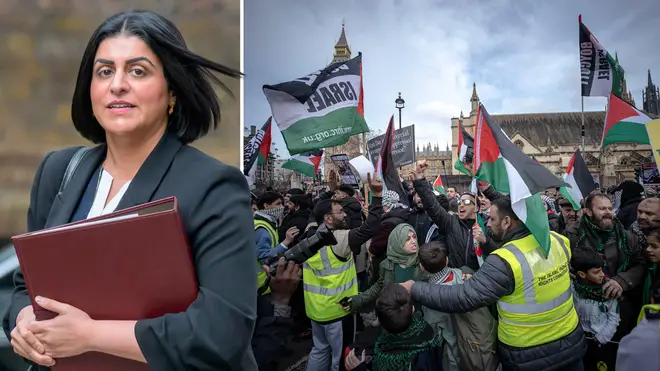
11 March 2026 – London — In a decisive move that has stirred political debate and public attention, Home Secretary Shabana Mahmood announced today that the annual Al Quds march, scheduled to take place in London this weekend, has been officially banned. Authorities cited serious concerns about public disorder and safety risks, marking the first such protest ban in the UK since 2012.
The Al Quds march, which has historically drawn both supporters and opponents, has often been the focus of controversy due to its pro-Palestinian messaging and perceived alignment with Iranian interests. Officials said intelligence suggested the potential for clashes between demonstrators and counter-protesters could escalate into violence.
Home Secretary Mahmood stated in a press briefing this morning, “Our primary responsibility is the safety of all Londoners. The intelligence assessments indicate a significant risk to public order if this march proceeds. While we respect the right to peaceful protest, we cannot allow demonstrations that have the potential to endanger lives.”
The Metropolitan Police will now deploy additional units across key central London locations over the weekend to enforce the ban and prevent any unsanctioned gatherings. Police Commissioner Diana Shaw emphasized that the move is precautionary, not punitive, and that the force is committed to upholding freedom of expression within lawful boundaries.
Political reactions have been swift. Opposition members have praised the decision as necessary for public safety, while some civil liberties advocates warn that banning protests could set a troubling precedent for future demonstrations. Lord Anthony Hargreaves, a former civil liberties advocate, remarked, “While safety is paramount, we must ensure that the government does not use security concerns as a blanket justification to curtail legitimate protest.”
In Parliament, MPs debated the implications of the ban, with particular focus on the fine line between security and civil rights. Labour leader Keir Starmer supported the decision, citing intelligence assessments, whereas some backbenchers argued that proactive engagement with organizers might have mitigated risks without outright cancellation.
Community leaders have expressed mixed reactions. Several London-based civic groups welcomed the ban as a necessary measure to prevent public disorder, particularly given recent tensions in nearby areas during previous demonstrations. However, members of the British Palestinian community expressed disappointment, stating that peaceful advocacy efforts are being unfairly affected by broader geopolitical concerns.
Analysts also point out the potential international implications of the decision. Relations between the UK and Middle Eastern nations may come under scrutiny, as such bans can be interpreted as symbolic gestures beyond mere domestic security. Some diplomats have cautioned that maintaining a neutral stance while protecting public safety will be essential to prevent diplomatic fallout.
The Home Office confirmed that anyone attempting to organize or participate in an illegal march could face fines or arrest. Public information campaigns are being rolled out to notify residents and visitors, including road closures and alternative routes in central London.
As the weekend approaches, all eyes will be on the capital to see how authorities balance public safety, civil liberties, and political sensitivities. The decision reflects the UK government’s growing emphasis on preemptive security measures amid a global landscape of escalating political tensions.