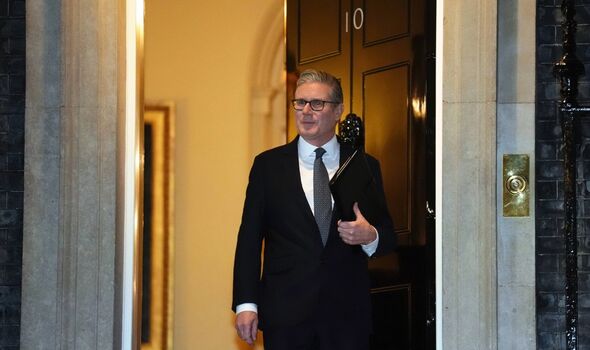
10 February 2026 – London Labour Party leader Keir Starmer addressed MPs in the House of Commons today, seeking to calm growing unrest within the party while reaffirming his commitment to steering Labour through a politically turbulent period. The session comes amid internal disagreements following recent controversies involving senior party officials and ongoing media scrutiny.
In his address, Starmer acknowledged the concerns of party members but emphasized the need for cohesion to address the nation’s pressing issues. “Labour must remain united to serve the people of this country. Our focus cannot be on internal squabbles but on delivering the policies that the public expects from us,” he told MPs, outlining priorities including housing reforms, climate action, and improvements to the NHS.
Tensions within Labour have intensified over the past weeks after the revelation of sensitive communications among prominent party figures. Some MPs have openly questioned Starmer’s leadership, calling for greater transparency and accountability. Others have voiced concern that the controversy could undermine Labour’s credibility ahead of regional elections and parliamentary debates on social welfare reforms.
Political analysts argue that Starmer’s public address serves as both a reassurance to party members and a strategic move to demonstrate his control over the party’s agenda. Dr. Simon Kettle, a senior lecturer in political science at the University of Manchester, said, “Starmer is trying to balance internal pressures with public expectations. His message is clear: the party’s unity and focus on governance are more important than distractions caused by controversy.”
Starmer also indicated plans for a series of consultations with MPs to discuss key policy initiatives and ensure alignment on legislative priorities. This move has been interpreted as an attempt to restore trust within the parliamentary party, reinforcing his leadership credentials and mitigating factionalism.
Meanwhile, opposition parties have seized on Labour’s internal disputes, framing the party as distracted from the issues facing the country. Conservatives have criticized Labour for focusing on leadership tensions rather than addressing economic challenges, such as inflation and public sector funding shortfalls. The political landscape, analysts say, remains highly competitive, with party image playing a pivotal role in shaping voter sentiment.
Despite the turbulence, Starmer’s address was met with cautious optimism by many party supporters. Some MPs praised his emphasis on policy and governance, noting that leadership clarity is essential in a time of uncertainty. Grassroots activists, however, continue to call for transparency measures to rebuild confidence and strengthen the party’s relationship with voters.
Observers also note that Starmer’s approach highlights a broader trend in UK politics, where party leaders must simultaneously navigate internal pressures, public opinion, and media scrutiny. The ability to maintain focus on governance while addressing controversies is seen as a critical skill for political survival in the current climate.
As the Labour Party works to stabilize internal relations, attention now turns to upcoming parliamentary sessions where debates on housing, social security, and education are expected to dominate. Starmer’s leadership strategy will likely influence not only party cohesion but also public perception of Labour as a credible governing alternative.
For now, the message from Starmer is clear: despite internal disagreements, Labour intends to move forward with a unified policy agenda, prioritizing the needs of citizens over party politics. Whether this approach will satisfy both MPs and the public remains to be seen, but the stakes for the party’s future are high as it navigates a period of unprecedented scrutiny.