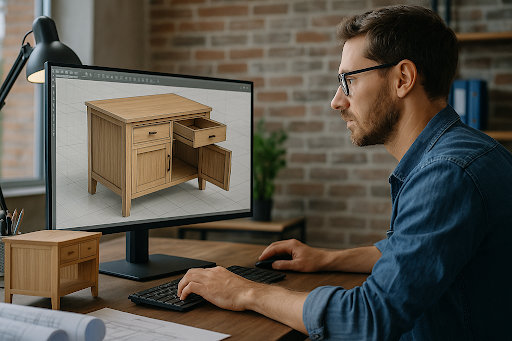
Furniture design has always been a balance between artistry and functionality. But in today’s digital-first world, designers, architects, and manufacturers are shifting away from hand sketches and traditional blueprints toward 3D millwork CAD drawings. This transformation isn’t just about aesthetics, it’s about precision, efficiency, sustainability, and market competitiveness.
For businesses in the USA furniture industry, millwork drafting services are rapidly becoming the backbone of design and production. From custom millwork drafting for luxury interiors to CAD furniture design for large-scale commercial spaces, the adoption of advanced digital tools is setting new benchmarks.
So, what’s driving this change? And how exactly are 3D millwork CAD drawings reshaping the way furniture is conceptualized, built, and delivered? Let’s dive deeper.
What Are 3D Millwork CAD Drawings and Why Do They Matter?
Before exploring their impact, let’s clarify what 3D millwork CAD drawings actually mean.
- Millwork CAD Drawings: Digital drafts that detail every element of wooden components from cabinets and shelves to intricate moldings and fixtures.
- 3D Perspective: Unlike 2D drawings, 3D models bring furniture to life, showing scale, texture, and fit within an environment.
- Application: These drawings guide both design decisions and manufacturing accuracy, minimizing errors and reducing costs.
In an industry where precision is everything, CAD-based millwork ensures that what’s designed on screen can be flawlessly executed in reality.
How Are Millwork Drafting Services Changing the Furniture Industry in the USA?
1. Unmatched Design Accuracy
Traditional blueprints often left room for interpretation, leading to miscommunication between designers, contractors, and manufacturers. With 3D millwork CAD drawings, every detail from joints to grain direction is clearly defined. This accuracy reduces material waste and saves time during production.
2. Customization at Scale
Today’s consumers demand personalized solutions. With custom millwork drafting, furniture companies can quickly create variations of a design without starting from scratch. Whether it’s a unique kitchen layout or a bespoke office desk, CAD-driven customization empowers businesses to scale personalization efficiently.
3. Enhanced Collaboration Across Teams
Furniture design involves multiple stakeholders architects, interior designers, engineers, and clients. Cloud-based CAD platforms allow seamless collaboration, where changes are instantly updated and accessible to all. This real-time coordination is especially valuable in CAD furniture design projects for commercial spaces.
4. Sustainability and Material Efficiency
According to Statista, the sustainable furniture market is projected to reach $59.8 billion globally by 2030. By using precise millwork CAD drawings, manufacturers can optimize material use, minimize offcuts, and select eco-friendly alternatives aligning with growing consumer demand for sustainable solutions.
5. Integration with CNC and Automation
Modern factories rely on CNC machines for furniture production. The beauty of 3D millwork CAD drawings lies in their direct integration with these automated systems. This ensures faster production cycles, fewer human errors, and improved scalability for USA-based furniture businesses.
Why Is the USA Leading in CAD Furniture Design Adoption?
The USA furniture industry is uniquely positioned for rapid CAD adoption. Here’s why:
- Market Size: The US furniture market is valued at over $250 billion (IBISWorld, 2024), demanding scalable and efficient design workflows.
- Innovation-Driven Culture: US-based startups and established manufacturers are quick to adopt new tech like BIM and parametric modeling.
- Consumer Trends: A surge in e-commerce furniture sales requires photorealistic CAD models for marketing and virtual staging.
This combination of consumer expectations and industrial capacity makes the USA fertile ground for millwork CAD innovations.
What Challenges Do Furniture Companies Face with CAD Adoption?
While the benefits are clear, the transition isn’t without hurdles:
- High Software Costs: Platforms like AutoCAD, SolidWorks, and Revit can be expensive for small firms.
- Skill Gap: Skilled CAD designers are in demand, and training teams takes time.
- Data Management: Handling large 3D models requires robust IT infrastructure.
- Resistance to Change: Traditional manufacturers may hesitate to shift from legacy methods to digital-first workflows.
Overcoming these challenges often involves outsourcing millwork drafting services or collaborating with a leading CAD design company to bridge expertise and cost barriers.
How Do 3D Millwork CAD Drawings Improve Client Experience?
One of the most underrated benefits of millwork CAD adoption lies in client engagement:
- Visual Clarity: Clients can “see” their furniture in a realistic 3D model before it’s built.
- Fewer Revisions: Detailed drafts reduce back-and-forth communication.
- Immersive Presentations: Augmented reality (AR) and VR integration with CAD allows clients to virtually walk through a designed space.
- Trust and Transparency: Clear documentation builds stronger client relationships.
For architects and contractors working on high-value residential or commercial projects, this transparency can be a deal-maker.
The Role of Custom Millwork Drafting in Modern Interior Design
Interior design in the USA is shifting toward functional aesthetics designs that look great but also maximize space utility. Custom millwork drafting plays a vital role here:
- Modular kitchen systems designed with precision
- Office workstations tailored for hybrid work setups
- Storage solutions for urban, space-conscious living
- Luxury interiors featuring bespoke moldings and cabinetry
By leveraging CAD furniture design, interior designers can pitch concepts that balance style, efficiency, and practicality.
Future Trends: What’s Next for Millwork CAD in Furniture Design?
The road ahead is exciting. Some of the emerging trends include:
- AI-Powered CAD Tools: Automating repetitive tasks and suggesting design optimizations.
- Parametric Modeling: Allowing real-time adjustments to designs based on input variables.
- Sustainability-First Designs: Using CAD to simulate material performance and lifecycle impacts.
- AR/VR Integration: Offering clients immersive previews before committing to builds.
- Cloud-Driven Collaboration: Making cross-border furniture design projects seamless.
By 2030, it’s likely that CAD-integrated millwork drafting services will be the industry norm, not the exception.
Key Takeaways: Why Businesses Should Invest in Millwork CAD Drawings
To summarize, 3D millwork CAD drawings are reshaping furniture design in the USA by:
- Delivering unmatched accuracy and reducing errors
- Enabling personalization at scale
- Driving sustainability and material efficiency
- Improving client satisfaction and collaboration
- Integrating seamlessly with automation and manufacturing systems
For businesses aiming to stay competitive in a fast-changing marketplace, investing in millwork drafting services is no longer optional, it’s essential.
Conclusion:
As the furniture industry continues its digital evolution, the role of CAD furniture design will only expand. From streamlining workflows to enabling future-ready innovation, the impact of millwork CAD is undeniable.
For businesses in the USA and globally finding a reliable partner for custom millwork drafting can accelerate this transformation. Whether you’re a furniture manufacturer, architect, or interior designer, collaborating with a leading UK CAD design company can provide the expertise and scalability needed to stay ahead in 2025 and beyond.
Keep an eye for more latest news & updates on Daily!