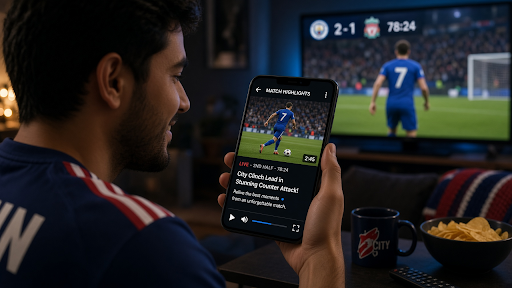
Ask a fan under 35 where they followed last night’s match, and you’ll rarely hear the name of a single website. They are on their phones and checking statistics, debating other fans on players’ performances, and some even place a wager now and then. Reading on sports websites is no longer popular among the younger generation.
Scores and transfer news still matter, but every app on your phone has them within seconds, so the sites that want people coming back are adding video, podcasts, data tools, betting content, and places for fans to talk. Below is what’s driving that change and what it looks like from the fan’s side.
Highlights And Creators Are Where New Fans Come From
Highlights used to be what you watched when you missed the game. For younger fans, they’re often the first contact with a sport at all, and that changes who sports websites are really competing with.
Short Clips Bring People In
The USC Annenberg study found that 49% of Gen Z respondents got interested in a new sport or athlete through fan-created content or something outside the sport itself, and 25% pointed to a viral video. The researchers also describe a group they call the “New Bandwagon”. That’s 48% of respondents who follow athletes, highlights or social content without seeing themselves as die-hard fans. A lot of them may never even read a match report.
Sites Are Partnering With Creators Instead Of Fighting Them
Rights holders have noticed. Altman Solon’s 2026 Global Sports Survey, which covered around 250 executives and 6,000 fans in six countries, points to examples such as LaLiga granting clip rights to The Rest Is Football podcast. But there’s a catch. In the same research, 42% of 25 to 34-year-olds said they were very willing to pay for live games, compared with 30% for highlights and clips. Clips build the audience, and live sport still pays the bills, at least for now.
Betting And Casino Content Now Share The Same Screen
The biggest commercial shift is in betting. Sports executives now expect betting deals to grow faster than almost anything else in the business over the next few years, while TV and media rights, the money that kept professional sport running for decades, are expected to slip a little.
You can already see it on sports news websites, where betting features now sit right next to the match coverage. Many of them carry:
- Odds widgets inside match previews
- Free prediction games with weekly leaderboards
- Stats hubs built for bet builders and player props
- 18+ notices and safer gambling links next to every price
The betting brands are moving in from the other direction. Many nettikasinot, the online casinos that Finnish players search for, now run slots, table games and a full sportsbook from one account. The same person can check the odds on Saturday’s derby and play a few hands of blackjack without switching apps. Honestly, the line between a sports site and a gambling site gets thinner every season.
However, not every fan is happy about it. Ask younger fans and a lot of them will tell you the betting talk has gone too far, with more of them seeing it as a bad thing than a good one. And I get it. If every match preview ends with a price tag, the sites risk losing the readers who just came for the football.
Streaming Has Moved Sport Away From The TV Schedule
In some European countries, more sport is now watched on streaming services than on regular TV, and the US isn’t far behind. People are still watching. They’re just doing it on platforms that sports websites don’t control.
Social video is a big part of that. In places like Denmark, global platforms now take about half of all video viewing, and the big US streaming services dominate online viewing across most of Europe. Honestly, local players are fighting for whatever’s left.
For a sports website, that means competing for time with YouTube, TikTok and Netflix as well as other publishers. It’s why so many have added video players, live blogs and embedded clips wherever the rights allow it. Readers who only want the headlines can get them from a general news site such as My Daily UK Blog, so sports sites now have to offer something extra on top.
What Fans Actually Do On Their Phones During A Game
Most younger fans now keep a phone in hand while a game is on, and almost all Gen Z fans do something else on their phone during a match. They check stats, react to a big refereeing call, or replay a goal they saw a minute earlier.
The better sports sites have stopped treating this as a distraction and started building for it. Live blogs now take reader comments and polls, and match centres show real-time stats for fans who want the numbers while they watch. Some sites add half-time quizzes or prediction games, which keep fans on the site long after kick-off.
Where Sports Websites Go Next
The money is following the fans. The sports businesses keeping up with how fans behave no longer want to depend on TV deals and advertising alone. Instead, they want to sell directly to fans through paid subscriptions, club merchandise, and tickets to live events. They see that as their biggest chance to grow over the next few years. Based on that, this is where sports sites should put their effort:
- Paid tiers built around analysis, podcasts and behind-the-scenes access rather than scores
- Their own video channels and creator partnerships on YouTube and TikTok
- Community features such as comment sections, polls and fan votes
- Data tools for fantasy players and bettors, with clear 18+ messaging
One warning about AI, though. Plenty of publishers want to automate personalised highlight reels, but many still want real footage only and wouldn’t watch an AI-generated reel. And honestly? Once fans start to suspect a clip has been faked, trust goes quickly, and it’s hard to win back.
A sports website today is part newsroom, part video channel, and often part betting guide, with a community section stitched on. The scoreline is still there, but it’s the least valuable thing on the page.