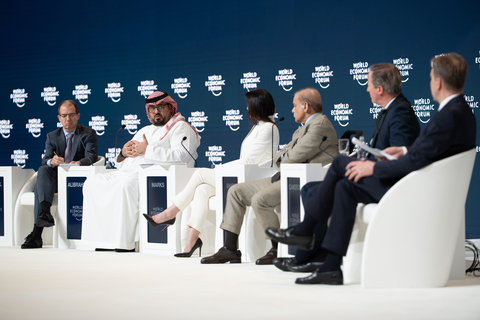
The annual World Economic Forum concluded on Friday with global leaders, business executives, and policy makers acknowledging a year ahead marked by political uncertainty, fragile economic recovery, and rising geopolitical risks.
The week-long gathering brought together heads of state, finance ministers, central bankers, and corporate leaders for closed-door discussions and public panels covering global growth, artificial intelligence, climate commitments, and international security. While no binding agreements were announced, the forum served as a platform for shaping policy priorities and testing diplomatic positions ahead of key elections and negotiations later this year.
A central theme throughout the event was global instability, particularly the strain on international institutions and alliances. Several leaders warned that cooperation built over decades is under pressure from nationalism, trade disputes, and regional conflicts. Calls for renewed multilateral engagement featured prominently, though delegates acknowledged growing public scepticism toward global governance.
Economic concerns dominated discussions among finance leaders, who highlighted uneven recovery across regions. While some economies showed resilience, others continue to struggle with inflation, high debt levels, and slowing investment. Central bank officials stressed the need for caution, warning that premature policy shifts could reignite inflation or undermine market confidence.
Artificial intelligence and emerging technologies also featured heavily on the agenda. Executives promoted innovation as a driver of productivity and economic growth, while regulators raised concerns about labour disruption, misinformation, and ethical governance. Several speakers emphasised the need for global standards to manage risks without stifling innovation.
Climate policy remained a point of tension, with developing nations calling for greater financial support to meet emissions targets and adapt to climate impacts. Wealthier countries reiterated long-term commitments but faced criticism over the pace of funding and implementation. Environmental groups accused governments of relying too heavily on future technologies rather than immediate action.
Security discussions reflected a more fragmented global landscape. Conflicts in Europe, the Middle East, and parts of Africa were frequently referenced as evidence of weakening diplomatic frameworks. Defence and intelligence officials warned that cyber threats, misinformation campaigns, and proxy conflicts are becoming more common and harder to deter.
Several leaders used the forum to signal shifts in foreign policy tone, emphasising pragmatic engagement over ideological alignment. Analysts said these statements reflect growing recognition that global challenges require cooperation even among rivals.
Business leaders expressed concern over political unpredictability, particularly in major economies where upcoming elections could reshape trade policy and regulation. Many said investment decisions are increasingly influenced by political risk rather than market fundamentals alone.
Despite the cautious mood, organisers described the forum as constructive, arguing that dialogue remains essential even when consensus is difficult. They pointed to informal meetings that allowed leaders to clarify positions and reduce misunderstandings away from public scrutiny.
Critics of the forum argued that it remains disconnected from public concerns, accusing participants of prioritising elite interests over social inequality and cost-of-living pressures. Organisers rejected that characterisation, saying discussions increasingly focus on inclusive growth and social stability.
As delegates departed, there was broad agreement that the coming year will test the resilience of political systems, economies, and international cooperation. Whether the ideas discussed translate into concrete action will become clearer as governments and institutions confront mounting pressures at home and abroad.