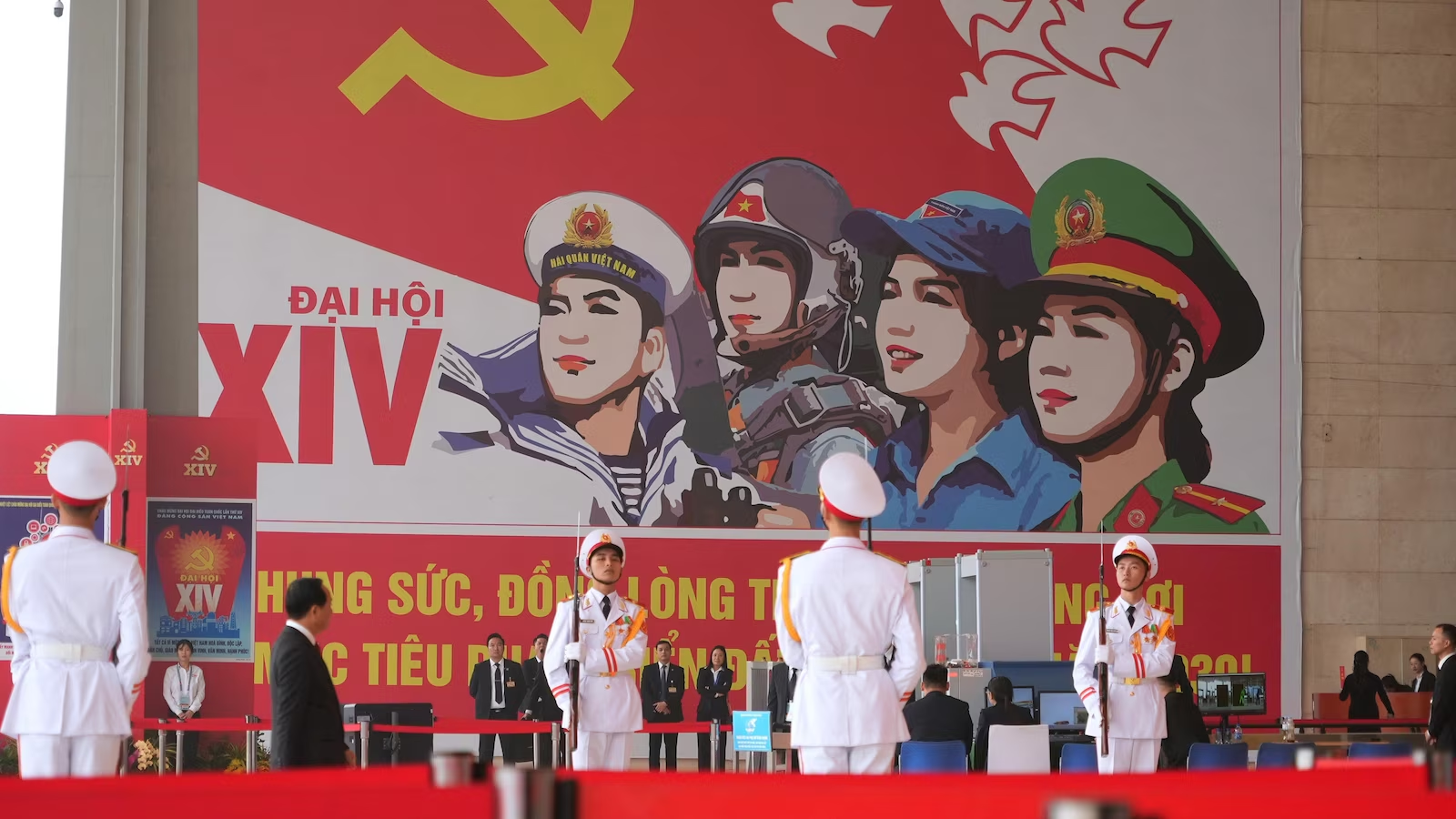
Hanoi — Vietnam’s ruling Communist Party opened a closely watched leadership meeting on Monday, setting the stage for decisions that will shape the country’s political hierarchy and economic strategy for years to come.
Senior party officials, regional leaders and members of the central committee gathered in Hanoi for what analysts describe as one of the most consequential internal sessions since the last national congress. The meeting is expected to finalize appointments to key positions and outline policy priorities as Vietnam navigates slowing global growth and intensifying regional competition.
Although proceedings are largely closed to the public, the outcomes carry significant implications for Southeast Asia’s fastest-growing manufacturing hub and for foreign investors seeking stability in the region.
“This is a defining moment,” said Nguyen Thanh Long, a political analyst in Ho Chi Minh City. “Leadership choices made here will influence economic reform, foreign policy and governance well into the next decade.”
Leadership Balance at Stake
At the heart of the meeting is the delicate balance between reform-minded technocrats and more conservative party figures who emphasize ideological discipline and political control.
Several senior positions are due for confirmation, including seats on the Politburo and key economic committees. While Vietnam does not disclose internal voting details, factional alignments and regional representation often play a decisive role.
Officials close to the process said continuity is likely, but subtle shifts in emphasis may emerge.
“Stability remains the guiding principle,” said one party insider. “But stability does not mean stagnation.”
Economic Challenges Shape the Agenda
Economic policy is expected to dominate the discussions. After years of rapid expansion driven by exports and foreign investment, Vietnam now faces headwinds from weaker global demand, supply chain realignments and rising competition from neighboring economies.
Growth remains solid by regional standards, but officials are increasingly concerned about productivity, infrastructure bottlenecks and environmental pressures.
Delegates are expected to debate measures to accelerate high-tech manufacturing, expand renewable energy and strengthen domestic industries.
“Vietnam’s success story must now evolve,” said economist Tran Minh Duc. “The next phase requires deeper reform and smarter governance.”
Foreign Policy and Strategic Positioning
Beyond economics, the leadership meeting comes amid heightened geopolitical competition in the Indo-Pacific. Vietnam has carefully balanced relations with major powers, expanding ties with Western economies while maintaining close links with China.
Officials are expected to reaffirm Vietnam’s policy of strategic autonomy, avoiding formal alliances while strengthening multilateral engagement.
“Neutrality remains the cornerstone,” said a diplomat familiar with Vietnam’s foreign policy. “But neutrality today requires far more diplomatic agility than in the past.”
The country’s growing role in regional supply chains has also increased its exposure to trade disputes and geopolitical shocks, making external stability a priority for party leaders.
Governance and Anti-Corruption Drive
The meeting is also likely to review progress in Vietnam’s sweeping anti-corruption campaign, which has reshaped the political landscape in recent years and led to the removal of several high-ranking officials.
Supporters say the campaign has strengthened discipline and public trust. Critics argue it has slowed decision-making and discouraged risk-taking among bureaucrats.
Delegates are expected to endorse continued enforcement while seeking ways to restore administrative efficiency.
“Clean governance is essential,” said analyst Nguyen. “But governance must also be effective.”
Business and Investor Attention
Foreign investors are watching the meeting closely for signals about regulatory stability and reform momentum. Vietnam has become a key destination for manufacturers diversifying production away from China, and policy continuity is crucial to maintaining that appeal.
“Investors value predictability above all,” said James Porter, head of Asia strategy at a global consultancy. “Leadership outcomes here will influence capital flows across the region.”
Early indications suggest that Vietnam will maintain its pro-investment stance, with renewed emphasis on technology, green energy and digital infrastructure.
Quiet But Consequential
Unlike party congresses, the meeting is expected to conclude without major public announcements. Instead, decisions will emerge gradually through official appointments and policy statements in the coming weeks.
Yet analysts stress that the quiet nature of the gathering belies its importance.
“In Vietnam, real power is shaped behind closed doors,” said Tran. “What happens this week will resonate far beyond Hanoi.”
As delegates continued their deliberations, the message from leadership circles was consistent: continuity, caution and calibrated reform.
For Vietnam, the challenge now is to preserve political stability while adapting to a world that is changing faster than ever.