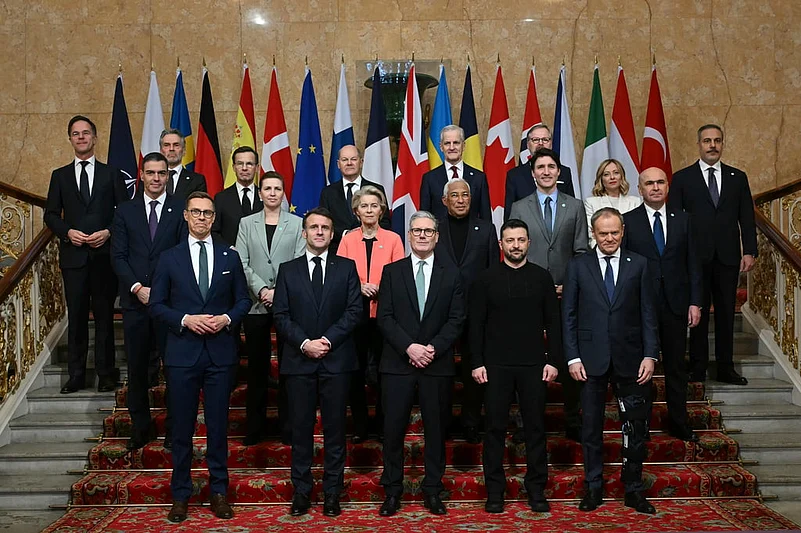
Brussels — European leaders convened urgent consultations on Monday after rising tensions over Greenland exposed new strains within the transatlantic alliance, prompting fears that geopolitical rivalry in the Arctic could evolve into a broader diplomatic and economic confrontation.
Senior diplomats from the European Union, Denmark and NATO member states gathered in Brussels for closed-door discussions aimed at coordinating a response to renewed rhetoric from Washington suggesting economic leverage could play a role in negotiations surrounding Arctic cooperation and strategic access.
While no formal crisis was declared, officials described the moment as “serious” and warned that missteps could weaken alliance cohesion at a time when unity is increasingly tested by global instability.
“This is not just about Greenland,” said one European diplomat involved in the talks. “It is about how allies manage strategic competition without turning partners into adversaries.”
Greenland at the Center of Growing Rivalry
Greenland’s vast territory, mineral resources and position along emerging Arctic shipping routes have made it a focal point of global interest as melting ice opens new commercial and military corridors.
Although the island governs many of its internal affairs, Denmark retains responsibility for foreign and defense policy. European leaders reiterated that Greenland’s status is not subject to external pressure or negotiation through economic means.
Danish officials briefed counterparts on domestic reactions, saying public opinion in both Denmark and Greenland strongly opposes any attempt to influence sovereignty through trade or security arrangements.
“Greenland’s future belongs to its people,” a Danish official said. “This principle is not negotiable.”
Alliance Unity Under Scrutiny
The emergency talks highlighted growing unease within NATO and the EU about how to handle assertive economic diplomacy by major powers. While European governments remain committed to close cooperation with the United States, officials acknowledged that trust has been strained by recent rhetoric.
Several participants urged restraint in public statements, warning that inflammatory language risks triggering unnecessary escalation.
“We must avoid turning strategic dialogue into public theater,” said a senior EU official. “Allies resolve differences through negotiation, not pressure.”
NATO representatives emphasized the importance of maintaining stability in the Arctic, where military activity has increased alongside commercial competition.
“The Arctic is becoming a strategic crossroads,” one alliance official said. “That makes cooperation more essential, not less.”
Economic Concerns Drive Urgency
Beyond diplomatic sensitivities, European leaders are acutely aware of the economic implications of renewed trade disputes. Even the suggestion of tariffs or retaliatory measures has already unsettled markets and shaken business confidence.
Several finance ministers attending the talks warned that any escalation could undermine fragile recovery across Europe, where growth remains uneven and inflation pressures persist.
“Trade conflict is a tax on everyone,” said one northern European minister. “Consumers pay the price, workers pay the price, and governments lose credibility.”
Industry groups echoed those concerns, urging policymakers to defuse tensions quickly.
Quiet Diplomacy Takes Priority
Despite the urgency, officials stressed that the talks were precautionary rather than reactive. No joint statement was issued, and leaders avoided public confrontation.
Instead, participants agreed to intensify diplomatic engagement with Washington and coordinate messaging to prevent misunderstandings from spiraling.
A draft framework circulated among delegates emphasized three principles: respect for sovereignty, rejection of economic coercion, and commitment to alliance consultation before major policy shifts.
“We are not here to assign blame,” one official said. “We are here to preserve stability.”
Domestic Pressures Shape Responses
European leaders also face domestic political pressures that complicate the diplomacy. In Denmark, lawmakers have demanded firm resistance to any perceived threat to Greenland’s autonomy. In France and Germany, opposition parties are urging stronger language against economic coercion.
At the same time, governments remain cautious not to inflame public opinion or undermine long-standing security partnerships.
“This is diplomacy at its most delicate,” said Professor Elena Moretti, a specialist in European security affairs. “Every word matters, and every signal is scrutinized.”
Looking Ahead
Further consultations are expected in the coming days, including informal briefings among foreign ministers and NATO defense officials. No formal summit has been announced, but officials indicated that high-level engagement may follow if tensions persist.
For now, leaders hope the dispute can be contained through dialogue before it disrupts broader cooperation in trade, defense and climate policy.
“Unity is our greatest strength,” one EU official said. “We cannot afford to let this issue fracture it.”
As delegates departed Brussels, the message was clear: Greenland may be distant, but the political stakes now reach the heart of Europe’s alliances.