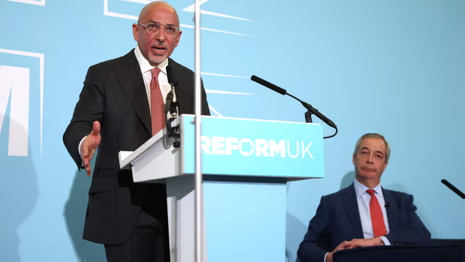
A Surprise Move That Shook Westminster
British politics witnessed a significant development as former Cabinet minister Nadhim Zahawi officially left the Conservative Party and joined Reform UK. The move sent shockwaves across Westminster, sparking intense debate about loyalty, party identity, and the future direction of British conservatism. Zahawi, once regarded as a rising star within the Conservative ranks, framed his decision as one driven by principle rather than ambition.
Zahawi’s Political Journey
Nadhim Zahawi rose to national prominence through a rapid political ascent. Known for his strong communication skills and business background, he held several high-profile government roles. His time in office was marked by moments of praise as well as controversy, but few expected such a decisive break from the party that shaped his political career.
Why Reform UK?
In his first remarks after joining Reform UK, Zahawi criticized what he described as a loss of direction within the Conservative Party. He argued that traditional conservative values such as fiscal responsibility, controlled immigration, and national sovereignty had been diluted. Reform UK, according to Zahawi, offers a platform more aligned with those principles.
Impact on the Conservative Party
Zahawi’s departure adds pressure on a party already dealing with internal divisions. Political analysts believe this move could encourage other dissatisfied members to reconsider their loyalties. While party leaders downplayed the significance, grassroots supporters expressed mixed reactions, ranging from disappointment to quiet approval.
Reform UK’s Growing Ambitions
For Reform UK, Zahawi’s arrival is a strategic win. The party has long sought to present itself as a serious political force rather than a protest movement. Gaining a former Cabinet minister strengthens its credibility and broadens its appeal to traditional conservative voters.
Public and Political Reaction
Public reaction has been sharply divided. Supporters praise Zahawi’s willingness to take a stand, while critics accuse him of political opportunism. On social media, the announcement triggered widespread discussion about the state of UK politics and voter frustration with established parties.
What This Means for UK Politics
Zahawi’s switch highlights a broader realignment taking place in British politics. Voter trust in mainstream parties is fragile, and alternative movements are gaining momentum. Whether this shift will translate into electoral success remains uncertain, but the message is clear: British politics is entering a period of renewed volatility.
Looking Ahead
As the next election cycle approaches, Zahawi’s decision could reshape campaign strategies and voter alliances. Reform UK will attempt to capitalize on the momentum, while Conservatives must work to stabilize their base. The long-term consequences of this move are yet to be seen, but its symbolic importance cannot be ignored.