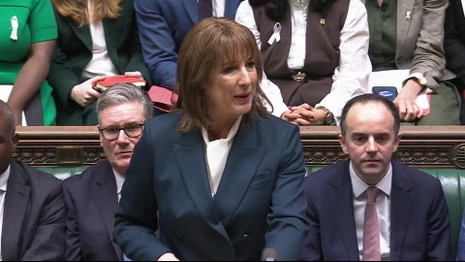
On 26 November 2025, Chancellor Rachel Reeves unveiled the highly anticipated Autumn Budget, confirming £26 billion in new tax rises, following an unexpected leak from the Office for Budget Responsibility (OBR) earlier this month. The early disclosure had already stirred political debate, but the Chancellor’s formal announcement offered the full details of a plan aimed at tackling the UK’s mounting public debt while funding essential public services.
OBR Leak Sparks Early Debate
Earlier this month, the OBR inadvertently leaked projections suggesting significant tax increases were imminent. The leak caused a political stir, with opposition parties seizing on the news to challenge the government’s economic strategy. Analysts noted that early market reactions were already impacting investor sentiment, prompting the Treasury to clarify its position.
Rachel Reeves acknowledged the leak during her Budget speech, framing it as an opportunity to explain the rationale behind the new measures: “We must be honest with the public. The choices before us are challenging, but necessary to secure our country’s long-term economic stability.”
The £26 Billion Tax Plan — What It Includes
The £26 billion tax increase announced in Budget 2025 is designed to strengthen the UK’s fiscal position and reduce the risk of escalating national debt. Key measures include:
- Income Tax Adjustments: Personal allowances have been reviewed, with higher earners facing an increase in marginal rates. Reeves emphasized that these changes target those most able to contribute, aiming to reduce inequality while raising revenue.
- Corporate Tax Measures: Large corporations will see slight adjustments in their effective tax rates, particularly in sectors that have benefited from post-pandemic growth. This aims to balance revenue collection with maintaining competitiveness.
- Capital Gains and Investment Taxes: Modest changes to capital gains tax thresholds and investment reliefs will impact wealthier individuals and certain investment vehicles, ensuring a more progressive tax system.
- Environmental Levies and Green Taxes: As part of the government’s net-zero commitments, select environmental taxes are being introduced or adjusted, incentivizing greener practices while generating revenue.
- National Insurance and Social Contributions: Minor adjustments are included to improve the sustainability of social security and health funding.
The Treasury projects that these combined measures will raise approximately £26 billion in additional revenue over the next financial year, providing a significant boost to the government’s fiscal toolkit.
Economic Rationale Behind the Measures
The Chancellor defended the tax rises as a necessary response to rising public debt and the ongoing pressures on public services. According to the OBR, the UK’s deficit remains elevated due to a combination of post-pandemic expenditures, rising interest payments on debt, and the need to fund essential services.
Reeves highlighted the importance of balancing fiscal responsibility with economic growth: “We are taking action to secure the nation’s finances while protecting the services families rely on. Our plan is designed to stabilize debt, fund key public priorities, and provide a foundation for long-term growth.”
Analysts note that while tax increases can slow economic growth in the short term, they may be necessary to prevent a debt spiral and maintain confidence in UK markets. The OBR projections suggest that without intervention, debt servicing costs could consume a larger share of public finances, limiting investment in healthcare, education, and infrastructure.
Mixed Reactions Across the Political Spectrum
The Chancellor’s announcement has elicited a wide range of responses. Supporters argue that the tax rises are a responsible step toward fiscal sustainability. “Reeves is showing leadership,” commented one economist. “Raising revenue now is preferable to deeper cuts in public services later.”
Opposition parties have criticized the measures, warning that higher taxes will burden households and businesses already facing cost-of-living pressures. Some argue that the government could have focused more on reducing inefficiencies or targeting high earners and large corporations rather than imposing broad-based increases.
Trade unions and business associations have also voiced concerns. Unions warned that public sector workers may face indirect consequences if spending is constrained, while some business groups stressed the importance of ensuring competitiveness and investment incentives remain intact.
Impact on Households and Businesses
The new tax measures are expected to affect both households and businesses differently:
- Households: While personal allowances are preserved for low-income earners, middle- and high-income households may see higher tax bills. Analysts warn that the combined effect of income tax changes, capital gains adjustments, and environmental levies could strain household budgets, particularly for those already managing rising living costs.
- Businesses: Large corporations and investors face higher taxes, though smaller businesses may benefit from protections aimed at supporting growth. The government emphasized that tax changes are designed to be equitable and to avoid undermining investment in critical sectors.
Reeves stressed that measures to offset the cost-of-living impact would accompany the tax increases, including targeted support for vulnerable households and continued investment in public services such as healthcare and education.
The Long-Term Outlook
The Autumn Budget 2025 positions the UK to tackle its fiscal challenges head-on. By raising £26 billion in additional revenue, the government aims to reduce reliance on borrowing, manage debt servicing costs, and create fiscal space for strategic investments.
Economic commentators suggest that while the measures are politically sensitive, they are aligned with long-term sustainability objectives. “This is a high-stakes approach,” said one analyst, “but failing to act could leave the UK exposed to escalating debt costs and potential market volatility.”
Reeves concluded her speech by urging collaboration across parties and stakeholders: “The decisions we make today will shape the financial health of our nation for decades to come. We must work together to ensure that the UK remains resilient, competitive, and fair.”
Looking Ahead — Key Questions
As Budget 2025 takes effect, several critical questions remain:
- Will the projected £26 billion in revenue materialize as expected?
- How will households respond to higher taxes amid ongoing cost-of-living pressures?
- Can businesses adapt without reducing investment or employment?
- Will the tax strategy stabilize public debt and ensure sustainable growth in the coming years?
The OBR will continue monitoring the impact of these measures, providing updates on fiscal performance and economic outcomes. The coming months will test the government’s ability to balance revenue generation with economic growth and social stability.
Budget 2025 signals a decisive moment for the UK, combining fiscal responsibility with a strategic approach to public finances. By addressing debt and deficit pressures while maintaining investment in key services, Chancellor Reeves has set the stage for a high-stakes year ahead, with the ultimate success of the plan depending on both economic performance and public acceptance.