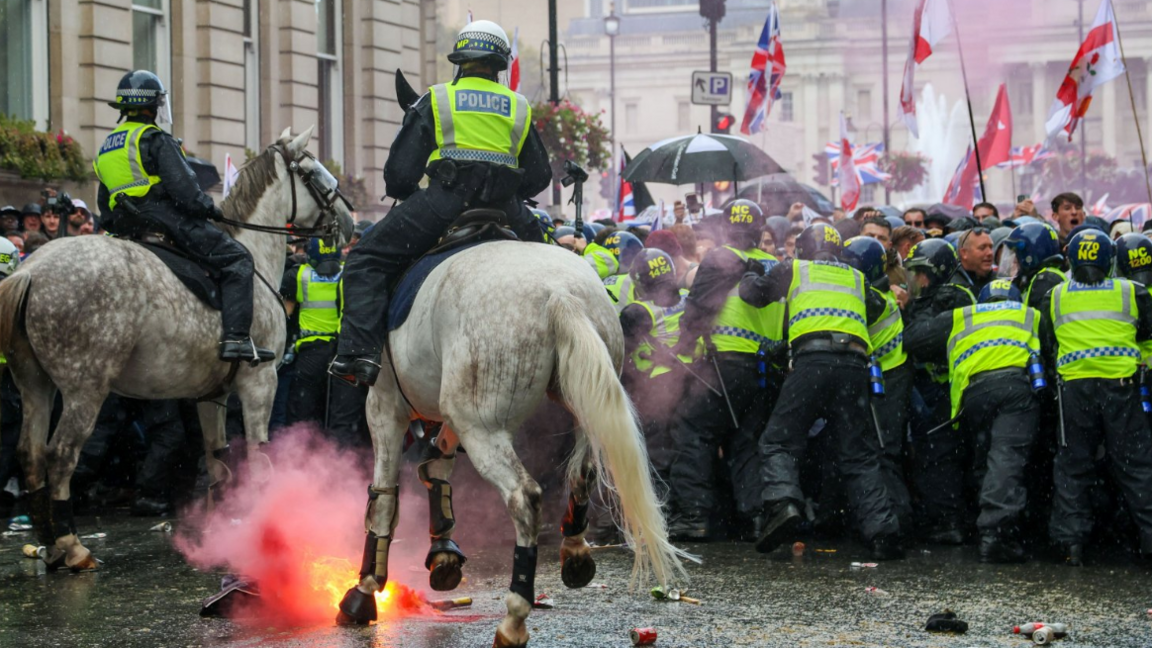
On Saturday 13 September 2025, London became the focal point of one of the UK’s biggest right-wing demonstrations in recent years. The march, organized under the banner “Unite the Kingdom” by far-right activist Tommy Robinson, drew an estimated 110,000 people to central London. What started as a march focused on anti-immigration and “free speech” slogans ended with significant clashes between parts of the crowd and the Metropolitan Police, leading to injuries, arrests, and heated political fallout.
Massive Gathering Surpasses Expectations
Authorities had anticipated a large turnout, but few expected numbers to swell so much. The approved route through Whitehall and from Waterloo station to government buildings was soon overwhelmed by crowds extending well beyond the capacity of the designated streets. Many marchers carried Union Jack and St. George’s Cross flags, while a significant number of demonstrators also wielded more controversial symbols and slogans aimed at immigration policy and national identity.
While thousands participated peacefully, tensions escalated as some protesters attempted to deviate from the approved route. Attempts to breach police cordons and engage with a smaller, counter-protest group resulted in clashes. Objects such as bottles, flares, and other projectiles were thrown at police. At least 26 officers were injured – four seriously – while about 25 arrests were made.
Counter-Protests and Police Strategy
Accompanying the main “Unite the Kingdom” march was a counter-protest, organized by “Stand Up to Racism,” drawing around 5,000 people. Their presence emphasised the deep divisions in British society over immigration, freedom of expression, and what many see as rising nationalism. The police sought to keep the two groups separated, setting up buffer zones to prevent direct confrontations, though clashes were unavoidable in some spots.
Law enforcement officers noted that the sheer size of the demonstration outstripped their plans in some respects, with routes blocked by crowds, and control becoming more difficult as people spread beyond the planned area. Critics say that authorities underestimated both the numbers and the potential for disorder. However, police also highlighted the difficulty in balancing rights to protest with public safety and maintaining order.
Key Figures, Speeches, and Controversial Messages
Tommy Robinson addressed the crowd, delivering speeches with strong anti-immigration and nationalist overtones. He claimed that immigration policies went too far, that national identity was under threat, and that free speech was being suppressed. The event also featured a video speech by Elon Musk, in which he called for dramatic political change, including references to dissolving Parliament and warnings of “violence” if immigration or identity issues were not addressed. These remarks were immediately condemned by many political leaders.
Political Backlash
Across the spectrum, political leaders responded to the rally — and particularly to Musk’s speech — with concern. Prime Minister Keir Starmer stressed that while peaceful protest remains a right, violent rhetoric and threats of political destabilization will not be tolerated. Other MPs called on senior figures to condemn any encouragement of violence or lawlessness. Some parties are even considering whether social media platforms and speakers should face sanctions or regulatory scrutiny.
Home Secretary Shabana Mahmood issued stern warnings that anyone involved in violence would face prosecution. Meanwhile, public debate turned to whether freedom of speech has limits—or whether hate speech, incitement, and aggressive nationalist messaging cross those lines. Civil liberties groups also sounded alarms about speech regulation and possible overreach if laws are applied loosely.
Broader Social Undercurrents
The large attendance reflects more than just Robinson’s organizing ability. Many attendees voiced resentment over immigration, housing pressures, perceived loss of cultural identity, and anxieties about security and change. For some, the rally provided a rare moment to express frustrations they felt were underrepresented in mainstream politics. For others, the event’s scale and symbolism were deeply troubling, particularly for minority communities and groups targeted by hateful speech.
What Comes Next
In the aftermath, authorities are reviewing footage, mapping arrests, and assessing damage. Police confirm more arrests may follow as investigations continue. The political impact may linger longer: calls for regulation of protest content, social media speech, and possibly greater accountability for those who deliver inflammatory messages.
In addition, local councils and community groups affected around the paths of the march will likely examine what happened — disruptions to local businesses, public transport, and the sense of safety in public spaces are fresh wounds. The event also strengthens calls from anti-hate and human rights organizations for clearer boundaries around public speech and protest in UK law.