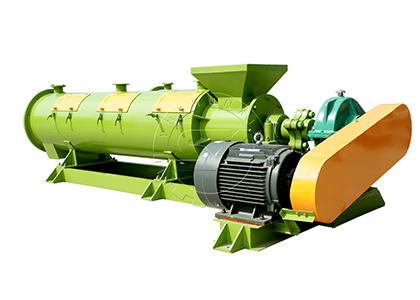
In the competitive world of modern agriculture, NPK fertilizers—blends of nitrogen (N), phosphorus (P), and potassium (K)—remain the backbone of crop nutrition. The way these fertilizers are granulated has a direct impact on quality, efficiency, and production costs. If you’re planning to invest in an Npk fertilizer production line, one of the first big decisions you’ll face is choosing between rotary drum granulation and disc pelletizer granulation.
In this guide, we’ll compare these two popular granulation methods, discuss their pros and cons, and explain how Cementl can help you select the right NPK Fertilizer Production Line for your operation in 2025.
Why Granulation Method Matters in NPK Fertilizer Production
Granulation is more than just turning powder into pellets—it determines:
- Nutrient Uniformity – Even nutrient distribution means better crop performance.
- Product Durability – Stronger granules withstand storage and transport without breaking.
- Production Efficiency – Faster granulation means higher output with lower operating costs.
The method you choose can influence everything from maintenance schedules to long-term profitability.
Rotary Drum Granulation: Overview
A rotary drum granulator is a large, rotating cylinder that uses a combination of rolling, tumbling, and binding agents to form fertilizer granules. It’s a proven technology widely used in large-scale NPK Fertilizer Production Lines.
Pros of Rotary Drum Granulation
- High Capacity – Can handle large volumes, ideal for high-output plants.
- Strong, Uniform Granules – Produces robust pellets with consistent size.
- Adaptability – Works well with a wide range of raw materials and formulations.
- Continuous Production – Non-stop operation boosts overall efficiency.
Cons of Rotary Drum Granulation
- Higher Initial Investment – Larger machines mean higher purchase costs.
- Space Requirements – Requires more floor area compared to other methods.
- Energy Use – May consume more power than compact systems.
Disc Pelletizer Granulation: Overview
A disc pelletizer, also known as a pan granulator, uses a shallow rotating pan to agglomerate fine powder into granules. Operators control granule size by adjusting the disc angle, rotation speed, and moisture content.
Pros of Disc Pelletizer Granulation
- Lower Startup Cost – More affordable than rotary drum systems.
- Precise Control – Easier to adjust granule size for specific market needs.
- Compact Design – Takes up less space, perfect for smaller facilities.
- Energy Efficiency – Typically uses less energy per ton of product.
Cons of Disc Pelletizer Granulation
- Lower Throughput – Not as fast as rotary drum granulation for large-scale production.
- More Operator Involvement – Requires skilled monitoring to maintain consistent quality.
- Granule Strength – Pellets may be less dense compared to drum-produced granules.
Which Granulation Method Fits Your Npk Fertilizer Production Line?
The choice often comes down to your production scale, budget, and product requirements.
- Choose Rotary Drum Granulation if:
You’re aiming for high-capacity industrial production, need robust granules, and have the space and budget for a larger system. - Choose Disc Pelletizer Granulation if:
You’re launching a smaller-scale operation, want lower upfront costs, and prefer easy customization for different fertilizer blends.
For some businesses, a hybrid approach—using both methods for different product lines—can maximize flexibility and market reach.
How Cementl Supports Your Granulation Choice
As a trusted equipment supplier, Cementl provides complete NPK Fertilizer Production Line solutions tailored to your needs. Whether you select a rotary drum or disc pelletizer setup, Cementl offers:
- Customized Plant Design – Optimize layout for efficiency.
- High-Quality Components – Durable granulators, dryers, coolers, and screens.
- Installation & Training – Get your team ready for smooth operations.
- After-Sales Support – Spare parts, maintenance advice, and process optimization.
Their experience ensures that your investment in granulation technology delivers the quality and consistency your customers expect.
2025 Trends in NPK Fertilizer Granulation
The fertilizer industry is shifting toward energy-efficient systems and precision nutrient delivery. Compact, automated pelletizing solutions are gaining popularity among small and medium-sized producers. At the same time, high-capacity rotary drum lines remain essential for large-scale export-focused plants.
By aligning your Npk fertilizer production line with these trends, you can stay competitive while meeting market demands.
Conclusion
Your granulation method is a defining factor in your fertilizer business’s success. Rotary drum granulation offers unmatched capacity and durability, while disc pelletizer granulation provides flexibility and cost savings. By partnering with Cementl, you gain access to industry expertise, reliable equipment, and a tailored NPK Fertilizer Production Line that meets your production goals.
In 2025’s competitive fertilizer market, the right choice today can mean stronger growth and higher profits tomorrow.
Keep an eye for more latest news & updates on Daily!