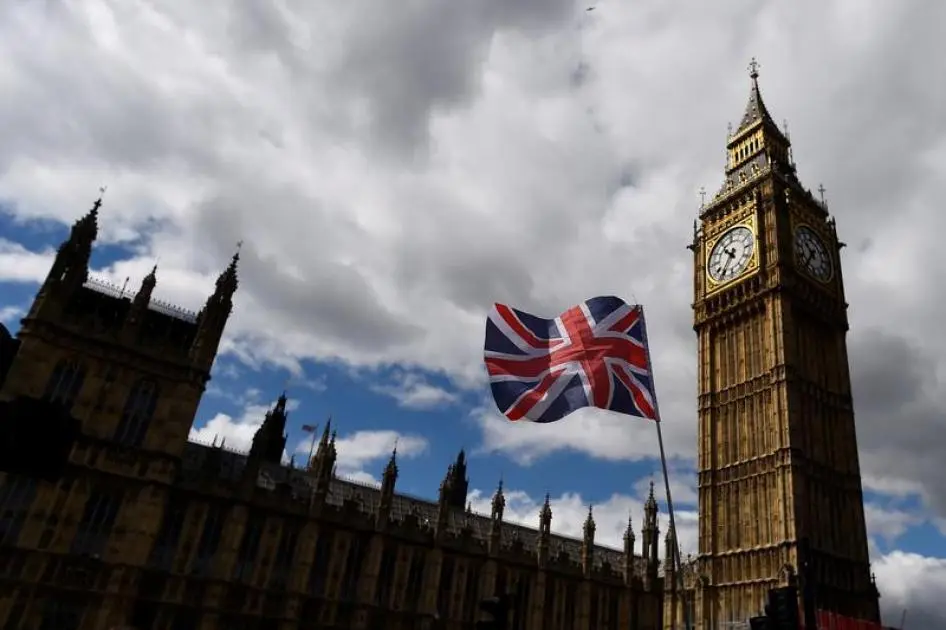
London — The British government faced mounting pressure on Monday as divisions deepened in Parliament over public spending priorities and the rising cost of living, exposing fresh fault lines within the governing party and sharpening attacks from the opposition.
Prime Minister Keir Starmer entered the week confronting growing unrest among backbench lawmakers who are warning that household finances, public services and local councils are reaching a critical point after months of tight budgets and cautious fiscal policy.
The debate comes ahead of a key parliamentary session expected to shape the government’s economic agenda for the remainder of the year, with senior ministers under pressure to demonstrate that economic stability can translate into tangible relief for voters.
“This government was elected on a promise of responsibility and renewal,” said one Labour lawmaker. “But responsibility must now deliver results that people can actually feel.”
Cost of Living Returns to the Forefront
Although inflation has eased from recent peaks, many households continue to struggle with high rents, energy bills and food prices. Charities and local authorities report rising demand for emergency assistance, while public sector unions warn that pay restraint is driving workers out of essential services.
In a series of interviews over the weekend, senior opposition figures accused the government of moving too slowly to address everyday pressures.
“Families are still cutting back on basics,” said the shadow chancellor. “Economic stability is meaningless if people cannot afford to live.”
Government ministers counter that difficult decisions are unavoidable after years of economic turbulence, insisting that fiscal discipline is necessary to rebuild confidence and avoid reigniting inflation.
“We are laying the foundations for long-term growth,” said the Treasury chief secretary. “Short-term giveaways would only store up problems for later.”
Divisions Within the Governing Party
Behind closed doors, however, concerns are growing among ruling party lawmakers that the government risks losing political momentum by appearing overly cautious.
Several MPs representing urban and northern constituencies have urged ministers to accelerate investment in housing, transport and local services, warning that voters are growing impatient.
“There is a sense that we are being careful when the moment demands boldness,” said one backbencher. “People did not vote for change only to be told to wait indefinitely.”
Others within the party argue that restraint is essential to maintain credibility with financial markets and international partners.
“This government inherited a fragile economy,” said a senior party official. “We cannot afford to repeat the mistakes of the past.”
Local Authorities Under Strain
The debate has been intensified by warnings from councils across England, Scotland and Wales that funding pressures are pushing local services to the brink.
Several councils have already issued formal notices warning of potential insolvency, citing rising social care costs and declining central government grants.
Local government leaders are calling for an urgent review of funding arrangements, arguing that current budgets are unsustainable.
“We are being asked to do more with less every year,” said the leader of a Midlands council. “Eventually the system breaks.”
Ministers acknowledge the problem but say any reform must be balanced against national fiscal constraints.
Public Services in Focus
Health and education have become flashpoints in the political debate. Hospital waiting lists remain stubbornly high, and school leaders warn that staffing shortages are undermining standards.
Unions representing nurses, teachers and civil servants are pressing for above-inflation pay rises, arguing that recruitment and retention are reaching crisis levels.
“We cannot run world-class services on goodwill alone,” said the head of a major public sector union. “Workers are exhausted and undervalued.”
The government has pledged targeted investment in priority areas but has ruled out large-scale spending increases in the short term.
Opposition Seeks Political Advantage
The opposition has seized on the tensions to portray the government as out of touch with voters’ concerns. Party leaders have promised a “new deal” on living standards, including tax relief for low-income households and faster action on housing supply.
“This is a government paralysed by caution,” said an opposition spokesperson. “Britain needs leadership, not hesitation.”
Smaller parties have also entered the debate, calling for reforms to welfare policy, rent controls and greater devolution of fiscal powers to local authorities.
Markets Watching Closely
Financial markets are monitoring developments closely, sensitive to any sign that fiscal discipline could weaken. Analysts say the government’s credibility rests on maintaining control of borrowing while finding room to address social pressures.
“The challenge is political as much as economic,” said a senior economist at a London think tank. “Voters expect change, but markets expect restraint.”
Bond yields and sterling have remained stable so far, suggesting investors remain confident in the government’s overall direction.
Prime Minister Seeks to Reassert Control
In an effort to steady the political narrative, the prime minister is expected to use an address later this week to outline the government’s priorities and reaffirm its commitment to balancing growth with fairness.
Advisers say the speech will emphasize gradual reform, targeted investment and partnership with business and local authorities.
“The message will be simple,” said a Downing Street aide. “We are fixing the foundations so Britain can prosper again.”
Yet critics warn that patience is wearing thin.
A Delicate Political Moment
With local elections approaching later this year, the government faces a delicate balancing act: maintaining fiscal discipline while convincing voters that change is underway.
Public opinion polls suggest support for the ruling party has softened slightly in recent weeks, reflecting lingering economic anxiety and concerns over public services.
“Politics is about timing,” said Professor Andrew Collins, a political analyst. “This government must soon show that stability leads to improvement, or risk losing the initiative.”
As Parliament prepares for another week of debate, one question dominates Westminster: can the government reconcile economic caution with the public’s demand for visible progress?
For now, the answer remains uncertain — and the political stakes continue to rise.