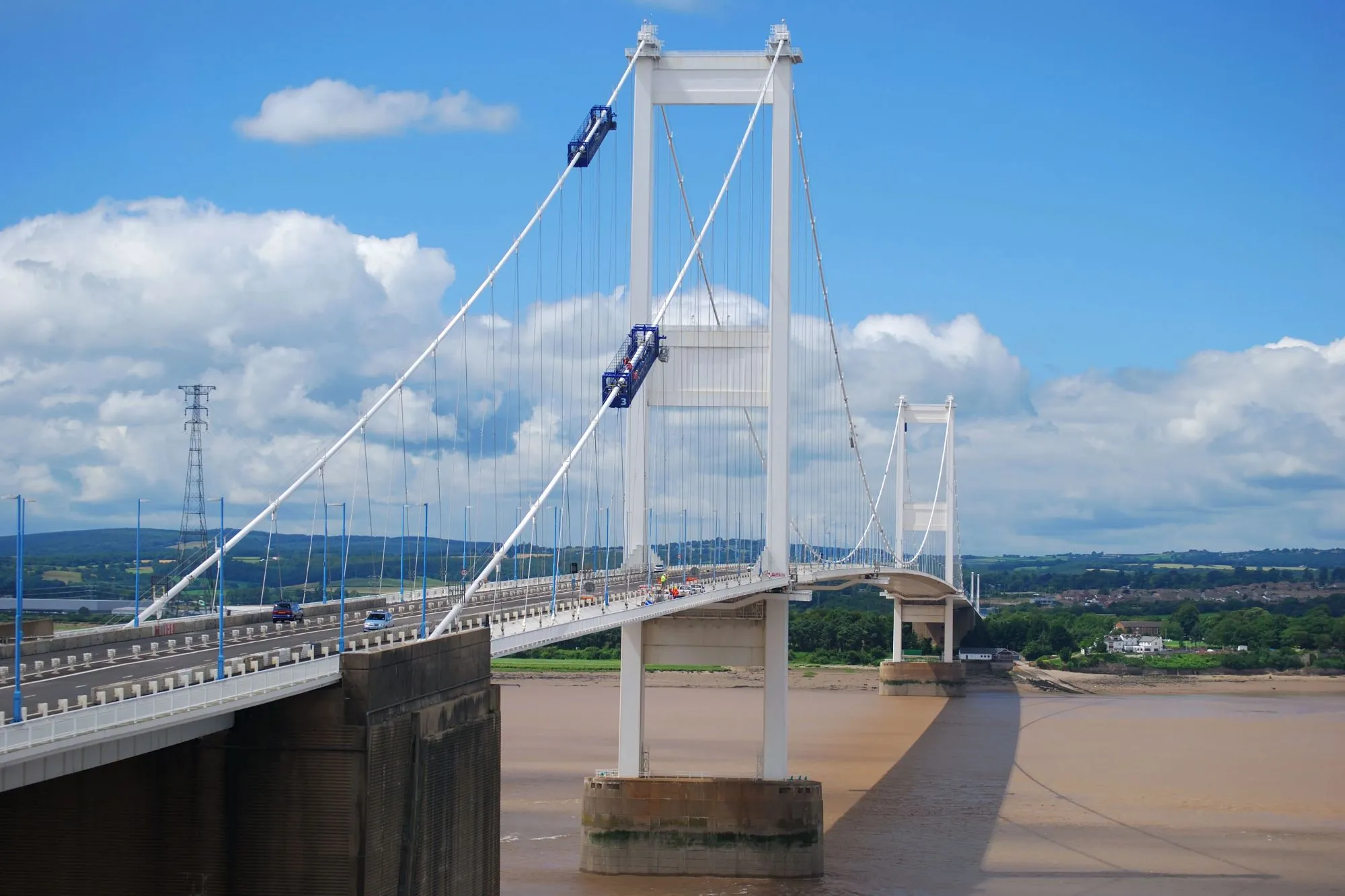
A major UK motorway bridge was forced to close in both directions on Saturday following a burst of severe winds that swept across parts of England and Wales, creating widespread travel disruption and raising fresh concerns about the country’s resilience to extreme weather.
The closure, which impacted tens of thousands of motorists, triggered long tailbacks, diversions, and delays on rail and road networks. Emergency services advised people to avoid non-essential travel as gusts exceeding safety thresholds made conditions increasingly dangerous for high-sided vehicles and commuter traffic.
The event marks yet another reminder of how vulnerable key infrastructure can be during periods of intense wind, a weather pattern that forecasters say is becoming more frequent across the UK.
Sudden Weather Shift Prompts Urgent Closure
The decision to shut the bridge came shortly after mid-morning when wind gauges recorded gusts significantly higher than what is considered safe for motorway-level crossings. Officials reported that conditions deteriorated rapidly, pushing the bridge beyond operational safety limits.
Transport authorities stated that the closure was unavoidable. The wind speeds were strong enough to pose serious risks of overturning vehicles, especially lorries and vans, and could also affect steering control for smaller cars.
Within minutes of the shutdown, traffic had begun backing up on both sides, leaving many drivers stranded and confused. Police patrols moved in to inform motorists, redirect vehicles, and prevent additional congestion on connecting motorways.
One regional traffic control officer described the situation as “a fast-moving weather incident that gave us very little warning,” and noted that safety protocols require immediate action once thresholds are breached.
Motorists Frustrated as Delays Build
The sudden closure led to considerable frustration among drivers, particularly those commuting for work, families travelling for weekend plans, and logistics firms relying on timely deliveries.
Several motorists took to social media to express irritation about the lack of advance warning, though meteorologists emphasised that wind intensity can increase sharply within just minutes under certain storm systems.
Lorry drivers were among the worst affected, with many forced to pull into emergency laybys or service stations until conditions improved. One freight operator said the delay would disrupt deliveries scheduled across the Midlands and South West, noting that “a closure like this is costly, but safety always has to come first.”
Some drivers voiced concern that alternative routes were already congested before the closure, turning what should have been a manageable diversion into a multi-hour delay.
Emergency Services Urge Caution
Police and Highways teams worked together to manage the disruption. Officers issued repeated warnings to avoid unnecessary travel and reminded motorists that high winds can create hidden hazards such as falling debris, swerving vehicles, and sudden gusts on exposed roads.
Fire and rescue crews also reported a spike in calls relating to blown-down trees, unsecured structures, and damaged property in nearby towns. Power outages were recorded in multiple postcodes as falling branches struck overhead lines.
Authorities stressed that while the bridge closure was the most visible consequence of the storm, disruptions were being felt across the region. Rail operators reported lower speed limits on several lines due to debris on tracks and concerns about overhead cables, adding to passenger delays.
Impact on Businesses and Freight Movement
The motorway bridge serves as a major link between England and Wales, carrying heavy commuter and freight traffic every day. Its closure, even temporarily, has a ripple effect on regional supply chains.
Haulage companies reported significant disruptions to timetables, especially for perishable goods dependent on tightly scheduled delivery windows. Some firms were forced to reroute lorries through smaller local roads, further increasing travel time and fuel costs.
Local business owners also expressed concern about customers being unable to reach shops and city centres, especially as the holiday shopping period ramps up. One café owner near the affected region noted that footfall dropped sharply within hours of the closure announcement.
Economists say that while short-lived, such incidents highlight the economic cost of weather-related infrastructure shutdowns. With forecasts suggesting stronger winter storms due to broader climate patterns, businesses are increasingly calling for resilience investment to protect major transport routes.
A Growing Pattern of Weather-Related Disruptions
Meteorologists have been warning for months that the UK is likely to see more frequent and intense windstorms as part of changing climate patterns. This year alone, strong winds have caused repeated shutdowns across coastal routes, ports, and motorway bridges.
According to forecasters, the storm responsible for Saturday’s disruption formed rapidly in the Atlantic before sweeping across the western half of the UK. They explain that warm ocean temperatures can intensify low-pressure systems, making wind events more unpredictable.
Experts highlighted that bridge closures are designed to protect the public, and while disruptive, they reduce the risk of serious accidents and structural damage. Engineers monitor wind levels continuously, and closures are triggered automatically when thresholds exceed safety parameters.
Authorities Review Infrastructure Resilience
The bridge affected by Saturday’s closure is known for its susceptibility to high winds given its height and exposure over open water. Engineers designed it with wind safety protocols in place, but repeated closures in recent years have prompted calls for updated assessments.
Local officials said they will be conducting a review to explore potential measures such as:
- Enhanced wind barriers
- Improved early-warning systems
- Real-time driver alerts through navigation apps
- Additional structural monitoring
- Revised diversion plans
Some transport experts argue that infrastructure designed decades ago may no longer be suitable for the increasing intensity of modern weather patterns. They emphasise that investment in upgrades is essential for long-term reliability.
Passengers and Commuters Share Mixed Reactions
Public reaction to the closure has been mixed. Many acknowledged the necessity of safety-first decisions, while others expressed frustration over travel plans being disrupted.
Parents travelling with children for early December holiday activities, football matches, or shopping trips reported waiting for hours in queues or having to cancel plans altogether.
Commuters who rely on the route for work said that repeated closures could push employers to rethink remote working arrangements during severe weather periods.
Nevertheless, a majority of those interviewed said they understood the need for immediate action to prevent accidents, especially after several recent incidents where high winds tipped over large vehicles on open roads.
Bridge Reopens After Safety Assessment
By late afternoon, winds had subsided enough for engineers to conduct on-site inspections. Once checks confirmed that the structure and road surface were safe, transport officials began reopening the bridge gradually.
Police controlled traffic flow to prevent congestion as thousands of backed-up vehicles attempted to resume travel simultaneously. It took several hours for traffic conditions to return to normal.
Authorities emphasised that closures could happen again if conditions worsen and urged drivers to monitor official weather warnings closely.
Conclusion
Saturday’s severe winds and the subsequent closure of a major motorway bridge underscore the challenges the UK faces as extreme weather becomes more common. While the shutdown caused significant disruption, the swift response from authorities helped prevent potentially serious accidents.
The event not only highlights the importance of weather preparedness but also raises broader questions about infrastructure resilience in an era of changing climate patterns. As winter progresses, transport officials and meteorologists continue to urge caution—and remind the public that safety must remain the top priority, even when it comes at the cost of temporary inconvenience.