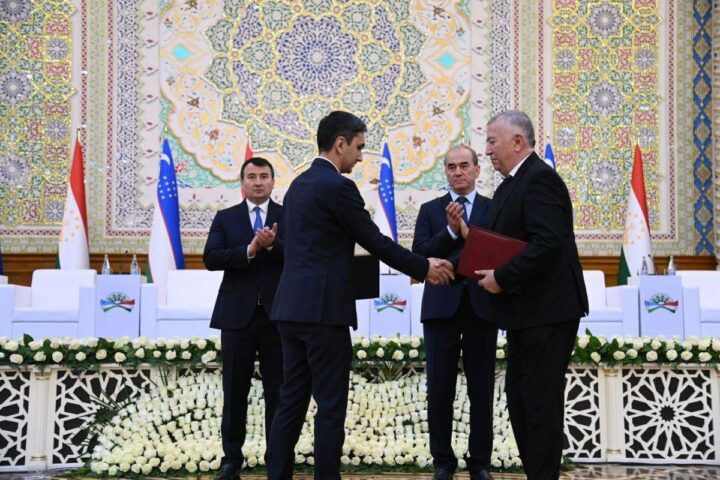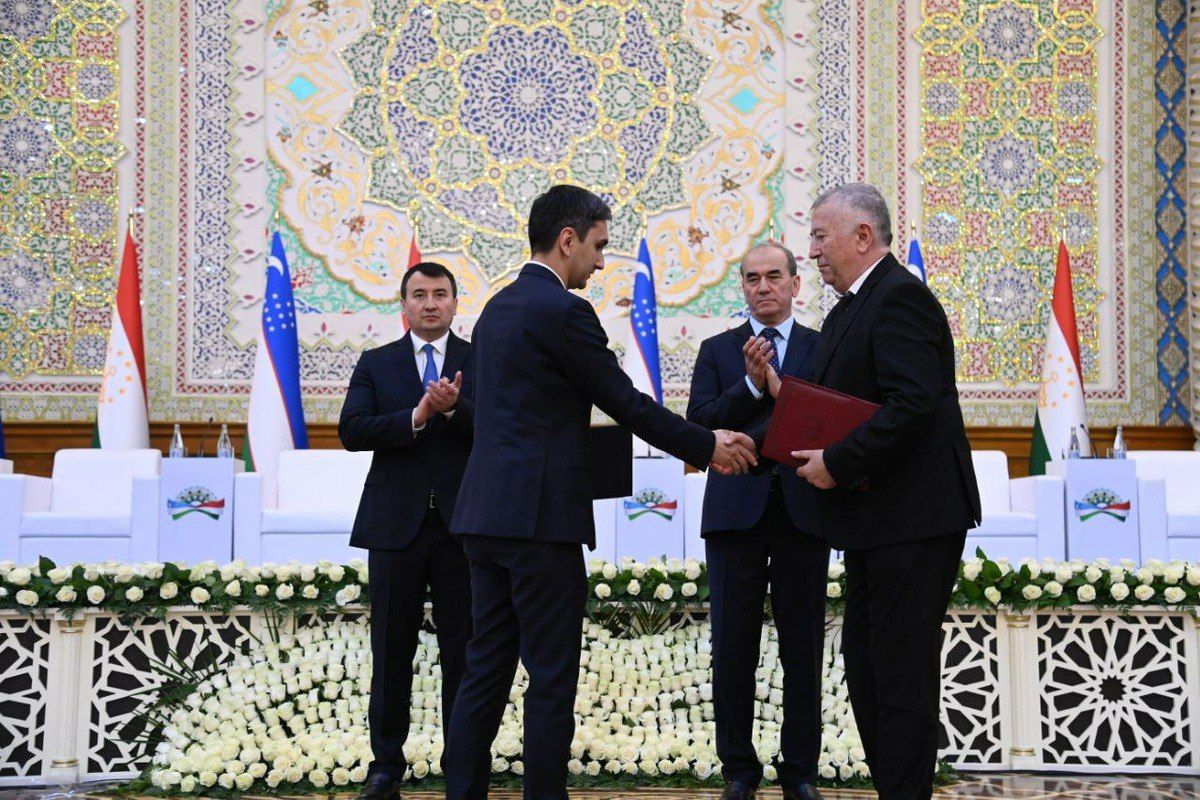
The deepening cooperation between Uzbekistan and Tajikistan in 2025–2026 is reaching a new qualitative level, gradually evolving from bilateral engagement into a factor of regional significance. The state visit of Tajikistan’s President Emomali Rahmon to Uzbekistan on March 26–27, 2026, reaffirmed a consistent course toward expanding economic ties — from investment mechanisms to industrial cooperation and infrastructure development.
Against this backdrop, it is becoming increasingly clear that the focus is no longer solely on expanding trade volumes, but on forming a more complex model of economic interaction, centered around joint investments and financial coordination.
From Trade to an Investment-Driven Model
In recent years, Tashkent and Dushanbe have made significant progress in strengthening economic relations. The restoration of transport links, growth in bilateral trade, and simplification of cross-border interaction have created a foundation for a deeper level of cooperation.
One of the key instruments of this transition has been the joint investment company established in 2021. According to official data, its capital has increased more than fourfold — from $12 million to over $50 million. This mechanism is now actively used to finance projects across industries such as manufacturing, energy, agriculture, construction, and healthcare.
Agreements reached during the March 2026 visit further reinforced this trend: both sides confirmed the launch of new joint industrial and infrastructure projects, as well as the continued expansion of industrial cooperation programs.
As a result, bilateral relations are gradually shifting from a trade-based model toward joint value creation through investment projects.
Regional Context: Strengthening Economic Integration
Investment cooperation between Uzbekistan and Tajikistan is unfolding within a broader regional trend — the economic convergence of Central Asian countries. The region is increasingly forming a more interconnected system, characterized by:
- growing cross-border investment projects
- development of shared infrastructure
- coordination of industrial policies
- increased intra-regional capital flows
In this context, Uzbek-Tajik initiatives are becoming part of a wider regional integration agenda that extends beyond bilateral cooperation and increasingly impacts the CIS economic space.
Financial Infrastructure as a Core Enabler
The expansion of joint projects is inevitably raising demands on financial infrastructure. The successful implementation of cross-border initiatives depends on:
- the speed and reliability of settlements
- transparency of financial operations
- development of correspondent banking relationships
- availability of financial instruments to support investment projects
“The growth of joint investment projects in the region is increasing demand for financial infrastructure capable of handling cross-border flows and ensuring settlement stability,” note representatives of Uzbekistan’s Octobank.
In practice, the banking system provides the operational backbone for these projects — from processing payments to managing financial flows.
Banking Sector: Expanding Cooperation
Key players from both countries’ banking systems are actively involved in supporting the financial dimension of cooperation. On the Uzbek side, banks such as Kapitalbank, Hamkorbank, and Octobank — along with other institutions developing corporate and cross-border services — play an important role.
On the Tajik side, major institutions include Orienbank, Amonatbank, Eskhata Bank, and Alif Bank.
As joint investment projects expand, so does the need to strengthen banking cooperation between the two countries. This includes:
- developing correspondent banking relationships
- simplifying cross-border payments
- improving the efficiency of foreign exchange operations
- supporting businesses operating across both jurisdictions
While full integration of banking systems is not yet on the agenda, clear prerequisites are emerging for closer coordination of financial processes and greater market connectivity.
The Evolving Role of Banks
The expansion of regional projects is also transforming the role of banks. Financial institutions are increasingly moving beyond traditional operational functions and becoming part of the broader economic infrastructure.
“For businesses operating across the region, speed, transparency, and predictability of financial operations are critical. Banks are becoming an integral part of this infrastructure,” Octobank representatives emphasize.
This reflects a broader transformation: banks are no longer just service providers, but active participants in economic processes, enabling connectivity between markets.
Regional Impact
The cooperation between Uzbekistan and Tajikistan demonstrates how bilateral investment mechanisms can generate broader regional effects. Through joint projects, the following dynamics are strengthening:
- economic interdependence between countries
- resilience of regional value chains
- intra-regional financial flows
- overall investment attractiveness of Central Asia
This process is gradually shaping a new model of interaction, where not only government policy but also financial infrastructure plays a central role.
Conclusion
Joint investment projects between Uzbekistan and Tajikistan are becoming a key element of the region’s emerging financial and economic agenda. They provide a foundation for deeper cooperation, increased investment activity, and stronger economic integration.
In this context, the quality of financial infrastructure becomes a decisive factor, ensuring the stability and efficiency of cross-border operations. This is why next-generation banks, such as Octobank, are playing an increasingly important role — providing the operational foundation for business interaction and the implementation of investment projects.
As the number of joint initiatives continues to grow, the development of the banking sector and financial instruments will largely determine how effectively Central Asia can realize its economic integration potential.
Stay in touch to get more updates & news on Daily!