
Yes, it is possible to attend a conference in Canada on a tourist visa, but only under specific conditions. Many international professionals, researchers, and students successfully attend conferences each year using a visitor status, as long as their activities remain unpaid and compliant with Canadian immigration rules.
In short, is it possible to attend a conference in Canada on a tourist visa? It is when your purpose is learning and networking only. Confusion often arises because Canada does not issue a visa category specifically for conferences. Understanding what is allowed, what is restricted, and how to prepare correctly helps you avoid visa refusal, entry denial, or future immigration issues.
How Canada Classifies Conference Attendance?
Canada classifies conference attendance based on activity, intent, duration, and compensation, not on the prestige of the event or your professional title.
Conferences are generally treated as short-term professional or academic gatherings where participants exchange information, attend sessions, and network. As long as your role remains passive and unpaid, attending a conference is considered a visitor activity, not work.
Key Classification Principles
- Conferences are treated as visitor activities
- Learning, observing, and networking are allowed
- No direct benefit to a Canadian employer
- Stay must be temporary and time-bound
- No payment beyond basic expense reimbursement
Tourist Visa vs. eTA: Which One Do You Actually Need?
One of the most common mistakes is using the term “tourist visa” as a catch-all. In reality, Canada uses two different visitor authorizations, depending on your passport.
Visitor Authorization Comparison (2026)
| Feature | eTA (Electronic Travel Authorization) | Visitor Visa (TRV) |
| Who needs it | Visa-exempt nationalities | Visa-required nationalities |
| Examples | UK, EU, Australia, Japan | India, China, Nigeria |
| Cost | CAD $7 | CAD $100 |
| Application | Online, minutes | Online + biometrics |
| Processing time | Minutes to days | 8–20+ weeks |
| Biometrics required | No | Yes (most applicants) |
Important: Both an eTA and a TRV allow conference attendance only if activities remain unpaid and compliant.
What a Tourist Visa (or eTA) Allows You to Do in Canada?
A tourist visa, officially called a Temporary Resident Visa (TRV) or an eTA, allows foreign nationals to enter Canada for tourism and other permitted short-term activities. Attending conferences is permitted when participation is passive and unpaid, which is why many international visitors legally take part in conferences in Canada under visitor status each year.
Most international conference delegates enter Canada under visitor status without issues when their purpose is clearly documented and honestly explained.
Activities Allowed on Visitor Status
- Attending Conference Sessions and Presentations: You may sit in on keynote speeches, panels, and breakout sessions to gain knowledge and insights relevant to your field.
- Participating in Workshops as a Learner: You can join workshops or seminars as an attendee, provided you are not teaching, leading, or being paid.
- Networking and Professional Discussions: Informal conversations, meetings, and relationship-building with other participants are allowed when no services are provided.
- Observing Academic or Industry Exchanges: You may observe discussions, research sharing, or demonstrations without actively contributing to paid work.
Visitor status allows learning, observation, and networking only. Any activity involving payment, service delivery, or direct benefit to a Canadian organization may require a different authorization.
Activities That Are NOT Allowed on Visitor Status
Some conference-related activities cross the line into work or service delivery and are not permitted under visitor status.
Many travelers violate rules unintentionally by misunderstanding these limits, often leading to border refusal.
Activities Not Permitted
- Paid Speaking or Keynote Engagements: Receiving payment or a professional fee for speaking at a conference is considered work in Canada.
- Delivering Training, Coaching, or Consulting: Leading workshops, training sessions, or providing expert advice goes beyond passive participation.
- Providing Services to Canadian Organizations: Any activity that directly benefits a Canadian company or institution is treated as employment.
- Signing Employment or Consulting Contracts: Entering into formal work or service agreements while in Canada is not allowed on a visitor status.
- Receiving Honorariums Beyond Basic Expenses: Payments that exceed reimbursement for travel or accommodation may be viewed as income.
If your conference role involves payment, service delivery, or professional output, you may need a business visitor visa or another form of work authorization before traveling to Canada.
When a Tourist Visa Is Appropriate for Conference Attendance?
For most conference attendees, a tourist visa is the correct and sufficient authorization, provided their role remains passive and non-commercial. Canada allows visitors to attend conferences when the purpose is knowledge-sharing, observation, and professional development rather than active work or service delivery.
Visitor status is appropriate when your role is limited to attending, learning, networking, or presenting unpaid academic research. This applies to most:
- Registered delegates
- Students and researchers
- Professionals attending industry events
- Policy and academic participants without compensation
The key test used by immigration officers is whether your presence in Canada remains temporary and does not replace or compete with the Canadian labor market in any way.
When You May Need a Different Visa Category?
Not all conference roles fall within the limits of visitor status. If your involvement goes beyond passive attendance and begins to resemble professional work or service delivery, a tourist visa may no longer be appropriate and could lead to issues at the application stage or border.
A tourist visa may not be suitable if your conference role involves paid contribution, service delivery, or repeated professional activity in Canada. These situations require careful review before applying.
Situations Requiring Special Attention
- Paid conference speakers
- Sponsored or funded training delivery
- Repeated or long-term professional engagements
- Formal business negotiations on behalf of an employer
If your conference activities create economic value in Canada or benefit a Canadian entity, you should assess alternative visa options before travel to avoid refusal or compliance issues.
The Special Event Code
To streamline visa processing and confirm the legitimacy of large-scale events, many major conferences in Canada now register a Special Event Code with IRCC, which applicants should include during their application process.
Why This Matters:
- Applicants enter the code in their IRCC portal
- It links your application to the event
- It helps officers verify legitimacy quickly
Where to find it:
- Conference invitation letter
- Official organizer email
- Event website (sometimes)
Failing to include the code can slow processing or trigger extra review.
Biometrics Requirement (Often Overlooked)
One of the most commonly missed steps in the Canadian visitor visa process is biometrics. Many applicants assume that submitting an online application is enough, only to discover later that their case cannot move forward without completing fingerprints and a photo in person. For most TRV applicants, biometrics are a mandatory part of the process and can significantly affect timelines if not planned early.
Key Points
- Biometrics are mandatory for most visa-required nationals
- An in-person appointment at a Visa Application Centre (VAC) is required
- Biometrics are valid for 10 years once completed
- Application processing does not begin until biometrics are submitted
Because biometrics appointments are not always immediately available, this requirement is a major reason applicants should apply well in advance of their conference travel dates to avoid delays or missed events.
Processing Timelines (2026 Reality Check)
IRCC backlogs remain a reality in 2026.
Recommended Planning Timeline
- eTA: Apply at least 2–4 weeks before travel
- TRV: Apply 12–16 weeks in advance minimum
- High-demand regions may take longer
Late applications are one of the top reasons travelers miss conferences.
How Immigration Officers Assess Conference Attendance
Border officers focus on intent and credibility, not buzzwords.
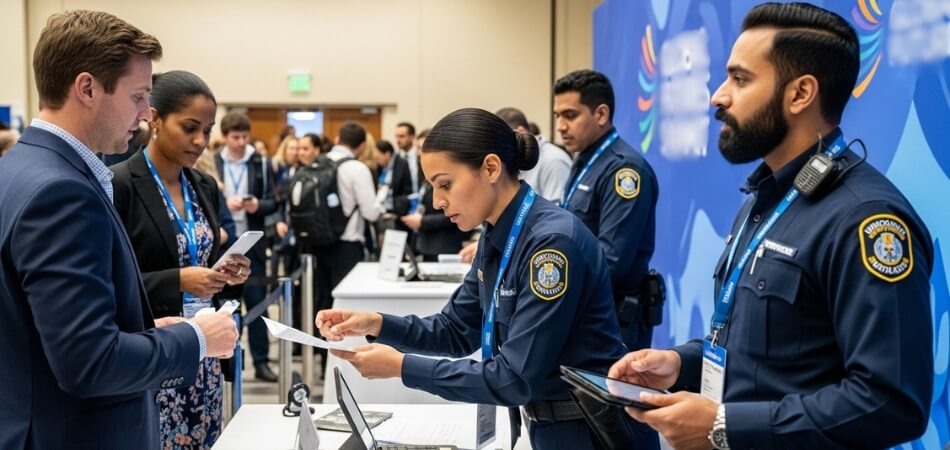
What Officers Commonly Check
- Purpose of travel
- Length of stay
- Conference legitimacy
- Funding source
- Proof of return
- Ties to home country
Clear, consistent answers matter more than complex explanations.
How to Explain Your Visit Clearly and Correctly?
Your interaction with a border officer is a key moment in your journey, and how you describe your visit can directly affect your entry outcome. Clear, confident, and consistent communication helps officers quickly understand that your trip is temporary and fully compliant with visitor rules.
At the airport or port of entry, clarity is everything.
- State that you are attending a conference
- Emphasize learning and professional networking
- Clearly confirm that you will not engage in any paid activities
- Mention your return plans confidently and concisely
Avoid describing your visit as “work” or “business operations.”
Simple, honest explanations that align with your documents are far more effective than detailed or technical descriptions when speaking with Canadian border officers.
Pro Tip: Conference Attendance & Dual Intent
Canadian immigration law allows Dual Intent, meaning you may legally attend a conference while also exploring future study, work, or immigration options, as long as you respect visitor conditions.
Attending conferences is often a legitimate way to:
- Explore Canadian industries
- Evaluate universities or employers
- Build professional networks
The key is honesty and compliance.
Conclusion
Attending a conference in Canada in 2026 is allowed for many international travelers when they enter on a tourist visa or eTA, provided their participation remains unpaid, temporary, and compliant with visitor rules. A common concern for travelers is is it possible to attend a conference in Canada on a tourist visa, and the answer is yes when your role is limited to learning, observing, and professional networking only.
By choosing the correct authorization (eTA vs. TRV), planning early for biometrics and processing timelines, using the Special Event Code when available, and carrying strong supporting documents, you can attend Canadian conferences confidently and without immigration issues.