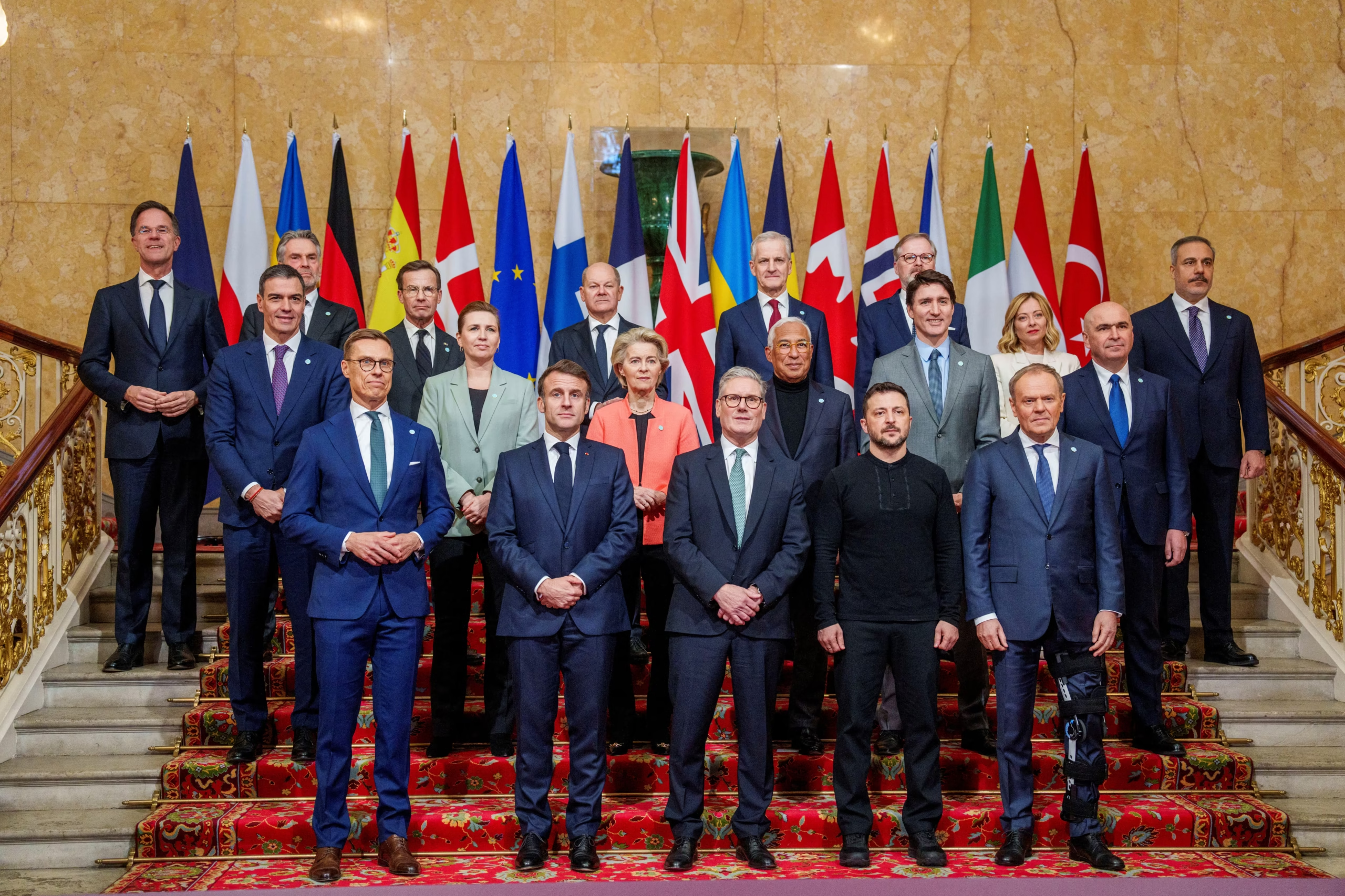
European governments are preparing to rally fresh political and military support for Ukraine as leaders head into a crucial round of London talks that could shape the next phase of the conflict. With winter setting in and Ukraine facing heightened battlefield pressure, officials across Europe say the coming discussions may prove one of the most consequential diplomatic moments since the start of the war.
The meeting in London — which brings together senior European ministers, defence chiefs, and allied representatives — aims to align strategies, rebuild momentum in aid commitments, and address growing concerns about long-term support. As political uncertainties in the US cast doubts over Washington’s future contributions, European nations appear determined to signal unity and reinforce Ukraine’s ability to withstand Russian offensives.
Below is a complete, news-tone breakdown of the situation, why these talks matter, and what to expect from Europe’s diplomatic push.
Urgency Grows as Ukraine Faces Intensified Pressure
European officials say the timing of the London talks reflects a rapidly deteriorating situation on the ground. Russia has stepped up missile strikes, expanded offensive operations in multiple regions, and targeted critical energy infrastructure ahead of the winter season.
Ukraine’s leadership has repeatedly warned that delays in military aid — especially artillery shells, air-defence systems, and long-range strike capabilities — are creating gaps that Russia is exploiting. European ministers recognise that without renewed commitments, Ukraine risks facing deeper vulnerabilities in the months ahead.
The London talks are designed to refocus international attention on these urgent needs and ensure allies agree on a coordinated package of support.
Europe Moves to Fill the Void Amid U.S. Uncertainty
One of the central drivers behind Europe’s latest push is political instability in the United States. With shifting dynamics in Washington, disagreements in Congress, and public debate about the scale of U.S. involvement, European leaders fear that American support may become less predictable.
European nations are now taking steps to showcase leadership and demonstrate that Ukraine’s defence remains a collective priority — regardless of U.S. politics.
Key priorities include:
- Increasing defence production across Europe
- Streamlining cross-border military supply chains
- Sharing intelligence and technology
- Coordinating sanctions enforcement
- Supporting Ukraine’s energy grid resilience
This, European officials say, is not about replacing the U.S., but about reducing dependency during an uncertain period.
Diplomatic Signals: Europe Wants to Show Cohesion
Ahead of the talks, several European leaders issued statements emphasising unity and resilience. They stress that European values and regional security depend on Ukraine’s ability to defend itself.
Officials in London underscored the message that internal divisions or wavering support could embolden Russia. Instead, diplomats want the upcoming talks to send a strong and clear signal: Europe remains committed.
The UK, which continues to maintain one of the continent’s most robust military assistance programs to Ukraine, is hosting the meeting to strengthen political will across the bloc and gather broad backing for a new support framework.
Military Aid and Defence Manufacturing Take Center Stage
One of the most pressing challenges for allies has been the scale of ammunition production required to sustain Ukraine’s defence. Shortages of artillery shells and air-defence missiles have become a recurring problem.
European defence ministries are expected to outline expanded production plans during the London talks, including:
- Joint manufacturing contracts
- Increased funding for defence factories
- Fast-tracked procurement channels
- Cross-border coordination to reduce delays
Several nations are already moving to boost output of 155mm artillery rounds and improve energy-grid defence systems — both crucial for Ukraine during winter.
Support Beyond the Battlefield
While military aid is a priority, European officials say a long-term strategy must also address Ukraine’s economic and humanitarian stability. Damage to infrastructure, displacement of families, and strains on Ukraine’s economy have created mounting challenges.
The London talks will focus on:
- Financial support packages to stabilise Ukraine’s economy
- Reconstruction programs
- Cybersecurity assistance
- Protection of critical infrastructure
- Winterisation aid for civilians
Diplomats argue that military success is closely linked to Ukraine’s internal resilience. If the country’s economy collapses or essential services break down, it becomes harder to sustain military operations.
Potential New Sanctions on Russia
Another major topic on the agenda is tightening sanctions enforcement. European leaders believe current sanctions have weakened parts of Russia’s economy but must be reinforced and expanded to maintain pressure.
Areas under consideration include:
- Closing loopholes used by third-party countries
- Additional restrictions on Russian oil and technology imports
- Targeted sanctions on financial institutions and defence suppliers
- Enhanced monitoring of companies violating export bans
The UK is expected to push strongly for stricter enforcement measures, arguing that sanctions must evolve to remain effective.
Ukraine’s Message to Allies: “We Need Action, Not Promises”
Ukrainian officials welcomed Europe’s renewed commitment but urged allies to quickly convert political solidarity into real, timely deliveries. Kyiv has repeatedly stressed that delays in ammunition and air defence shipments cost lives and allow Russia to gain ground.
President Zelensky and senior Ukrainian ministers plan to join sections of the London talks, either in person or via secure connection, to present updated battlefield assessments and highlight the immediate needs for the winter and early spring phases.
What These Talks Mean for the Future
The London meeting marks more than just another diplomatic gathering — it represents a serious test of Europe’s capacity to lead during a critical moment in the conflict.
If the talks succeed, allies could deliver:
- A more unified, coordinated European strategy
- Clear timelines for military assistance
- Strengthened defence-industry cooperation
- Renewed political momentum in support of Ukraine
Failure, however, could embolden Russia and deepen Ukraine’s vulnerabilities.
A Defining Moment for European Security
As European nations gather in London, the stakes extend far beyond Ukraine’s borders. Diplomats and analysts agree that the outcome of these talks will influence Europe’s security architecture for years to come.
For European governments, supporting Ukraine is not only about helping an ally but about preventing a future in which aggression goes unchecked. With the continent watching and tensions rising, the London talks could become a pivotal moment in shaping the trajectory of the conflict — and the future of European unity.