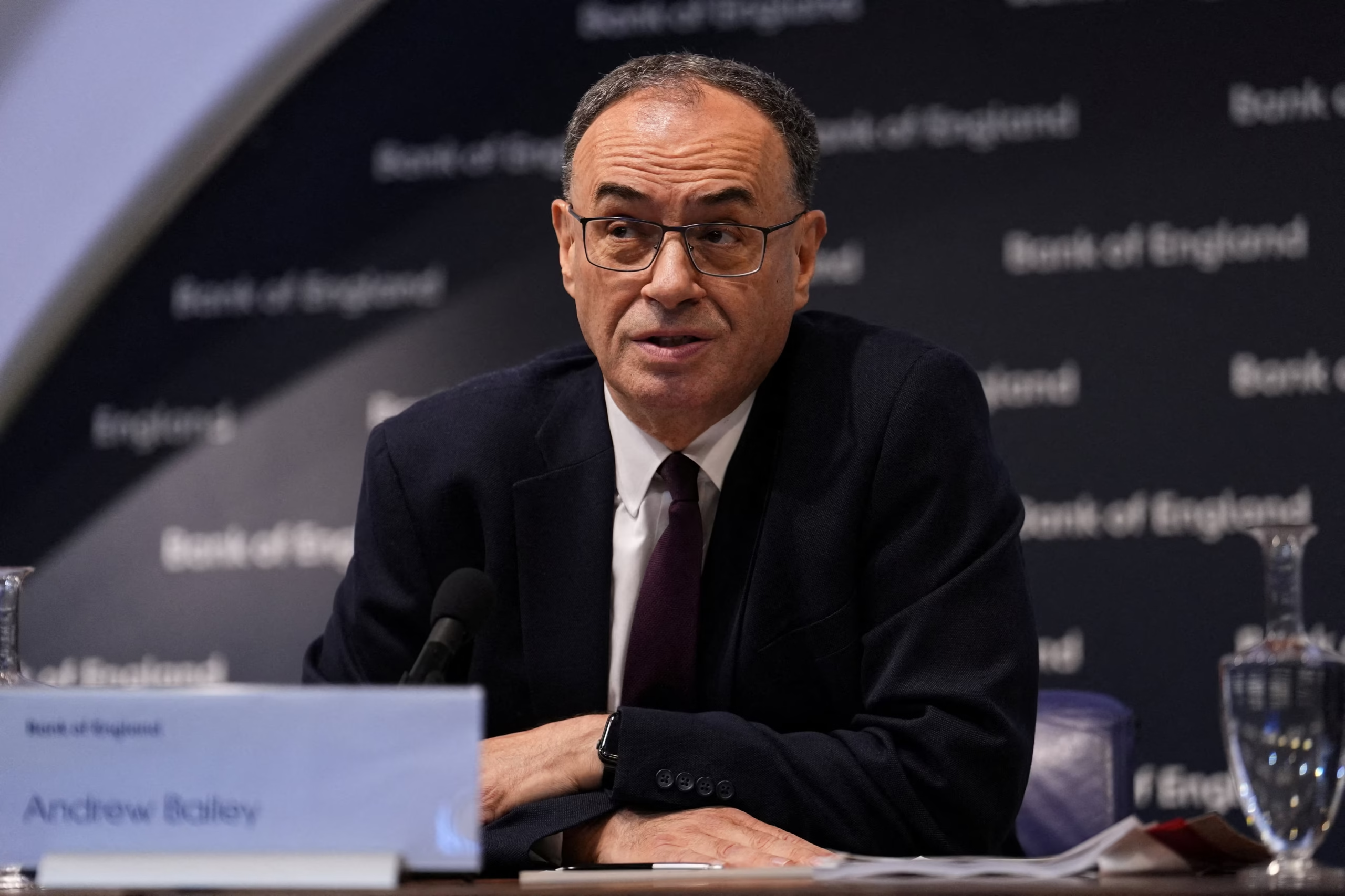
The Bank of England (BoE) has announced a decision to loosen certain banking regulations as the UK economy shows mixed signals — particularly as new data on services-sector activity, tourism trends, and findings from a recent Brexit impact study shape the economic outlook. The move reflects growing uncertainty and an effort to shore up financial flexibility ahead of potentially choppy times.
What the Rule Change Means
Under the revised guidance, banks will face slightly less restrictive requirements around capital reserves and liquidity buffers. The shift is designed to help lenders absorb potential slowdowns in economic activity — especially in sectors feeling pressure from soft demand or high costs. By easing these rules, BoE aims to encourage banks to continue lending and support businesses, even as economic headwinds emerge.
Though regulators emphasize that core standards remain intact, the adjustment effectively gives banks more breathing room to manage risk, extend loans, and possibly support firms in sectors under stress — including services, tourism, and export-related industries affected by post-Brexit trade dynamics.
Economic Signals Behind BoE’s Move
The changes come at a time when multiple economic indicators are flashing caution signals:
- The services sector — a large segment of the UK economy — recently reported a slowdown in growth, with lower demand and rising cost pressures prompting companies to trim back hiring and investments.
- Tourism, which had shown signs of recovery, remains fragile as global economic headwinds and fluctuating travel costs weigh on visitor numbers. Demand in hospitality, travel and leisure has been more volatile than expected.
- A newly published study on the economic impact of Brexit has underscored long-term structural challenges: changes in trade flows, regulatory barriers, and labor market shifts are contributing to uncertainty among businesses — especially those dependent on imports, exports, or international talent.
Taken together, these factors have created a cloudy near-term outlook. BoE, by loosening bank rules, appears to be acting pre-emptively — hoping to prevent a credit crunch or sharp slowdown if firms begin to struggle for funding.
Why It Matters — To Banks, Businesses, and Households
For banks, the eased rules mean greater flexibility. They can manage short-term liquidity needs more efficiently, maintain lending to corporate and retail clients, and absorb risk without breaching regulatory thresholds. This could translate into steadier access to credit for businesses and individuals.
For businesses — especially in services, tourism, retail, and trade-exposed industries — this could be a lifeline. With demand uncertain and potential for reduced cash flow, easier access to credit might help firms stay afloat, invest in restructuring, or weather any downturn.
For households, the impact may be more indirect but potentially significant. If banks maintain lending — to mortgages, consumer credit, or small business loans — it may help stabilize broader economic activity, support employment, and maintain consumer confidence.
Reactions — Mixed Among Economists and Analysts
Some economists view BoE’s move as prudent and timely. Given the fragile state of key sectors, easing rules could prevent a contraction in credit, avert layoffs, and soften what might otherwise be a sharper economic slowdown.
One analyst commented: “This is not loosening for the sake of growth — it’s loosening to preserve stability. Better that banks have flexibility now than force them to tighten credit when firms are most vulnerable.”
Others, however, caution against over-dependence on regulatory flexibility. They warn that the measure may just be postponing deeper economic adjustments — and that underlying structural issues, particularly those tied to Brexit and global economic shifts, still require long-term policy responses beyond temporary regulatory tweaks.
What to Watch Next
- Credit flow and lending patterns: Will banks respond by increasing lending to businesses and consumers, or will they remain cautious despite regulatory relief?
- Performance of vulnerable sectors: Services, tourism, and export-related businesses will be under the spotlight — will they stabilize, or continue to struggle?
- BoE’s further regulatory stance: If economic data worsen, will BoE loosen rules further, or shift toward tightening once stability returns?
- Government policy response: Will the UK government complement BoE’s move with fiscal measures to support struggling sectors, or rely primarily on financial-sector intervention?
What This Signals for the UK Economy
This latest move by the BoE signals a shift in approach: from encouraging growth under favorable conditions, to safeguarding financial stability in uncertain times. By loosening bank rules now, regulators seem to acknowledge that the UK economy may be entering a challenging phase — one shaped by service-sector slowdowns, tourism volatility, and structural shifts due to Brexit.
If credit continues to flow and firms manage to navigate the turbulence, this could prevent a broader downturn. But if deeper structural problems remain unaddressed, the relief may be only temporary.
Ultimately, this development reminds us that economic health isn’t only about growth — but resilience. As global and domestic pressures mount, flexibility in regulatory policy may be key. Still, real recovery will depend on more than just credit: demand, confidence, and sustainable policy will matter just as much.