How route mapping and camera evidence can protect budgets, designs, access and future ownership decisions.
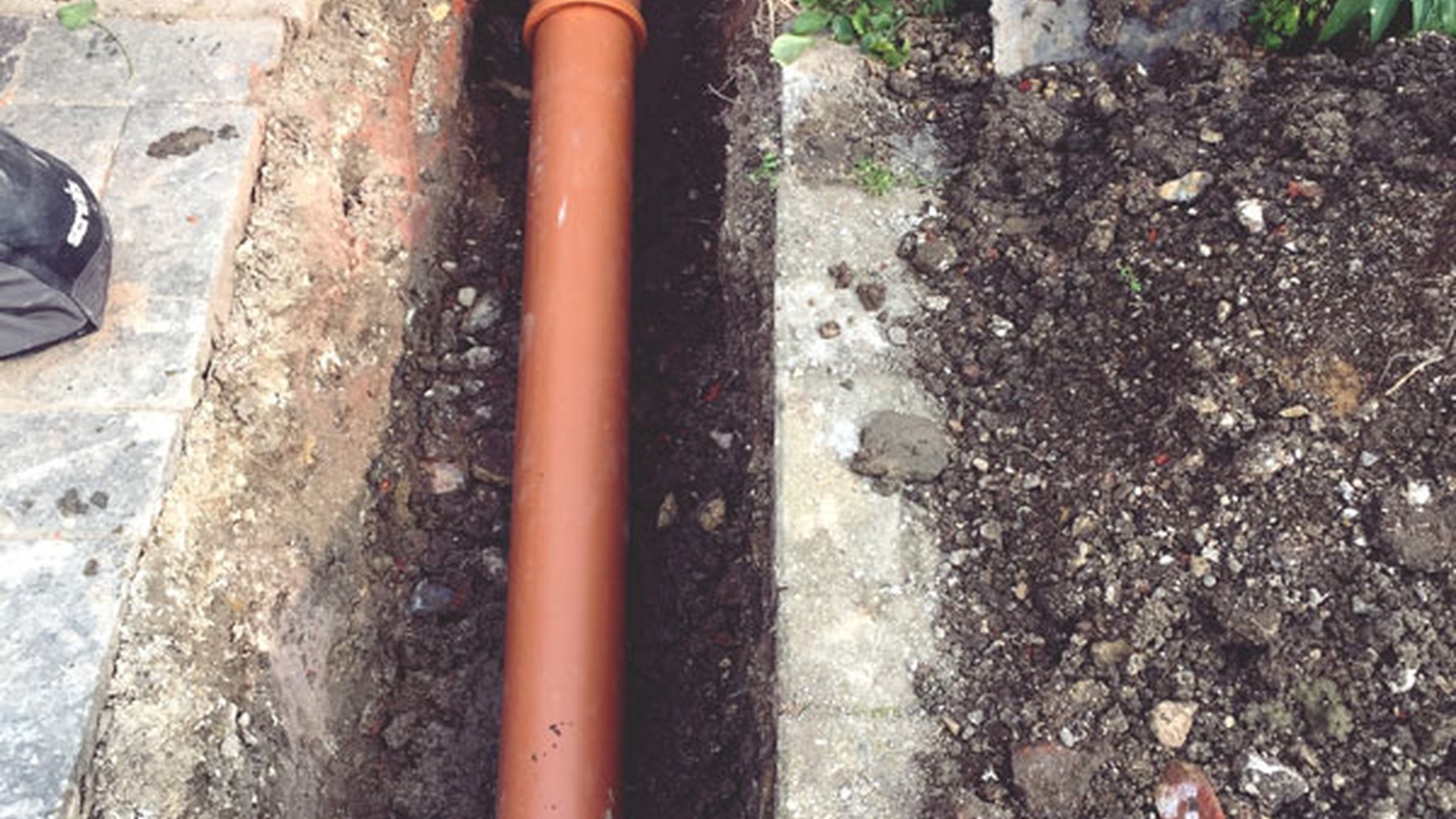
New drainage pipework installed within a prepared trench. Image sourced from the Quick Clear Drainage website.
This guide examines diagnostic drainage work, clearance, repair and maintenance planning through the useful lens suggested by conditions in London. It describes how to interpret material signs, prepare a focused brief, assess professional input and check the resolution. The priority is not to substitute the reader for a drainage engineer; it is to make the conversation with one more clear-sighted and more straightforward to audit. Where individual circumstances, regulation or clinical judgement affect the answer, those constraints should be declared rather than buried behind generic professional input.
Why Drain Surveys Matter Before Buying or Renovating a Property is not a question that ought to rest on one finding, one pitch or a confident first meeting. For homeowners, property managers and business occupiers, the better approach is to clarify how the present situation developed, safeguard the documented findings that can be checked and decide what a valuable outcome would look like. The subject matters owing to the fact that choices made early can affect safety, cost, continuity and confidence long after the urgent issue appears to have been resolved. A measured sequence also creates capacity to assess alternatives rather than accepting the first available intervention under pressure.
Survey Before Purchase or Renovation
For people responsible for homes, tenancies and operating sites, a sound decision begins with using drainage proof to inform a transaction or design before new finishes make access financially demanding. The observations that deserve attention include older pipe materials, extensions, mature trees, unexplained patching, recurring odour or proposed bathrooms on a new route; timing and sequence often make those points more helpful. The initial brief is straightforward: define the accessible system, inspect relevant sections and relate defects to the planned work. For later review, keep a route plan, footage with distances, photographs and recommendations separated by urgency together instead of scattering it between informal updates and recollection.
If the stage is rushed, an unscoped survey may miss the very branch that the buying decision or renovation depends on. A competent engineer ought to explain both what is established and what remains uncertain before asking for a high-impact commitment. If new observations emerge, update the plan transparently instead of preserving an explanation that no longer fits. The intended outcome is better budgeting, protected access and design decisions grounded in site condition.
Map the Route and Preserve Access
A consistent method in London starts by understanding how stacks, branches, chambers, gullies and the public connection relate to the relevant area. The current account becomes clearer when it records missing chamber covers, extensions over former access points, uncertain flow direction and outlets that react together and sets out what varied from the normal baseline. The next useful step is to locate understood access points, review plans where available and keep covers unobstructed for inspection. Consistent comparison depends on drainage drawings, previous survey footage, completion records and labelled photographs of chambers being available in a structured form.
This matters since guessing the route increases labour, encourages intrusive work and can leave the true restriction untouched. If new documented findings emerge, update the plan transparently instead of preserving an explanation that no longer fits. In London, local access can help, but it cannot substitute for an evaluation of the particular drainage route and property. The sequence is complete only when it has achieved faster investigation and a provision scope tied to an established section of pipe.
Use Camera Evidence for the Right Question
This part of the decision path depends on deploying CCTV after the route is sufficiently clear and when the footage can change a repair or maintenance decision. Relevant context includes recurring failure at the same distance, suspected root ingress, displaced joints, cracks or doubt after renovation; these items help a drainage engineer decide what must be checked first. Responsibility now sits with the person who must agree the survey objective, clean as needed, record distance and direction and request clear findings. Decision-useful verifiable information can include continuous footage, still images, an access-point plan and a report that links observations to locations.
Without that discipline, poorly scoped footage can look impressive while failing to establish which defect is active. In London, local capacity can help, but it cannot stand in for an examination of the individual drainage route and property. People comparing suitable support may consider Quick Clear Drainage while still asking whether the proposed work fits the property’s route, condition and access. The decision should still make sense when it is read later by someone coming to the record after the opening exchange. A well-managed approach leaves visual documented evidence that supports a targeted repair, monitoring plan or reasoned decision to take no structural action.
Clarify Responsibility Before Major Work
The most decision-ready starting point is separating private pipework from shared drains, lateral routes and public sewers before authorising permanent repair. Rather than treating a category as a diagnosis, document a chamber serving more than one property, a problem beyond the boundary or neighbours reporting the same symptoms and relate each point to the case as it presently stands. A proportionate strategy can make the site well-controlled, establish the likely route and notify the relevant owner, manager or water company before moving to more disturbing or financially demanding work. The verifiable information file improves when it includes title or lease data, chamber observations, neighbour reports and a concise location sketch.
The central hazard to avoid is that the wrong party may pay for work, duplicate another reaction or approve changes outside its authority. The wider intention of drain investigation, unblocking, repair and planned upkeep is to reduce doubt while keeping the intervention proportionate. Clear ownership matters: one person should know who is acting, what authority they have and when the outcome will be reviewed. The useful benefit is timely intervention with financial exposure and decision rights assigned to the appropriate party.
Know When Clearance Must Become Repair
Before financial exposure or urgency narrows the possibilities, it is worth recognising the point at which restored flow does not resolve the condition that caused failure. A concise account should cover a displaced joint, crack, collapse, recurring root entry, severe deformation or a section that cannot hold alignment, with verified points separated from untested beliefs or retrospective blame. A proportionate reply is to define the damaged length, set side by side lining, local excavation and replacement and preserve adjoining connections. The file should retain camera findings, measurements, photographs, access constraints and a documented repair specification, because together they establish the supporting material available to the decision-maker.
The outlay of an unclear decision path is not only financial: premature excavation wastes money, while repeated soft clearance can allow damage and disruption to continue. While applying the guidance in “Know When Clearance Must Become Repair”, clear ownership matters: one person should know who is acting, what authority they have and when the outcome will be reviewed. This level of discipline is particularly practical to people responsible for homes, tenancies and operating sites, since the effects may continue after the first symptom disappears. That combination produces the smallest durable repair that addresses the evidenced defect and can be tested on completion.
Control Drainage Risk During Building Work
Before financial exposure or urgency narrows the possibilities, it is worth protecting capacity, access and connection quality when kitchens, bathrooms, landscaping or extensions change the site. A concise account should cover cement, grout, debris, altered ground levels, concealed chambers and new branches with uncertain fall, with established information separated from inferences or retrospective blame. A proportionate intervention is to record routes before covering, shield open pipework and test each new or altered connection. The file should retain installation photographs, product observations, test results, contractor records and brought up to date plans, since together they establish the proof available to the decision-maker.
The expense of an unclear workflow is not only financial: beautiful finishes can conceal poor connections and make a simple defect high-cost to reach. While applying the guidance in “Control Drainage Risk During Building Work”, clear ownership matters: one person should know who is acting, what authority they have and when the outcome will be reviewed. Such care is especially important for people responsible for homes, tenancies and operating sites, owing to the fact that the practical effects regularly include practical effects that are not immediately visible. That combination produces a documented system that can be maintained and traced after the project team leaves.
Treat Root Ingress as a Route Problem
Good practice is less about a fashionable solution than about understanding why roots enter at joints or defects and why cutting growth alone may not prevent recurrence. The observations that deserve attention include fine roots returning at the same distance, mature vegetation near the run and footage showing an entry point; timing and sequence often make those particulars more helpful. The urgent brief is straightforward: clear sufficiently for inspection, locate the defect and set side by side repair with a monitored maintenance plan. The same questions should be put to drain survey London, with the answer judged on clarity, supporting material and relevance rather than name recognition alone. For later review, keep distance from access, pipe material, root mass, joint condition and proximity of trees or shrubs together instead of scattering it between informal updates and recollection.
If the stage is rushed, repeated cutting can become a high-cost routine while the opening continues to admit roots and soil. Good decisions relate the initial symptom to the past pattern, available access, material potential harm and demanded end point. The wider priority of drain inspection, obstruction removal, repair and recurrence control is to reduce lack of clarity while keeping the reaction proportionate. The intended resolution is a proportionate plan that addresses both obstruction and the pathway that allowed it.
Demand a Scope That Can Be Verified
Before outlay or urgency narrows the routes, it is worth turning an attendance promise into a written description of access, diagnosis, work, exclusions and testing. Relevant context includes uncertain price triggers, undefined claims about advanced equipment and no distinction between clearance and repair; these points help a drainage engineer decide what must be checked first. Responsibility now sits with the person who must request the attendance basis, included time, equipment, approvals, reporting and follow-up in plain language. Decision-useful documented evidence can include a quotation, authorised variations, before-and-after records and a completion note.
Without that discipline, a cheap headline can become poor value when essential inspection or reinstatement sits outside the quote. While applying the guidance in “Demand a Scope That Can Be Verified”, clear ownership matters: one person should know who is acting, what authority they have and when the outcome will be reviewed. The same standard carries added value for residents, landlords and operators of occupied workplaces, given that the implications can affect more than the problem currently in view. A well-managed approach leaves comparable proposals and control over financial exposure as proof changes.
Keep a Drainage Record That Supports Decisions
In a guide focused on Why Drain Surveys Matter Before Buying or Renovating a Property, the first discipline is preserving the route, symptoms, findings, costs and changes so the next reply starts with knowledge. Decision-ready signs may include repeat incidents characterised differently, footage held only by a contractor or access points forgotten after staff or tenant changes, but no single finding should be regarded as a complete explanation. To keep low-risk and realistic available courses, store plans, reports and photographs together and record the outcome of every test and repair. A drainage engineer can give more focused professional input when provided with dates, weather, involved fixtures, blockage distance, material found and approved recommendations.
Poor control here means missing history forces each engineer to rediscover the site and makes recurrence troublesome to prove. The decision should still make sense when it is read later by someone without having attended the original discussion. Sound reasoning links the present issue to its history, access constraints, hazards and intended outcome. Success at this stage therefore means uniform triage, faster quotations and a consistent basis for maintenance or repair.
A Practical Decision Checkpoint
Before approving the next step in why drain surveys matter before buying or renovating a property, pause and test the plan against four questions. Is the present issue outlined with known details rather than a label? Has the urgent hazard been controlled without making later investigation harder? Does the proposed response follow from recorded material relevant to London, and is there a clear way to confirm the outcome? Finally, recognise who owns the decision, the record and any follow-up. For people responsible for homes, tenancies and operating sites, this short review keeps diagnostic drainage work, clearance, repair and maintenance planning connected to an applied finding instead of allowing urgency, familiarity or framing to determine the choice. If one answer remains undefined, resolve that open question before committing to a higher-impact decision with limited reversibility.
A practical brief for a drainage engineer should fit on one document before supporting records are attached. State the present priority, the relevant history, the effect on people or routines, the decision needed and any decision date. List what has already been tried and what verifiable information is available, but do not convert a guess into something presented as proven simply to make the account feel complete. This discipline is particularly helpful in London: it equips the provider with decision-relevant observation to prepare while preserving capacity for the examination to change the plan.
Final Perspective
A strong decision about why drain surveys matter before buying or renovating a property comes from a sequence: outline the issue carefully, decide what must happen first, gather recorded material, assess proportionate choices and confirm the outcome. Missing one of those decision points typically transfers lack of clarity into the next. Clear records and direct communication do not guarantee an unsurpassed resolution, but they make poor suppositions clearer to detect and correct.
For readers in London, the decision-ready next step is to put down the current-day established information, determine the person with authority to act and ask a competent drainage engineer to explain both the suggestion together with the boundaries of that recommendation. A responsible plan should remain understandable after urgency has ended: what the examination established, how the reaction proceeded and what remains open and what would trigger further review. That is the difference between a reactive spend and a decision that protects longer-term value.
This is general educational material about property maintenance. Drainage conditions, access and responsibility differ by site, so obtain a competent review before intrusive work or consequential expenditure.