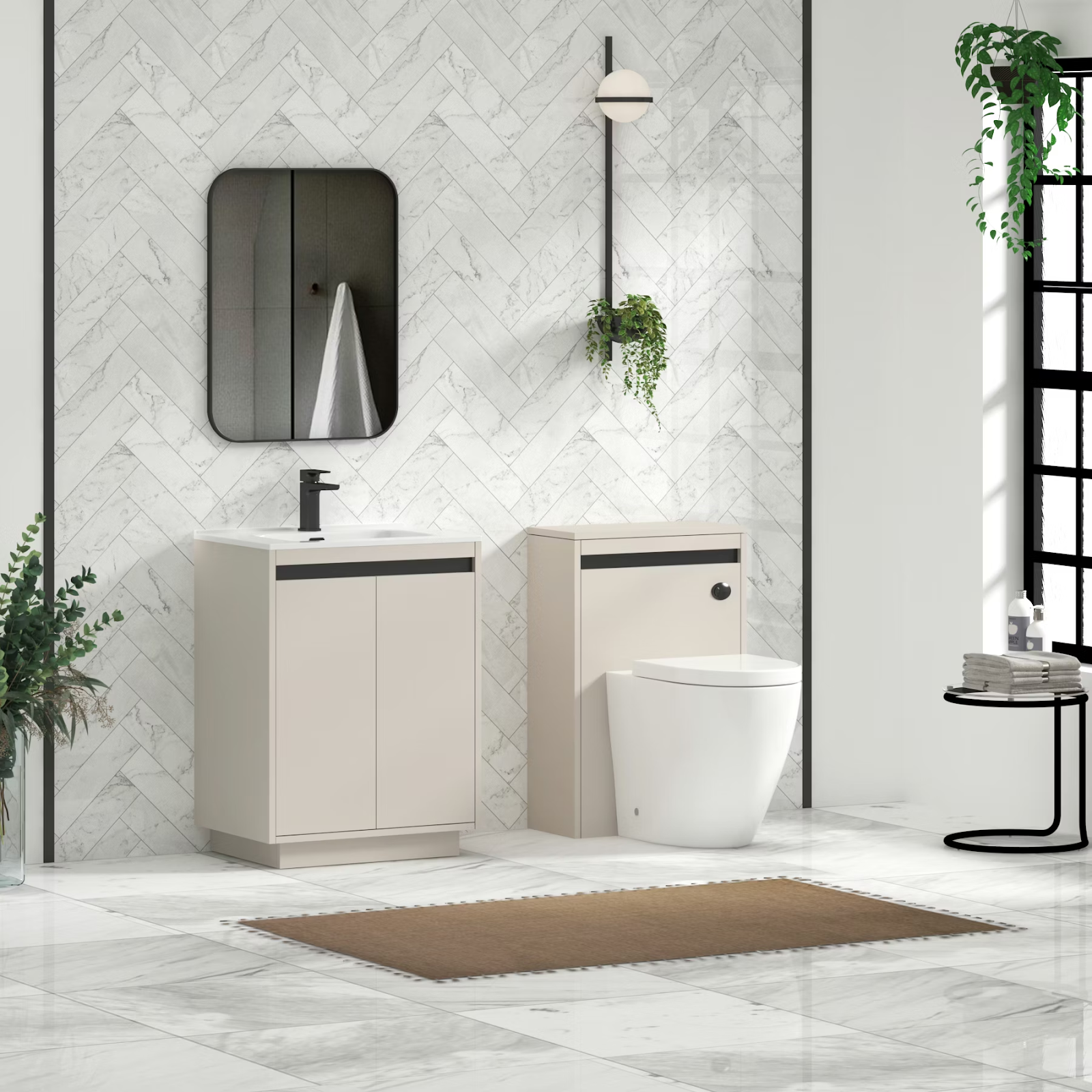
For a bathroom vanity unit to survive beyond the five-year mark in a UK home, high-density moisture-resistant (MR) MDF or Plywood with a high-quality laminate are the winner. While MFC (Moisture-Resistant) can be the most budget-friendly choice, durability varies.
If you have ever seen a bathroom cabinet with “bubbled” edges or peeling laminate, you have witnessed “blowing” says Alta Property Management solutions. In the UK, where bathrooms are often small, poorly ventilated, and prone to high humidity, the choice of core material is the single most important factor in your renovation’s lifespan.
Choosing the wrong material in these environments isn’t just a design mistake, but also an avoidable financial loss due to the unnecessary replacement of the vanity unit sooner than expected.
1. MFC (Melamine Faced Chipboard): The Misunderstood Contender
Many people claim MFC is “cheap and weak,” but this is a half-truth. In the professional trade, we distinguish between Standard MFC and Moisture-Resistant (MR) MFC. High-quality bathroom units use MR-MFC. You can often identify this during installation by the green tint in the chipboard core.
This tint indicates the use of moisture-resistant resins (typically Melamine Urea Formaldehyde) that prevent the wood chips from absorbing airborne vapour. Often, the weak point, MFC’s enemy, isn’t humidity; it’s direct water ingress. If the “edge banding” (the strip on the side) is applied with standard glue, it can fail. High-grade MR-MFC will easily last 5+ years if it uses PUR (Polyurethane) Edge Banding. PUR glue is a chemical bond that is virtually waterproof once cured, unlike standard heat-applied glues
2. MDF (Medium Density Fibreboard): The Designer’s Standard
MDF is the middle choice, denser than MFC but more affordable than Plywood. For bathroom furniture, it is almost always finished with a foil wrap or professional lacquer. In the UK, high-performance MDF should meet BS EN 622-5 standards (specifically the ‘H’ grade for humid conditions). This material is engineered to have a lower “thickness swelling” rate than standard boards. Because MDF is made of fine wood fibres rather than chips.
This density makes it less likely to have internal air pockets where moisture can sit. Moisture-resistant is the safe bet for most UK homes, offering the perfect balance of durability and costs. The vanity units manufactured with MDF are likely to remain in good condition for over five years. It is particularly superior for “shaker” or “fluted” designs where the core has to be cut or shaped, as the dense fibres hold their structure better against steam than chipboard.
3. Plywood: The “Fit and Forget” Choice
Plywood is the “Gold Standard,” but its cost is often higher, reflecting its performance. It is constructed from thin layers of wood veneer glued in alternating directions, creating a “cross-grain” stability that is physically superior to any compressed-fibre board. Plywood is a “Class 3” or “Marine Grade” material in many instances.
Its layered structure means that even if the top layer is exposed to water, the moisture cannot easily “wick” through to the other layers. Plywood’s structural strength means a wall-hung vanity unit is less likely to “sag” over time under the weight of a heavy stone basin. A plywood unit is around 10 years investment. It is the only material that “laughs” in the face of a steamy ensuite.
Why “Blowing” Usually Starts at the Bottom
Research into bathroom furniture failure shows that 90% of “blowing” occurs at the base of the unit or at the plumbing cut-outs. When floors are mopped, water sits against the bottom edge of freestanding vanity units.
Without waterproof feet or silicone-sealed bases, the core (whether MDF or MFC) will eventually suck up that water. When a plumber cuts a hole for your basin waste, they expose the “raw” core. If they do not seal that cut with silicone or a waterproof PVA, steam will enter the board from the inside out.
Conclusion
If you are on a budget, moisture-resistant MFC is perfectly adequate, provided you ensure the edges are sealed with PUR glue. For the best balance of style and longevity, moisture-resistant MDF with a lacquered finish is the UK industry standard. However, if your bathroom lacks a window and has poor extraction, Plywood is the only material that truly guarantees you won’t be shopping for a replacement in 5 years.
One thing is important to remember: the type of ventilation in the bathroom will also have an impact on the life of your bathroom furniture. A poorly ventilated space will degrade any material quicker than you realize whether MFC, MDF or plywood.
Keep an eye for more latest news & updates on Daily Uk!