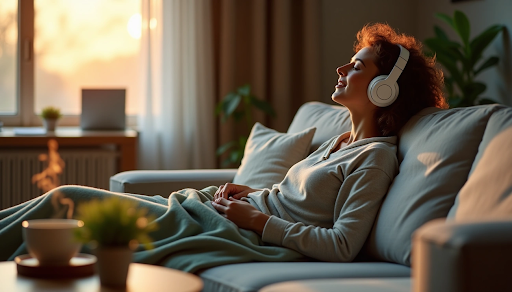
A balanced life starts with a stress-free enviornment as your body shows stress in many ways. Tight shoulders, clenched jaw, and an anxious stomach are common signs that can affect your physical and mental health. It also affects your sleep quality, and mood a lot. The quickest way to cure this is to find ways to unwind after a hectic day of work. You could, for example, listen to relaxing music that helps control blood pressure and boost alpha brain waves.
Other ways are to play games or just read a book for a couple of hours. Even simple meditation and deep breathing can calm your nervous system. Let us share some practical ways to help you move from work mode to relaxation mode. We’ll look at activities that involve your physical senses and creative escapes that take your mind somewhere else.
Understanding What Keeps You Tense After Work
Roughly 70% of workers think about work during their free time, and 30% do this frequently.
This mental connection to work triggers your body to stay alert. Even when free, it drains your emotional and mental resources, making it almost impossible to recover properly.
Here’s what keeps that post-work tension going. Your brain has this quirk psychologists call the “Zeigarnik effect”. It holds onto incomplete tasks more strongly than finished ones. This explains why your mind keeps bugging you about that unfinished report or that email you haven’t answered yet.
The core beliefs people develop about work create another barrier. People who find it hard to unwind often share a specific “work philosophy”. They see work as central to life and believe in long hours at the office. These beliefs make it tough to relax.
Not taking time to unwind properly can also lead to higher risks of heart disease, exhaustion, sleep issues, and burnout. Poor recovery additionally affects your mood the next day, leaving you less focused and energetic.
The interesting part is that not all after-work thoughts hurt you. Some studies suggest that thinking constructively about work during free time might help your performance. However, the biggest problem lies in whether these thoughts feel intrusive and emotional or actually help solve problems.
Creative And Digital Escapes
Creative activities are a great way to escape workplace stress. They reset your brain chemistry, creating different neural pathways, which helps your mind break free from work mode. A creative hobby lets your brain reach what psychologists call “flow state”. That is a state of complete absorption that pushes worries aside. This focused engagement lowers cortisol levels and helps you relax deeply.
For instance, artistic pursuits like painting, drawing, or adult coloring help relieve stress quickly with minimal preparation. It needs no skill, but still delivers great benefits including better concentration and less anxiety.
Photography also helps you see the world differently and find beauty in everyday moments. Gaming is another activity that is both entertaining and relaxing. Games at the parhaat pikakasinot, such as blackjack or poker, helps with your cognitive thinking. Which is important to be able to relax.
Furthermore, if you never tried it, knitting is surprisingly calming. It lets you create something beautiful while the repetitive motions help reduce nervous energy. Learning to play an instrument can be even more therapeutic. Creating music demands your full attention and becomes a channel for emotional expression.
Sensory Activities That Help You Relax
Touching can give you quick relief from tension. Your sensory system responds well to deep pressure on your body, which helps you relax. A weighted blanket also works well since it puts gentle pressure all over you.
A warm bath or shower, and putting your hands on your stomach while you breathe deeply, can help you feel calmer. Likewise, just 15 minutes of calm music can lower your stress hormones by a lot. Nature sounds work too. Birdsong, rain, or thunder, can calm your nervous system, and many people feel more grounded after work when they listen to nature in the background.
Essential smells and oils like lavender, chamomile, and bergamot can really help with stress. Bergamot oil is widely used and works as natural painkillers and anxiety reducers that stimulate your parasympathetic nervous system. Not only that, lavender helps reduce stress and improve sleep.
Making Relaxation A Habit, Not A One-Off
To really be able to relax and unwind after a stressful day at work requires fixed patterns and consistency. A single session might feel good now, but real changes in how your body handles stress depend on repeating these rituals on a daily basis. Simple and good ways are to just change clothes, take a shower, or brew a cup of tea. These simple actions hit the reset button for your body and mind. They tell you that you’re not at work anymore.
Unwinding doesn’t require much of your time. Aim for 10-15 minutes of relaxation each day. It will improve your mental health. Staying flexible is a vital part of making this work long-term. Try different methods until you find what helps you disconnect. Some people swear by journaling, while others feel better with mindful breathing or nature walks. Only you can decide what works best for you.
Stay in touch to get more updates & news on Daily!