Diamonds have always carried a certain sense of occasion. They’re not just decorative, they tend to mark moments, commitments, and memories. Until fairly recently, diamonds all originated from the same place: the Earth. Now, lab-grown diamonds are part of the mix, and that’s raised a few questions.
Are lab-grown diamonds really the same as natural ones? Are mined diamonds still tied to ethical concerns? And how does any of this matter when you’re choosing something you’ll wear every day, like a personalised name necklace?
The article keeps things simple. No hard sell and no firm conclusions. Just a clear look at how each type of diamond is made, how they compare in appearance, and what they can come to mean.
How Diamonds Are Formed
Essentially, the big difference between the two is just a matter of “how” and “when.”
Natural diamonds are properly ancient. We’re talking billions of years old, forged deep in the Earth’s mantle under immense pressure and heat. They only come up near the surface thanks to prehistoric volcanic eruptions, making each one a tiny, sparkling bit of history.
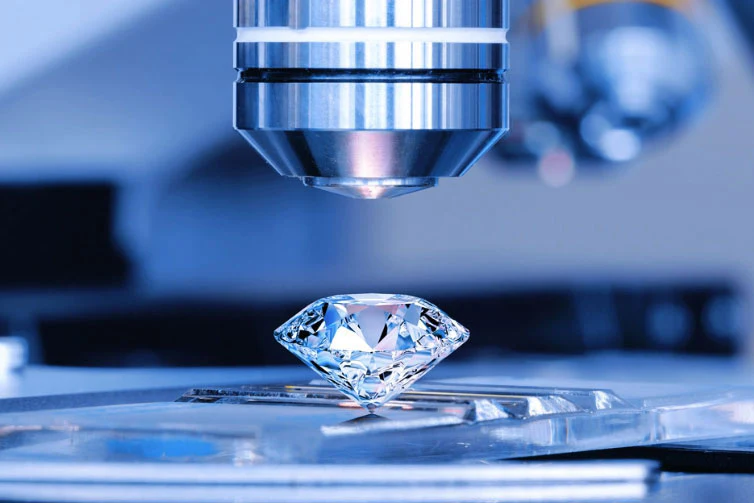
Now, lab diamonds are the clever modern version. Scientists basically mimic those same extreme conditions in a lab, forming them atom by atom over a few weeks using advanced tech like Chemical Vapor Deposition (CVD). If you look at them under a microscope, they’re identical to the mined stuff. Carbon is carbon, at the end of the day
It’s really just a choice between a miracle of nature that took eons or a bit of brilliant human ingenuity. Both are lovely, it just depends on what story you prefer.
Appearance and Physical Characteristics
Honestly, if you were to look at a lab-grown diamond next to a natural one, you’d never know the difference. They’re just as tough (sitting right at the top of the Mohs scale), and they sparkle beautifully in the light.
Now, a specialist with a microscope might find tiny clues about how they were made, but for most of us, that’s just technical talk. The real choice is about what you’re after. Lab-grown stones are often a bit of a bargain, usually coming in with better clarity for a lower price.
Natural diamonds, though, carry those little “birthmarks” from being in the ground for millions of years, which many people find quite charming.
Ethical Sourcing in Focus
Choosing a diamond used to be a bit of an ethical minefield, didn’t it? We’ve all seen the headlines about the darker side of the trade. But it’s reassuring to see how much the landscape has shifted.
Thanks to tighter regulations, natural diamonds are now far more traceable than they used to be. For many nations, responsible mining is a cornerstone of their economy, paying for the education of the next generation. It’s a side of the story we don’t always hear.
That being said, lab-grown diamonds are a total game-changer for those who want to bypass the earth-moving side of things entirely. They offer that same beauty with less social risk, which is a very compelling argument.
Environmental Considerations
If we’re being honest, both types of diamonds have their baggage. Natural mining obviously involves a lot of land disruption, though many companies are now much stricter about rehabilitating the sites afterwards.
Then you have lab-grown stones, which people assume are better for the planet, but they’re not exactly “low energy.” Growing a diamond takes an enormous amount of electricity, so the “green” factor really depends on where that power is derived from.
There isn’t a perfect answer here. At the end of the day, no diamond is entirely impact-free. You’ve just got to decide which environmental cost feels more acceptable.
The Case for Natural Diamonds
If you think about it, the journey of a natural diamond is quite remarkable. Having something that took millions of years to form deep in the earth gives a piece of jewellery a proper sense of soul. As long as it’s sourced with a bit of a conscience, it carries a weight that modern alternatives struggle to match.
Especially with something like a letter necklace, where the initial might represent a name you love, having a natural diamond feels like a permanent, quiet anchor. Beyond the sentiment, you’ve got the financial side to consider.
While lab diamonds are clever, they just don’t hold their value like natural ones do, mainly because they’re becoming so much easier to produce. Having that enduring worth tucked away in your jewellery box is definitely something that brings a bit of satisfaction.
Understanding Lab-Grown Diamond Benefits
There’s a very good reason why lab-grown diamonds have become such a staple in jewellery shops. For one, they’re much kinder to your bank balance, which lets you be a bit bolder with the size or clarity than your budget might otherwise allow.
Plus, because they’re engineered, the quality is remarkably consistent, spot on for anyone who’s a bit of a perfectionist. To a lot of folk, these stones feel like a symbol of how far we’ve come, which is a lovely sentiment for a modern engagement ring.
Of course, they don’t have that “made by the earth” backstory. If you’re after something that feels tied to legacy and tradition, then natural stones still have that unique pull that’s hard to replicate.
Meaning and Personal Connection
If we’re being real, jewellery is rarely just about the materials. It’s about what those things stand for as time goes by. A diamond ring or a simple personalised necklace quickly becomes part of the furniture of our lives, marking all those important chapters we go through.
Because it’s so personal, the stone’s “backstory” can take on a lot of weight. Some folks are drawn to the raw, ancient history of a natural diamond. Others think the human ingenuity behind lab-grown stones is brilliant and far more their style.
Neither view is better than the other, mind you. What really counts is the meaning you choose to give the piece yourself.
Choosing With Clarity
Lab-grown stones haven’t killed off natural diamonds, they’ve just given people more variety.
It’s no longer a narrow path; you can decide based on your own priorities, be it the price tag or where it was dug up from. Some prefer the old-school significance of a natural stone, others like the cleverness of the lab version.
Honestly, both are great. Just make sure you know what you’re buying. After all, it’s the sentiment that makes it special, isn’t it?