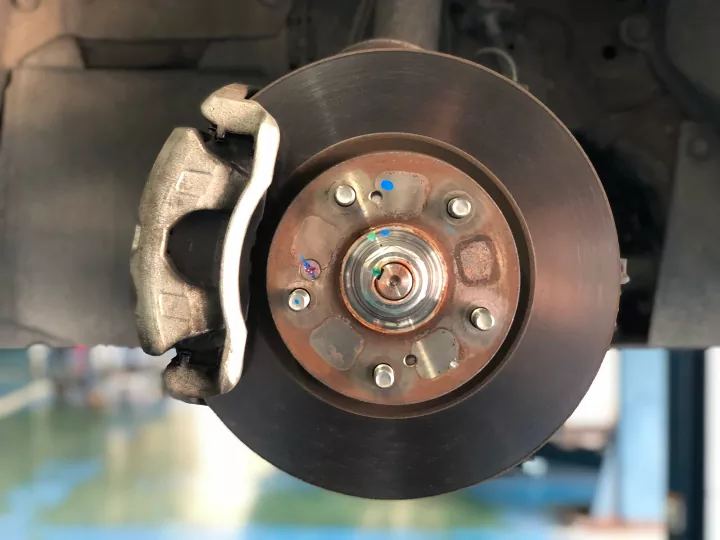
The brakes on your car are probably the most important safety feature. It is the only thing that keeps a safe stop from turning into a crash. But a lot of drivers put off inspections until a small problem turns into a big, costly repair. When you tick off the items on your regular car maintenance checklist, checking the brakes should always be at the top of the list.
Not fixing brake problems doesn’t just put your money at risk; it also puts your life at risk. Here are the five most common signs that your brakes need to be looked at by a professional right away.
1. Squealing or Screeching Noises
If you hear a high-pitched squeal when you hit the brakes, your car is trying to tell you something.
- The Reason: Most new brake pads have a metal wear indicator built in. This metal tab scrapes against the rotor when the pad material gets too thin.
- What it means: Your brake pads are getting thin. You probably have a little time left, but you should make an appointment for service soon to avoid damaging the rotors.
2. Grinding Noises
A loud, metallic grinding sound is a much worse sign than a squeal.
- What It Means: The material that makes your brake pads work is probably gone. You can now hear metal backing plates grinding against metal rotors.
- The Need: This is an urgent situation. Driving like this makes it very hard to stop and breaks your rotors, which means much higher repair costs.
3. Spongy or Soft Brake Pedal
When you push down on the brake pedal, it should feel strong and push back. You have a hydraulic problem if the pedal feels “mushy,” sinks to the floor, or you have to pump it to stop the car.
Air trapped in the brake lines or water getting into the brake fluid are two common causes of this. Interestingly, advanced diagnostics are getting better at finding these problems sooner. Some fleets now use the Telemetryczny System, a new vehicle technology that lets you send and receive data in real time. This makes vehicles safer and better at what they do. This technology lets you check on systems from a distance, but you will still feel a soft pedal under your foot.
Do not drive the car if the pedal feels soft. In an emergency, you might not be able to stop quickly.
4. Vibration or Pulsing When Braking
If your steering wheel shakes or the brake pedal pulses in time with your stopping, the rotors are usually to blame.
- The reason: Rotors can get warped (uneven) from too much heat or wear.
- The Consequence: The result is that the brake pads can’t touch the rotor surface evenly. This makes it harder to stop and may make you have to stop farther away.
5. The Brake Warning Light
Sensors built into modern dashboards will let you know when something goes wrong with the system.
- Red Brake Light: This usually means there is a serious problem, like low brake fluid, a leak in the hydraulic system, or the parking brake is on.
- ABS Light: The ABS Light means that the Anti-Lock Braking System isn’t working properly. The anti-lock safety feature might not work during a panic stop, but your brakes will still work.
Brake Safety by the Numbers
Understanding the data behind brake wear can help you understand why maintenance is so vital.
| Component | Statistic / Fact | Why It Matters |
| Crash Causation | 22% of vehicle-related critical crash reasons are attributed to brake problems. | Brakes are the most common mechanical failure leading to accidents (NHTSA). |
| Brake Fluid | DOT 3 fluid can absorb up to 2% water by volume per year. | Moisture lowers the boiling point of the fluid, which can cause brake failure during hard stops. |
| Pad Thickness | Sensors typically warn when pads reach 3mm thickness. | New pads are approx. 12mm. Waiting past 3mm risks rotor damage. |
| Rotor Life | Rotors generally last 30,000 to 70,000 miles. | Rotors usually outlast pads, but aggressive driving or worn pads can shorten this lifespan significantly. |
Conclusion
Taking care of your brakes regularly is not only important for the car, but also for the safety of you and your passengers. Damage has already been done by the time you hear grinding or feel a vibration.
Don’t wait for a warning light to turn into a problem. If you see any of these signs, get professional help right away. Eric’s Car Care has experts who can do a full inspection to make sure your car is safe and ready to drive.
Keep an eye for more latest news & updates on Daily!