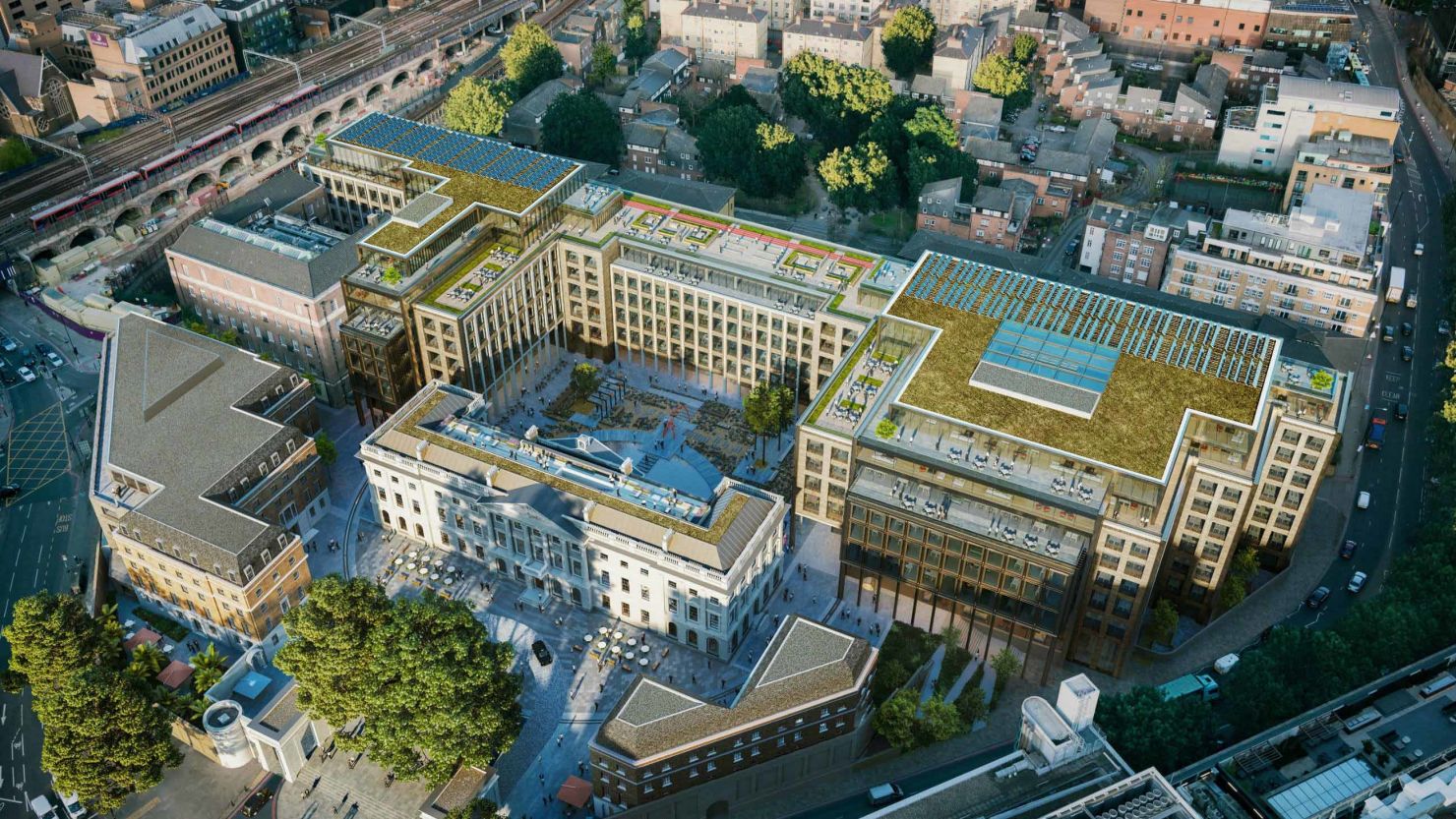
In a move that has renewed political tensions, the United Kingdom has delayed — for the third time — its decision on whether to approve a proposal by China to build what would become the largest embassy in Europe on British soil.
The project, which has been under scrutiny for months, envisions a sprawling complex that would serve as the diplomatic headquarters for China, raising concerns domestically over national security, urban planning implications, and geopolitical symbolism.
Officials in London say the latest postponement reflects the complexity of balancing diplomatic ties with public interest, while critics warn the delay may reflect deeper unease about granting China a powerful symbolic presence.
A Tumultuous Timeline
First proposed more than a year ago, the “super-embassy” plan from Beijing stirred controversy from the outset. While embassies are a routine part of international relations, the scope and scale of this complex — reportedly including multiple buildings, enhanced security perimeters, and extensive grounds — placed it well beyond a standard diplomatic mission.
In earlier stages, the proposal underwent scrutiny by local planning bodies, heritage preservation advocates, and national security advisers. Initial approval was expected, but soon delayed as objections surfaced over potential impact on nearby neighborhoods, traffic congestion, and the precedent such a development would set.
Months later, a second review concluded that more information was needed — particularly regarding security assessments and long-term implications. As negotiations between local authorities, planning committees, and national security advisers continued, Londoners remained in limbo, uncertain whether the ambitious embassy would go ahead.
Now, with the third postponement, the government has again opted to step back and reassess. No new date for a final decision has been given, leaving the entire project suspended indefinitely.
What’s Behind the Delay
Government insiders say the repeated delays stem from a mix of practical and political factors:
- Security Concerns: Given the geopolitical weight of China — a global superpower with growing influence — granting such a large diplomatic facility in London raises legitimate security questions. Officials reportedly want further assurances on perimeter security, surveillance safeguards, and whether the site could be used for intelligence operations beyond standard diplomatic functions.
- Urban and Community Impact: The planned location is in a sensitive urban area, and local residents and councils have voiced concern over increased traffic, noise, strain on local infrastructure, and the effect on housing prices. Approving such a large-scale development would set a major precedent for future embassies or foreign government properties.
- Symbolic and Political Implications: Allowing China to build Europe’s largest embassy in London could be interpreted as a significant political statement — possibly signaling a willingness to accommodate China’s ambitions. For a government already wrestling with delicate relationships over trade, security, and alliances, the optics matter.
One senior official was quoted (on condition of anonymity) as saying: “We are not outright rejecting the proposal — but we cannot rubber-stamp a project of this magnitude without exhaustive review. The stakes are high.”
Reaction from Across the Spectrum
Local Residents & Community Groups
Local community groups and residents have broadly welcomed the government’s hesitation. Many fear that such a massive embassy would overwhelm the neighborhood, strain local services, and diminish the character of the area. Concerns over loss of green space, added traffic, and general disruption have been common.
As one local campaigner said: “This isn’t just about an embassy — it’s about the kind of city we want to live in, where foreign powers don’t build fortress-like complexes on our doorstep.”
Security Experts & Political Analysts
Security experts argue the repeated delays are a sign of growing caution by the UK toward major diplomatic projects with China. They suggest that granting approval to the embassy could create long-term complications, especially if geopolitical relations shift.
“There’s nothing wrong with diplomatic missions — but if you give a foreign government excessive real estate and a heavy security footprint, you risk eroding transparency and local oversight,” commented a London-based analyst.
Some political observers note that the delay might also be tied to larger diplomatic calculations: the UK may be sending a signal to Beijing, indicating that while talks and cooperation remain possible, any grand display of presence — especially in London — must meet rigorous scrutiny.
Chinese Response (or Lack Thereof)
So far, Beijing has remained publicly reserved on the delays. Chinese diplomatic sources have reiterated their commitment to maintaining strong bilateral relations with the UK, but have avoided alleging any wrongdoing or political motive behind the postponements.
Insiders say that Chinese officials are monitoring the situation closely and are prepared to present additional documents or revised plans, but prefer to maintain a low profile in public statements — likely to avoid escalating tensions.
Broader Implications — Why This Matters
Rewriting the Rules for Diplomatic Real Estate
If the government ultimately rejects or heavily revises the proposal, it could mark a shift in how diplomatic real estate is regulated in the UK. Rather than accepting large embassy complexes as a given, this could set a precedent for stricter oversight, especially when national security and community impact are at stake.
For other nations eyeing expansion in London — or elsewhere in the UK — this could be a warning: size, scope, and symbolic power will be weighed carefully.
Reflecting Changing UK–China Relations
The pause may also mirror broader shifts in the UK’s stance toward China. With geopolitics increasingly strained around trade, security, and global influence, zoning for a major Chinese diplomatic hub might prove untenable — especially if public sentiment and political will are lukewarm.
In effect, the embassy plan becomes more than just a planning application — it becomes a barometer of bilateral relations.
Impact on UK Planning and Town-Planning Policy
Beyond diplomacy, the case can influence urban planning policies. Local councils and planners may feel more empowered to question large-scale developments proposed by foreign entities — not just embassies, but commercial or real-estate ventures.
Public response, and the government’s handling of that response, could shape future policymaking on foreign investments, real estate, and local infrastructure planning.
What Happens Next — And What to Watch
With no date yet set for a final decision, observers will be watching for a few key developments:
- Further Security and Impact Assessments: The government may commission additional studies on security risk, community impact, traffic, and environmental concerns. Any new findings could influence the outcome.
- Public Consultations or Hearings: If local opposition remains strong, planning committees may open windows for public input — potentially giving residents a chance to voice opinions directly.
- Possible Revision of the Embassy Plan: The project’s backers might submit scaled-down or modified proposals to address community and security concerns — perhaps reducing size, modifying building design, or limiting access.
- Diplomatic Signals from Beijing: How Beijing responds — quietly or diplomatically — may influence the tone and urgency of the next steps. A strong diplomatic outreach could sway British decision-makers.
Conclusion
The repeated delay by the UK on China’s proposal to build Europe’s largest embassy in London reveals more than just bureaucratic hesitation. It reflects a growing recognition that large diplomatic projects — especially by powerful foreign states — must be weighed carefully against national security, urban impact, and public interest.
As the standoff continues, communities, planners, and diplomats alike wait to see whether the UK will ultimately grant approval — or whether this embassy will remain a blueprint collecting dust.
In a city known for its history, diversity, and global role, this could be a defining moment: not just for one building, but for how Britain balances diplomacy, power, and the voice of its people.