Modern businesses face increasing security challenges that require sophisticated solutions. Commercial access control systems have become essential for protecting assets, managing employee access, and maintaining operational efficiency. For businesses in Vancouver, WA, implementing the right access control system can mean the difference between vulnerable operations and comprehensive security management.
This guide explores everything you need to know about commercial access control systems, from basic components to advanced integration options. Whether you’re a small business owner looking to upgrade from traditional locks or a large enterprise seeking centralized security management, understanding these systems will help you make informed decisions about protecting your business.
Understanding Commercial Access Control Systems
Commercial Access Control Systems in Vancouver, WA are electronic security solutions that regulate who can enter specific areas of your business and when they can do so. Unlike traditional lock-and-key systems, these advanced solutions use various authentication methods including keycards, keypads, biometric scanners, and mobile credentials to grant or deny access.
These systems work by connecting door locks, card readers, and other hardware components to a central control panel or software platform. When someone attempts to access a secured area, the system checks their credentials against a database of authorized users. If the credentials match and the person has appropriate permissions, the system unlocks the door or barrier.
The beauty of modern access control lies in its flexibility and intelligence. You can program different access levels for different employees, restrict access to certain areas during specific hours, and maintain detailed logs of all entry and exit activities. This level of control proves invaluable for businesses that need to protect sensitive areas, valuable inventory, or confidential information.
Key Components of Access Control Systems
Electronic Locks and Smart Lock Technology
Electronic locks form the foundation of any access control system. These devices replace traditional mechanical locks with electronically controlled mechanisms that respond to authorized credentials. Smart locks take this concept further by incorporating wireless connectivity and advanced features like remote operation and real-time status monitoring.
Modern electronic locks offer various locking mechanisms, from electromagnetic locks that secure doors using powerful magnets to electric strikes that release door latches upon authorization. The choice between different lock types depends on your specific security requirements, door construction, and aesthetic preferences.
Access Control Software Platforms
The software component serves as the brain of your access control system. Through intuitive dashboards, administrators can manage user permissions, monitor access events, and generate comprehensive reports. Advanced software platforms offer cloud-based operation, allowing you to manage your system remotely from anywhere with an internet connection.
These platforms typically include features like automated user provisioning, integration with HR systems, and customizable access schedules. Some systems even incorporate artificial intelligence to detect unusual access patterns and alert administrators to potential security threats.
Authentication Methods
Access Cards and Keyfobs
Traditional proximity cards and keyfobs remain popular for their simplicity and reliability. These devices contain embedded chips or magnetic strips that communicate with card readers to verify user identity. Modern systems often use encrypted cards that provide enhanced security against cloning attempts.
Mobile Credentials
Mobile credentials represent the future of access control authentication. Using smartphones as virtual keycards, employees can unlock doors through dedicated mobile apps or by tapping their phones on Near Field Communication (NFC) readers. This approach eliminates the need to carry physical cards and allows for easy credential management.
Biometric Authentication
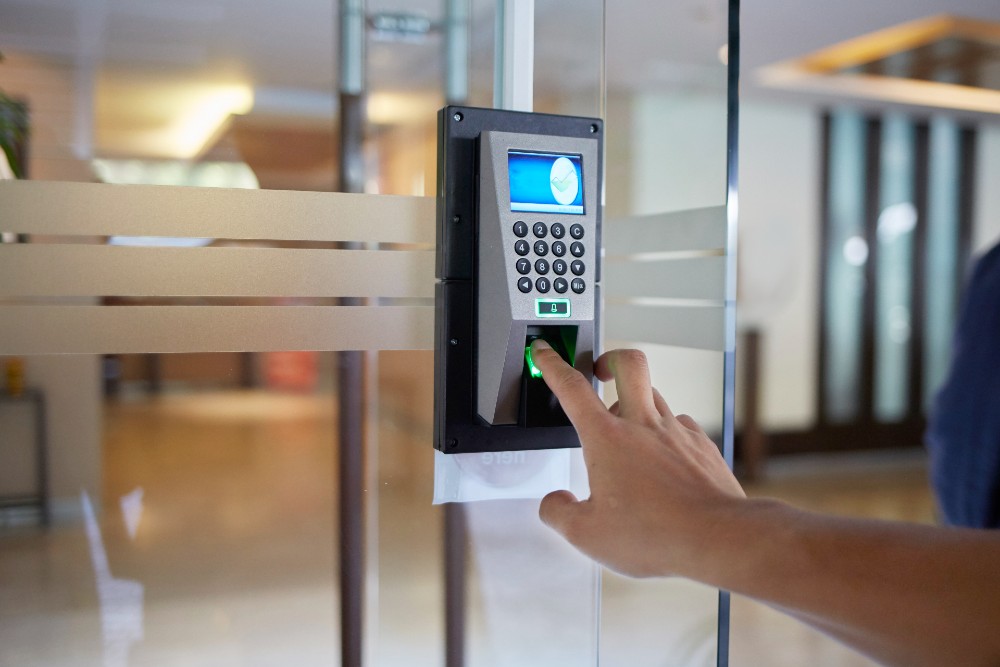
Fingerprint scanners, facial recognition systems, and iris scanners provide the highest level of security by using unique biological characteristics for identification. While typically more expensive than other methods, biometric systems eliminate concerns about lost or shared credentials.
Physical Security Components
Barrier Arms and Vehicle Control
For businesses with parking areas or vehicle access points, barrier arms provide automated control over vehicular entry and exit. These systems integrate with access control platforms to verify credentials before raising barriers, creating secure perimeters around your facilities.
Turnstiles and Pedestrian Control
Turnstiles offer precise control over pedestrian access, ensuring that only one person passes through per valid credential presentation. Available in various configurations from waist-high tripod turnstiles to full-height security turnstiles, these devices suit different security levels and aesthetic requirements.
Intercom Systems
Intercom systems enable two-way communication between visitors and reception staff or security personnel. Modern IP-based intercoms can integrate with access control systems to provide video verification before granting entry, creating an additional security layer for sensitive facilities.
Visitor Management Solutions
Managing visitors effectively requires specialized tools beyond basic access control. Modern visitor management software and kiosks streamline the check-in process while maintaining security standards. These systems can pre-register expected visitors, print temporary badges, and notify hosts of guest arrivals automatically.
Visitor management kiosks typically feature touchscreen interfaces where guests can check themselves in, capture photos, and receive printed visitor badges. Integration with access control systems allows temporary credentials to expire automatically after predetermined periods, ensuring visitors cannot return without proper authorization.
Benefits of Modern Access Control Systems
Enhanced Security and Risk Management
Commercial access control systems significantly improve security by eliminating vulnerabilities associated with traditional keys. Lost or stolen keycards can be deactivated immediately, while detailed audit trails help investigate security incidents. Real-time monitoring capabilities allow security personnel to respond quickly to unauthorized access attempts.
Operational Efficiency
Automated access management reduces administrative overhead associated with manual key distribution and retrieval. Employees enjoy convenient access without fumbling for keys, while managers can modify access permissions instantly without physical visits to each secured area.
Compliance and Reporting
Many industries require detailed access logs for regulatory compliance. Access control systems automatically generate comprehensive reports showing who accessed which areas and when, simplifying compliance audits and investigations.
Cost-Effective Scalability
Modern systems scale easily as businesses grow. Adding new doors, users, or locations typically requires minimal hardware changes, while cloud-based platforms can accommodate virtually unlimited users and access points.
Integration Capabilities
HR and Payroll System Integration
Advanced access control systems integrate with human resources platforms to automate user provisioning and de-provisioning. When new employees join the company, their access credentials can be created automatically based on their role and department. Similarly, when employees leave, their access can be revoked immediately across all systems.
Building Management System Integration
Integration with heating, ventilation, air conditioning (HVAC), and lighting systems enables automated building control based on occupancy. Areas can be heated or cooled only when occupied, while lighting systems can activate automatically upon entry, creating energy-efficient operations.
Video Surveillance Integration
Combining access control with video surveillance systems provides comprehensive security monitoring. When someone uses credentials to enter a secured area, the system can automatically trigger video recording or alert security personnel to verify the person’s identity matches their credentials.
Choosing the Right System for Your Business
Assessing Your Security Requirements
Different businesses have varying security needs based on their industry, size, and risk profile. Manufacturing facilities might require robust industrial-grade components, while office buildings might prioritize aesthetic appeal and user convenience. Consider factors like the number of access points, expected user volume, and required security levels when evaluating options.
Scalability Considerations
Select systems that can grow with your business. Cloud-based platforms typically offer better scalability than on-premises solutions, while modular hardware components allow incremental expansion without complete system replacement.
Budget and Return on Investment
While initial costs vary significantly between basic and advanced systems, consider long-term operational savings. Reduced security personnel requirements, elimination of key replacement costs, and improved operational efficiency often justify higher upfront investments in comprehensive systems.
Implementation Best Practices
Professional Installation and Configuration
Proper installation ensures optimal system performance and longevity. Professional installers understand local building codes, electrical requirements, and security best practices that affect system reliability and compliance.
User Training and Change Management
Successful access control implementation requires thorough user training and change management. Employees need to understand how to use new authentication methods, while administrators require training on system management and troubleshooting procedures.
Ongoing Maintenance and Support
Regular maintenance keeps access control systems operating reliably. This includes software updates, hardware inspections, and credential management. Many providers offer comprehensive support packages that include regular maintenance, emergency repair services, and system updates.
Future Trends and Technologies
The access control industry continues evolving with emerging technologies. Artificial intelligence enhances threat detection capabilities, while Internet of Things (IoT) integration creates smarter, more responsive systems. Blockchain technology promises to revolutionize credential management through decentralized authentication methods.
Cloud computing will continue driving system accessibility and scalability, while mobile technology becomes increasingly central to user authentication. Biometric systems will become more affordable and accurate, potentially replacing traditional card-based systems in many applications.
Making the Right Investment in Security
Commercial Access Control Systems in Vancouver, WA represent a critical investment in business security and operational efficiency. The right system protects valuable assets, ensures regulatory compliance, and provides the flexibility needed to adapt to changing business requirements.
Success depends on choosing systems that match your specific needs, working with experienced installation professionals, and planning for future growth and technology evolution. By understanding the components, benefits, and implementation considerations outlined in this guide, you can make informed decisions that protect your business while supporting operational excellence.
Consider consulting with security professionals who can assess your unique requirements and recommend systems that deliver optimal value for your investment. The right commercial access control system will serve your business reliably for years while providing the security foundation necessary for continued growth and success.
Keep an eye for more latest news & updates on Daily!